

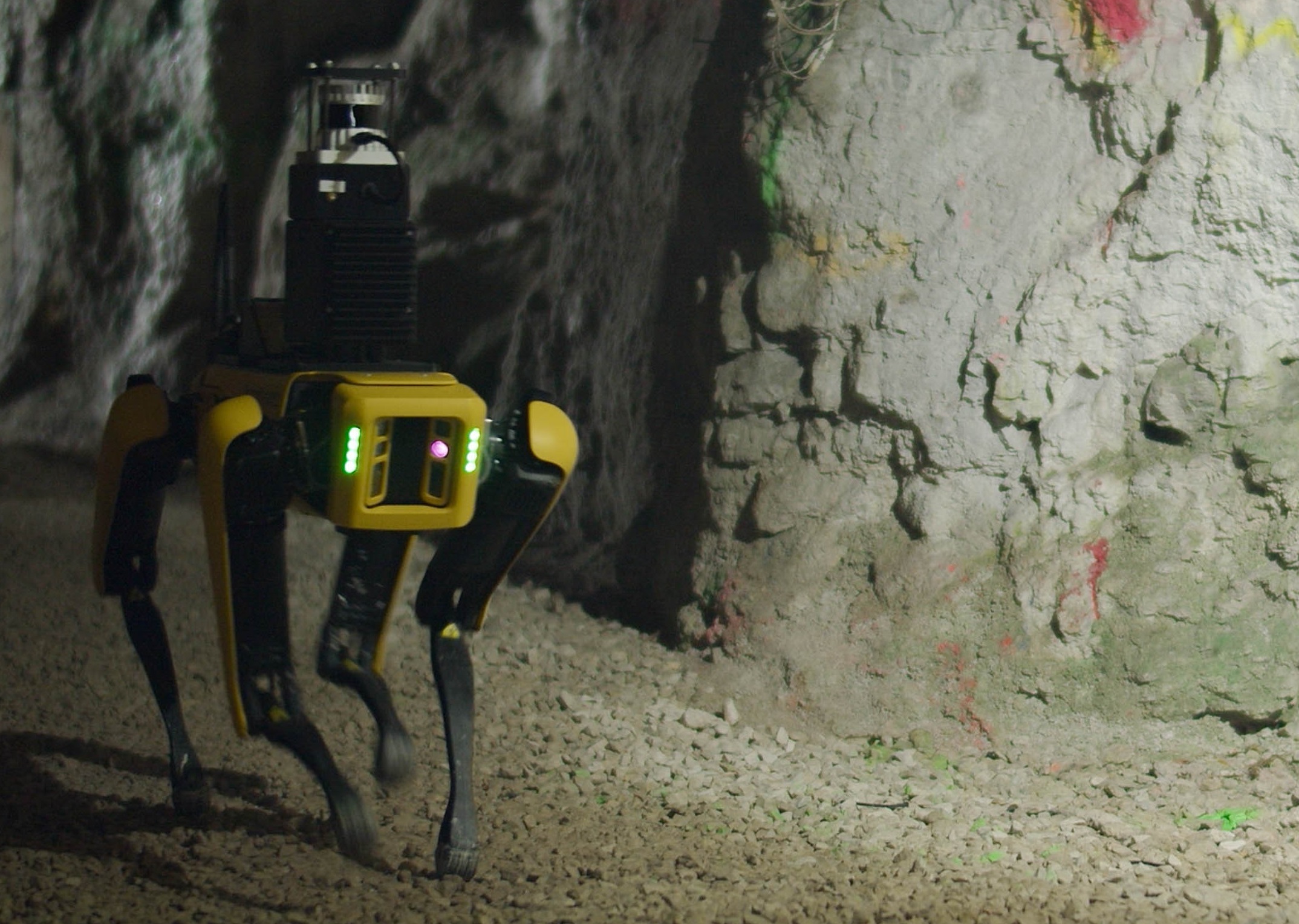
The U.S. Army DEVCOM Ground Vehicle Systems Center (GVSC) held a demo earlier this month to showcase robotic and autonomous technological advancements for subterranean (SubT) environments.
According to a recent Army news release, through the Autonomous Tunnel Exploitation (ATE) project, the demonstration exhibited improved situational understanding and tactical advantage by using multi-robot autonomy and sensing in a series of operational tests in a relevant SubT environment.
The GVSC-developed technology advancements included: GPS-denied autonomous navigation; 2D/3D spatial mapping; object detection; integrated chemical, biological, radiological, and nuclear sensing; mesh radio communication; and automated after-action reporting.
In collaboration with the Defense Threat Reduction Agency, Defense Department’s Coalition Warfare Program and the Republic of Korea Agency for Defense Development, GVSC led the development of Robotic and Autonomous System (RAS) capabilities to improve SubT facility exploitation efforts by combined forces.
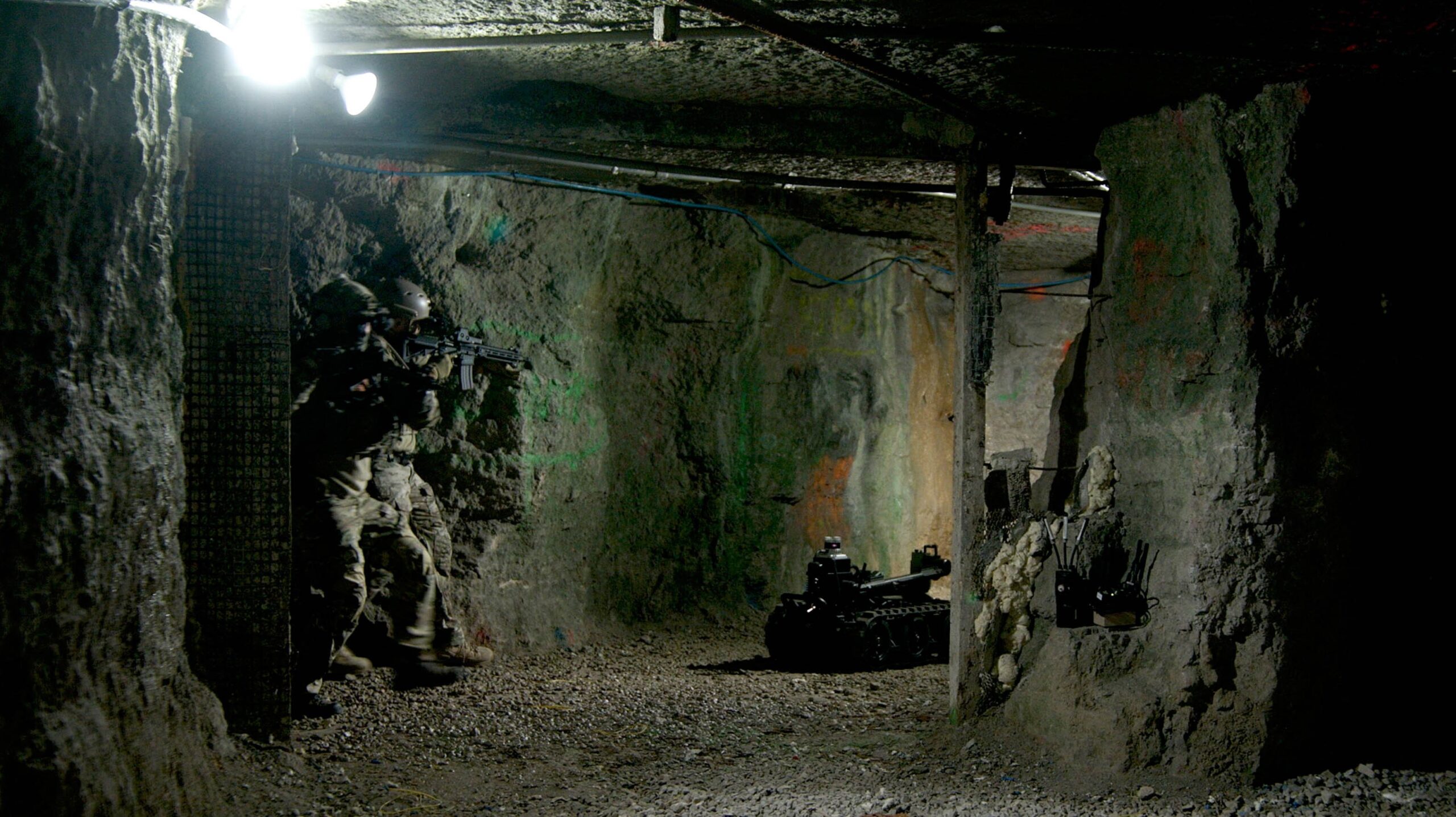
These capabilities were optimized for dismounted robotic systems suitable to operate in SubT environments in support of the exploitation and classification mission.
Danny Guerrero, GVSC project manager for Dismounted Robotic Systems, explained that adversaries increasingly use tunnels and underground facilities to provide protection to personnel and assets while also allowing covert freedom of movement.
“Engaging in these environments puts our warfighters in dangerous situations with limited visibility, movement, communication and tracking,” Guerrero said. “These limitations are made all the more challenging by potential environmental risks such as flooding, cave-ins, suffocation and harmful air quality including low oxygen, smoke, airborne debris or harmful gases.”
In such situations, deploying autonomy and sensor-enabled robotic systems provide the warfighter a tactical advantage through the ability to perform remote reconnaissance and other specific mission tasks while decreasing overall exposure to risks and lessening physical and cognitive load.
“Subterranean environments pose significant challenges for manned and unmanned operations due to limited situational awareness and severe communication constraints,” Guerrero said.
“With the capabilities we developed, warfighters can task unmanned systems to rapidly map, navigate, and exploit underground environments including natural cave networks, tunnel systems, and urban underground infrastructure without stepping a foot inside.
“The end goal is a fully autonomous robotic solution where a multi-robot team in a highly communication-degraded environment can complete a mission with minimal human supervision,” Guerrero said.
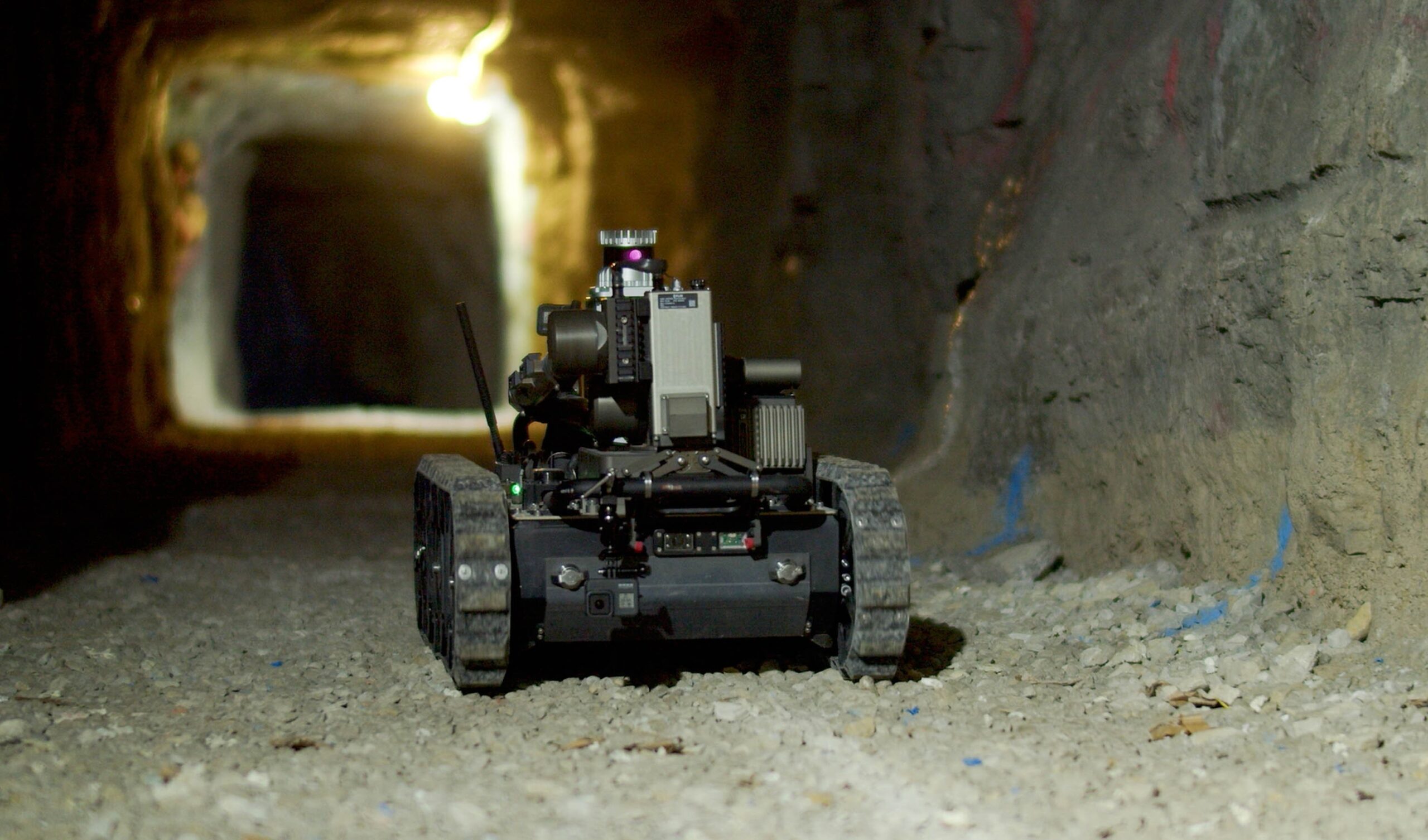
The autonomy capability developed for the ATE project established the Robotic Technology Kernel (RTK) Lite product line, which provides a software baseline for emerging Science and Technology and acquisition programs, said Milot Resyli, GVSC Branch Chief for Dismounted Robotic Systems.
“GVSC has established a project agreement with PdM RAS to transition RTK Lite in support of the Enhanced Robotic Payload Program of Record,” Resyli said.
“In addition, the RTK Lite is in the process of being integrated onto quadruped unmanned ground vehicles in support of the 10x Dismounted Infantry program and will provide the baseline capability for the CoVeR [Combat Vehicle Robotics] Small UGVs as Deployable Sensors effort starting in FY23,” he said.