

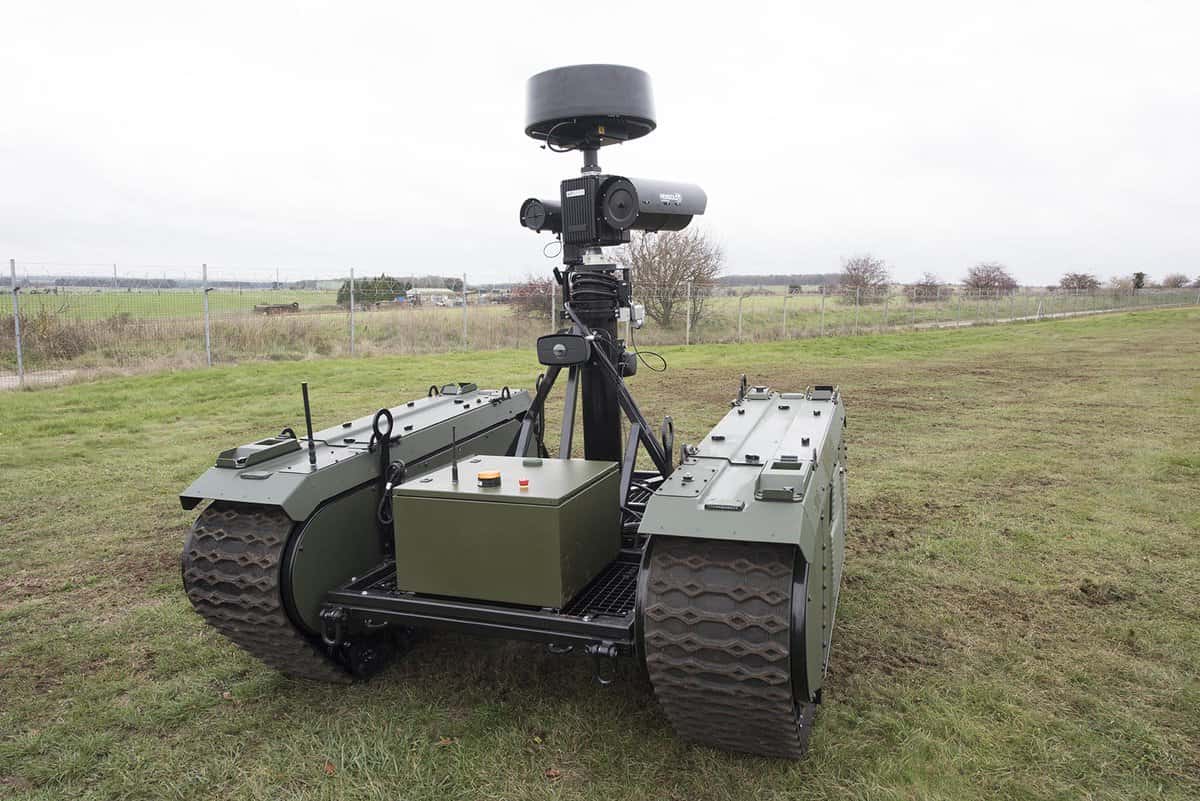
The Defense Secretary has announced on 5 March that $86,9 million (£66m) of Defense funding will be fast-tracked to ensure that military robotic projects get onto the battlefield this year.
The Science Museum today hosted the Autonomous Warrior Exploitation Conference where it was announced that the British Army will benefit from:
- New mini-drones, providing troops with an eye-in-the-sky to give them greater awareness to outmaneuver enemies on the battlefield.
- Systems to fit Army fighting vehicles with remote-control capability, so they can be pushed ahead of manned vehicles and used to test the strength of enemy defenses.
- New autonomous logistics vehicles which will deliver vital supplies to troops in warzones, helping remove soldiers from dangerous resupply tasks so they can focus on combat roles.
The injection of funding from the new $210,7 million (£160m) Transformation Fund will see some of this equipment set to deploy to the likes of Estonia, Afghanistan and Iraq before the end of the year.
Chief of the General Staff Sir Mark Carleton-Smith said: “Rapid adaptation is an essential ingredient for success on the battlefield and the fielding of the next generation of armoured fighting vehicles and ground-breaking robotic and autonomous systems will keep the British Army at the cutting edge of battlefield technology, improving our lethality, survivability and competitive advantage.”
The investment comes after the Army tested a range of projects as part of the biggest military robot exercise in British history at the end of last year, Exercise Autonomous Warrior.
Assistant Head of Capability Strategy and Force Development, Colonel Peter Rowell said: “Robotic and autonomous systems make our troops more effective; seeing more, understanding more, covering a greater area and being more lethal. They unshackle them from the resupply loop.
“These are game-changing capabilities; and not just for combat operations. They are equally useful in humanitarian and disaster relief operations.”