

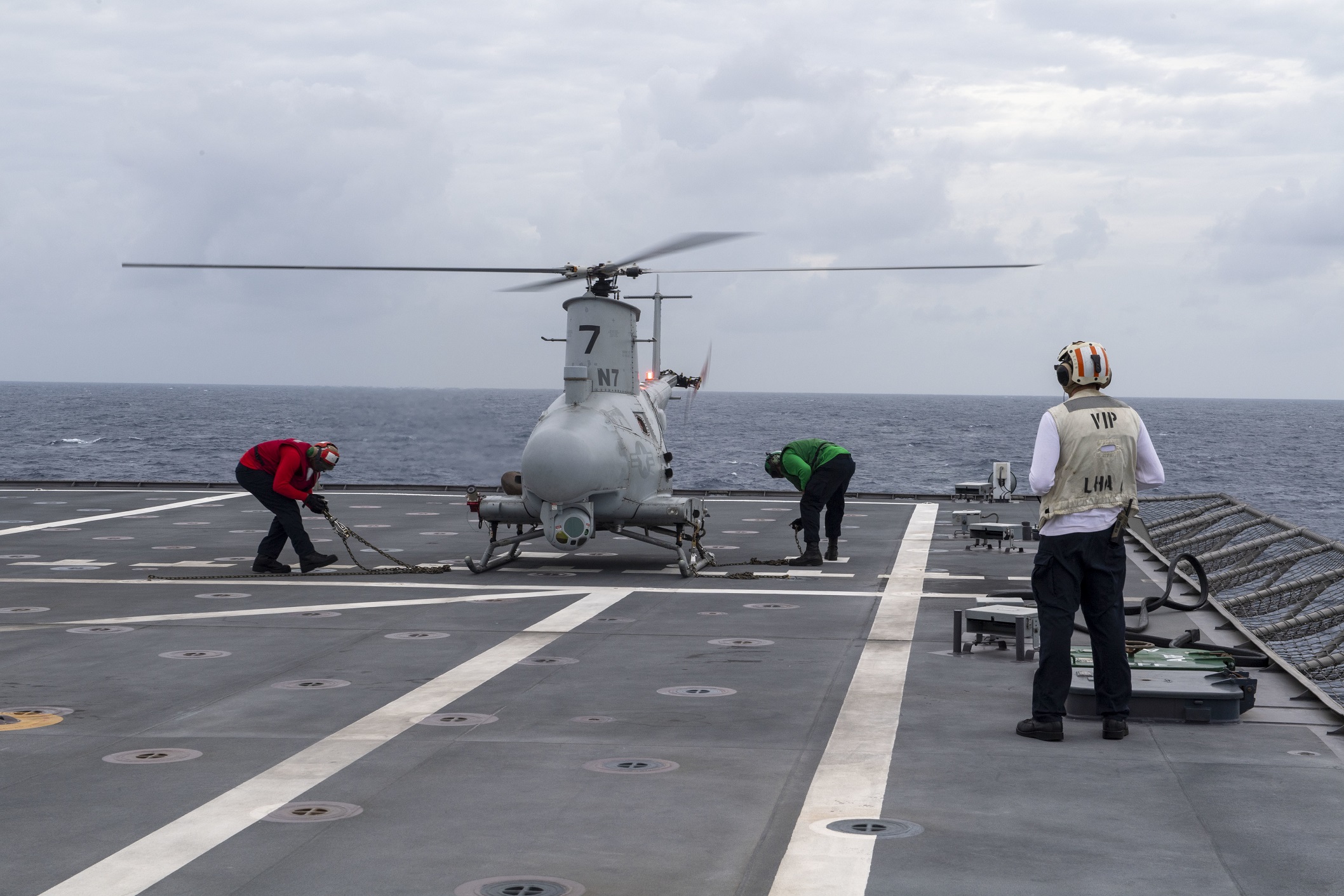
USS Montgomery uses unique unmanned aerial vehicle during live-fire exercise

The Independence-variant littoral combat ship USS Montgomery (LCS 8) has used the unique unmanned aerial vehicle, called the MQ-8B Fire Scout, during a live-fire exercise, Jan. 12, 2020.

Montgomery is on a rotational deployment to USINDOPACOM, conducting operations, exercises and port visits throughout the region and working hull-to-hull with allied and partner navies to provide maritime security and stability, key pillars of a free and open Indo-Pacific.

During recent exercise, Sailors assigned to the Independence-variant littoral combat ship USS Montgomery conducted flight operation of MQ-8B Navy Fire Scout of Helicopter Sea Combat Squadron 23 (HSC 23).

- ADVERTISEMENT - CONTINUE READING BELOW -

The Fire Scout is the Navy’s only unmanned aircraft to operate on land and at sea. The Fire Scout is a vertical take-off and landing UAV capable of carrying out surveillance, tracking and targeting missions.

The Navy has integrated a multi-mode maritime radar on MQ-8B and tested an onboard weapons capability, the Advanced Precision Kill Weapon System (APKWS). The MQ-8B Fire Scout has also demonstrated the ability to operate concurrently with other manned aircraft while operating at sea.

The MQ-8B will be capable of deploying Hellfire laser-guided missiles or two packs of four 70mm (2.75in) Hydra rockets or advanced precision kill weapon system laser-guided rockets or two Northrop Grumman Viper Strike precision munitions. Viper Strike has global positioning system (GPS) guidance and a semi-active laser seeker.
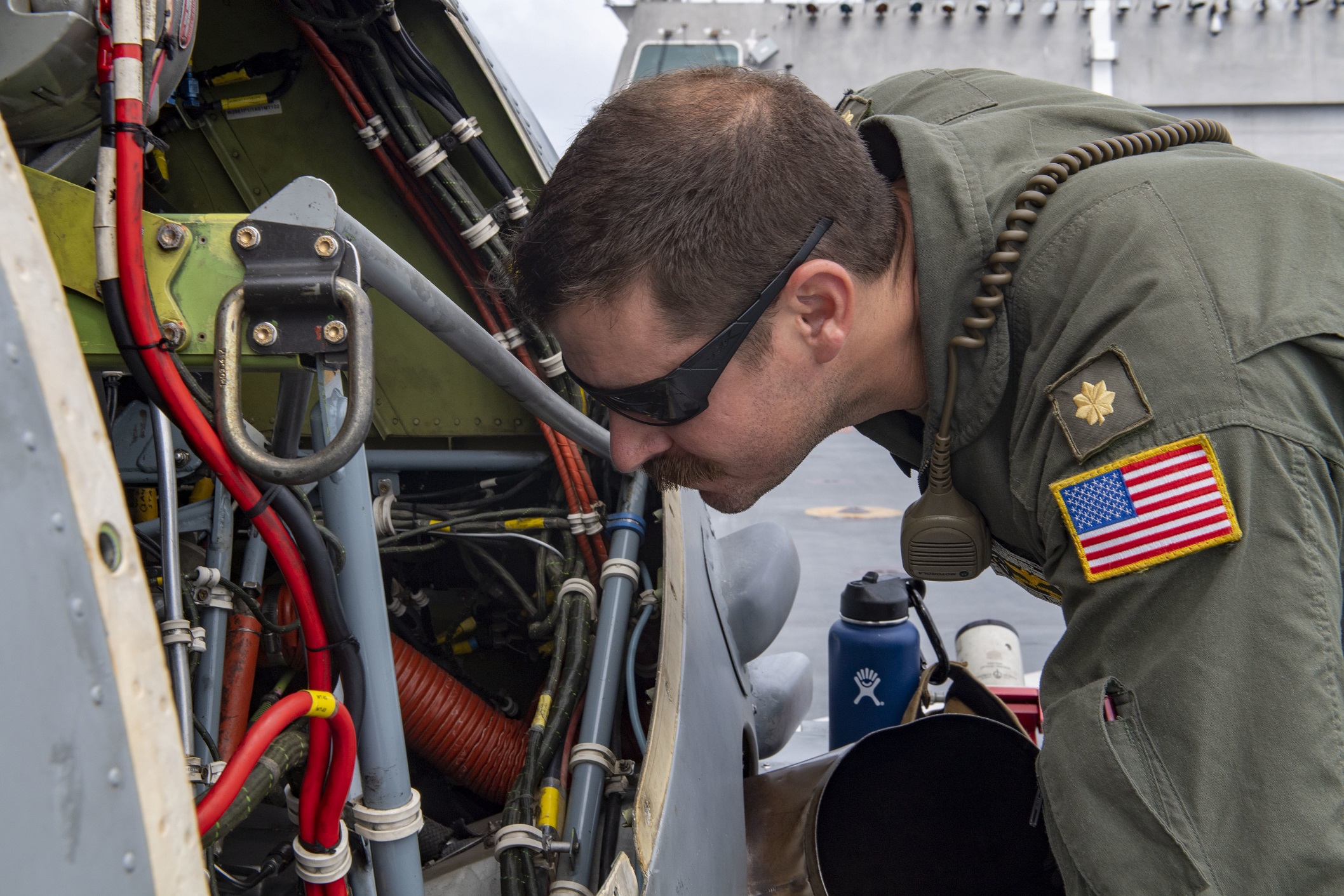
Lt. Cmdr. Nicholas Haubrich, assigned to Helicopter Sea Combat Squadron (HSC) 23, inspects the engine of an MQ-8B Navy Fire Scout on the flight deck of the Independence-variant littoral combat ship USS Montgomery (LCS 8), Jan. 12, 2020. Photo by Mass Communication Specialist 2nd Class Chris Roys
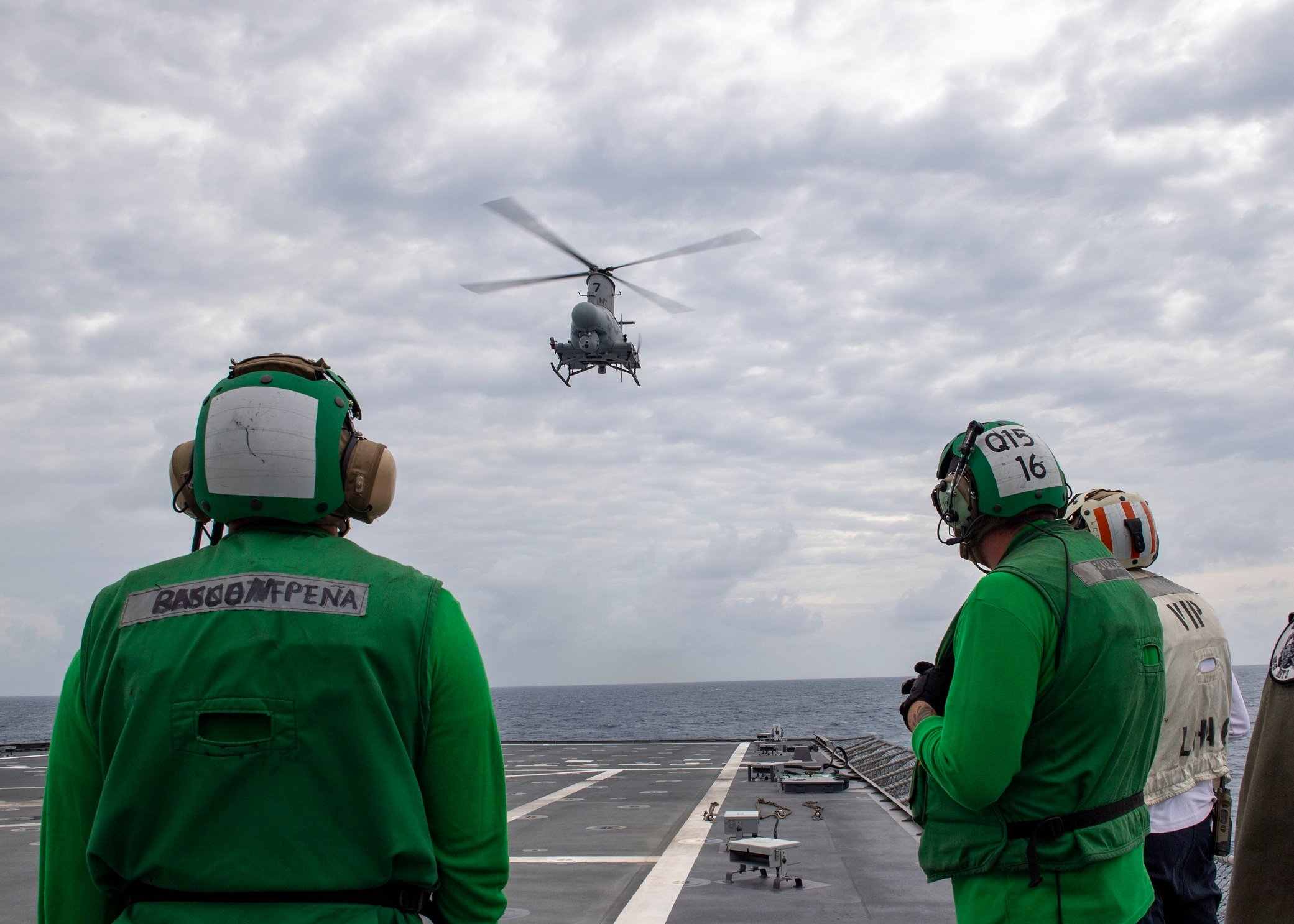
Sailors observe as an MQ-8B Navy Fire Scout hovers over the flight deck of the Independence-variant littoral combat ship USS Montgomery (LCS 8), Jan. 12, 2020. U.S. Navy photo by Mass Communication Specialist 2nd Class Chris Roys

Readers who wish to follow our weekly coverage can subscribe to the Weekly Defense Roundup.

If you wish to report a grammatical or factual error in this article, please let us know by using the online form.

Executive Editor
  • In this story
  • USA

Support The Defence Blog

Independent reporting takes resources. Join us on Patreon.

Become a patron

More Like This

X-Bow pushes rocket motor output past 1,100 units

X-Bow Systems said Monday it has delivered more than 1,100 solid rocket motors, a sharp production milestone for a U.S. defense market trying to...

U.S. Navy tests 3D-printed fix to get fighter jets flying faster

Engineers at the Naval Air Warfare Center Aircraft Division and Fleet Readiness Center Southwest built a 3D-printing method that lets sailors repair cracked composite...

Colorado engineers tapped to help design U.S. Air Force’s rocket cargo system

A two-person engineering firm in a small Colorado town just picked up a $4.3 million contract to help the Air Force answer a question...

U.S. Space Force funds system that warns troops about incoming missiles

Northrop Grumman secured a $49 million contract from U.S. Space Systems Command to provide sustainment services for the Joint Tactical Ground Station, a network...

Boeing wins $50M to extend AGM-86 nuclear cruise missile

Boeing secured a $49.5 million contract from the Air Force Nuclear Weapons Center on June 30, 2026, to remanufacture the electronic flight controllers and...