


A U.S. defense contractor has revealed a high-fidelity replica of China’s HQ-22 surface-to-air missile (SAM) system, part of an expanding program to create realistic threat targets for American military training.
Torch Technologies’ Integration and Prototyping Center (TIPC) is producing the decoy systems, which are designed to replicate the equipment, capabilities, and operations of foreign air defense platforms.
According to the company, these surrogates are intended to “increase the realism for training and testing of our nation’s service members.”
The HQ-22 replica currently in production is part of a batch of decoys meant to simulate the system’s complex battlefield profile. In combat, the HQ-22 is characterized by layered radar and missile engagement zones—capabilities the U.S. Air Force aims to mimic through these detailed surrogate targets.
Air Force officials have previously said that realistic ground-based threat systems are essential for preparing aircrews to identify and counter advanced air defenses they might face in high-threat operational environments. The use of such decoys allows pilots and mission planners to train against full-scale representations of adversary systems without the need to operate or expose actual foreign equipment.

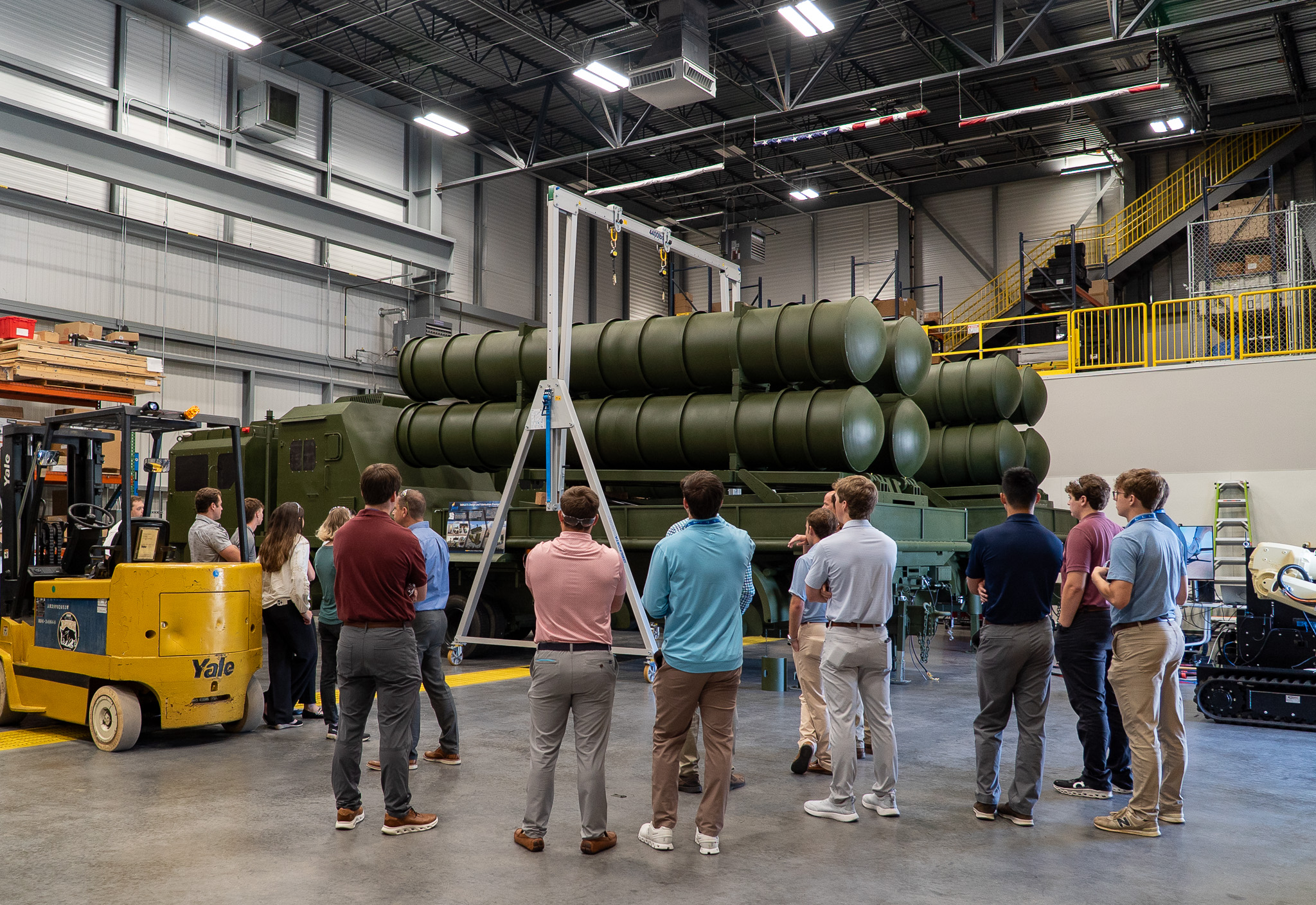
This is not the first time the Air Force has introduced a Chinese SAM replica into its training infrastructure. In July, the service publicly displayed a surrogate HQ-16 target vehicle, also built to support advanced pilot training. That mock system was showcased at the Experimental Aircraft Association’s annual AirVenture event at Wittman Regional Airport in Oshkosh, Wisconsin.
The HQ-22 decoy follows the same principle, giving aircrews and electronic warfare teams the opportunity to practice detection, targeting, and engagement in scenarios that replicate the radar signatures, visual profiles, and operational layouts of foreign-made air defenses.
TIPC’s work involves detailed fabrication processes to ensure that the mock systems match the real-world dimensions and configurations of their counterparts. While they are non-functional as weapons, their radar and thermal signatures can be engineered to emulate those of operational systems, providing a more challenging and authentic training environment.
By incorporating such high-fidelity surrogates into exercises, the Air Force and other branches can expose crews to the tactics and sensor data they are likely to encounter against near-peer adversaries. The approach also supports joint and multinational training, allowing allied forces to gain experience in coordinated suppression or destruction of enemy air defense missions.
With both the HQ-16 and HQ-22 surrogates now in production, the Air Force is building a more diverse library of threat targets to challenge pilots, sensor operators, and planners. While details on deployment locations were not disclosed, such decoys are typically fielded at dedicated training ranges and integrated into large-scale exercises.