


The U.S. Air Force has showcased a new HQ-16 surrogate target vehicle, designed to support advanced pilot training against modern air defense threats.
The mock system was displayed publicly for the first time during the Experimental Aircraft Association’s annual AirVenture event at Wittman Regional Airport in Oshkosh, Wisconsin.
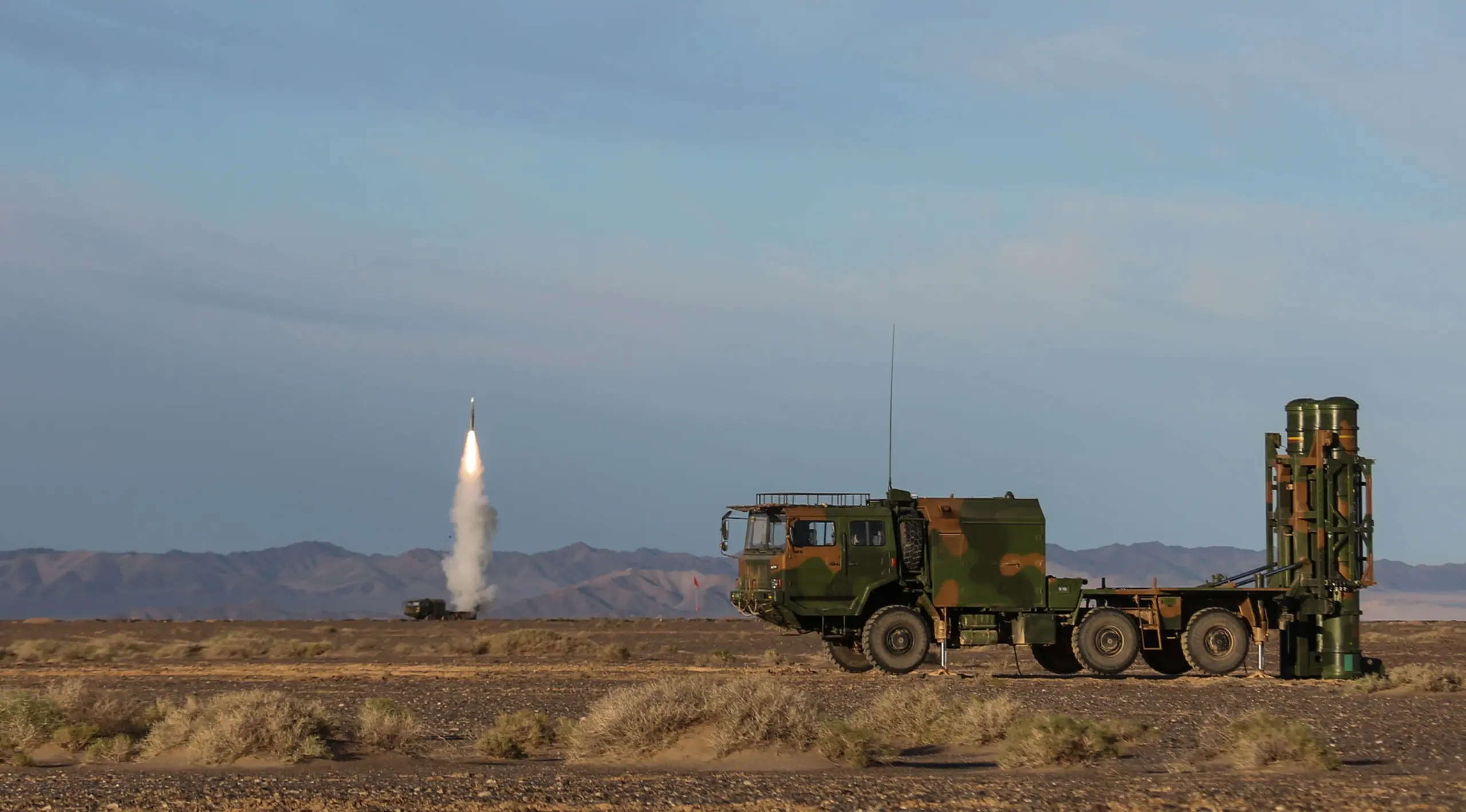
The HQ-16, known by its NATO designation CH-SA-16, is a Chinese medium-range surface-to-air missile (SAM) system derived from the Russian Buk family. In combat, it poses a complex threat with layered radar and missile engagement zones—capabilities the Air Force aims to replicate through high-fidelity surrogate targets like this one.
The HQ-16, fielded by Chinese ground forces and exported to several countries, represents a medium-altitude SAM threat with multi-target engagement capability. Its radar-guided missiles are capable of tracking and intercepting aircraft, cruise missiles, and UAVs across a wide envelope, making it a relevant training reference for U.S. strike and electronic warfare units.
The newly unveiled towable mock-up replicates the visual and radar signature of a real HQ-16 transporter erector launcher (TEL). According to the Air Force, such realistic ground targets are essential for preparing flight crews to identify and engage threats that mirror what they may encounter in high-risk operational theaters.
High-fidelity surrogate systems like this one are used in live and simulated training environments to build cognitive and sensor-based skills. By engaging with realistic ground target signatures, pilots sharpen their ability to rapidly detect, classify, and prioritize enemy systems under pressure.
The use of such surrogates also supports weapons integration and sensor validation for U.S. and allied aircraft. While the system on display at Oshkosh is a towable model, it is designed to replicate operational characteristics of the real HQ-16 system—including its radar reflectivity and thermal emissions—using embedded heaters and reflective panels that can simulate power unit signatures.
In the past, U.S. forces have relied primarily on Soviet and Russian-based threat mockups for target training, including systems modeled after the SA-2, SA-6, and SA-20. The introduction of Chinese system surrogates reflects a broader shift in U.S. defense planning, which now includes an increasing focus on People’s Liberation Army (PLA) air defense architecture.