

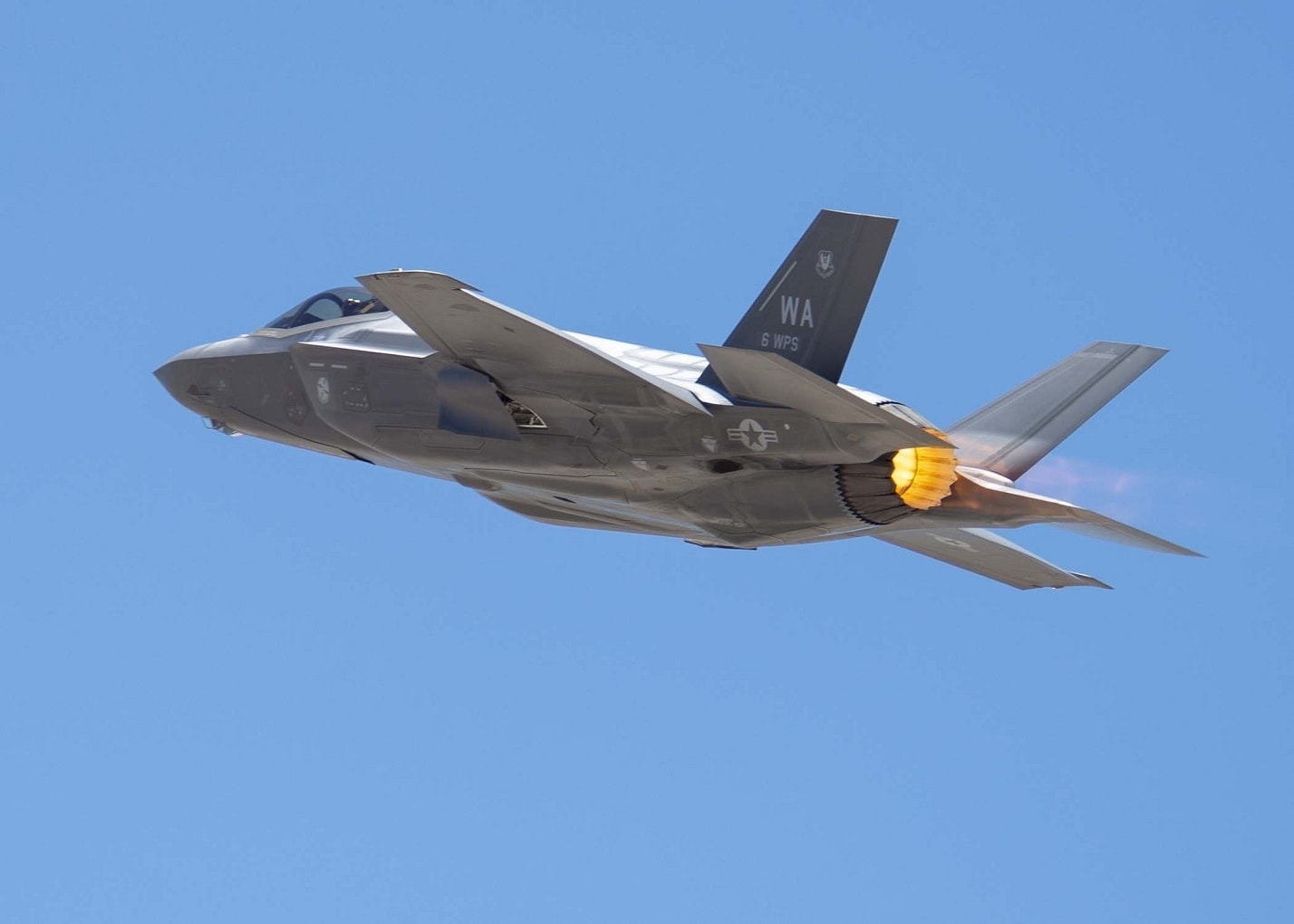
United Technologies awarded $2,1 billion for F-35 Lightning engines

Famed jet engine maker Pratt and Whitney, a United Technologies subsidiary, has been awarded a $2,1 billion U.S. Navy contract modification for F135 propulsion systems.

This modification definitizes the production and delivery of 112 F135-PW-100 propulsion systems for the Air Force, 46 F135-PW-600 propulsion systems for the Marine Corps, and 25 F135-PW-100 propulsion systems for the Navy. In addition, this modification definitizes award of long lead components, parts and materials associated with 129 F135-PW-100 and 19 F135-PW-600 propulsion systems for non-U.S. Department of Defense (DoD) participants and Foreign Military Sales (FMS) customers.

The Pratt & Whitney’s F135 is an afterburning turbofan developed for the Lockheed Martin F-35 Lightning II, a single-engine strike fighter. Pratt & Whitney’s F135 propulsion system powers all three variants of the F-35 Lightning II fighter aircraft – the F-35A CTOL (Conventional Takeoff and Landing), F-35B STOVL (Short Takeoff and Vertical Landing) and F-35C CV (Carrier Variant).

- ADVERTISEMENT - CONTINUE READING BELOW -

The F135-PW-100 used in the F-35A Conventional Take-Off and Landing variant.

The F135 has evolved from the proven F119 engine, which exclusively powers the U.S. Air Force’s F-22 Raptor, and features best-in-class single-engine reliability, fifth generation stealth capabilities as well as advanced prognostics and health management systems.

Since powering the F-35’s first flight in December 2006, the F135 has maintained high readiness levels that have enabled the program to meet flight test objectives and support operational requirements for all three aircraft variants. Supportability features are designed to offer ease of maintenance while achieving unprecedented engine reliability and maintainability.
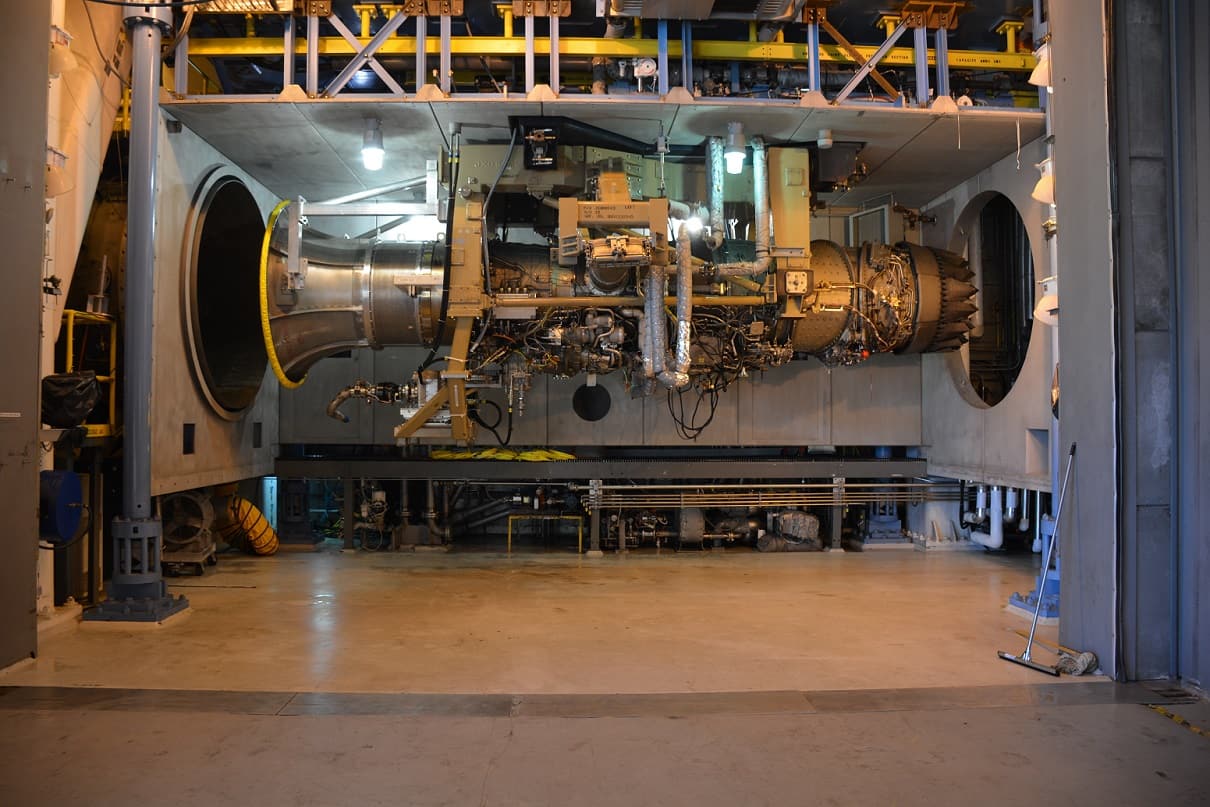
An F135-PW-100 engine, which powers the F-35 Joint Strike Fighter, undergoes salt water corrosion testing in the Arnold Engineering Development Complex SL-3 facility at Arnold Air Force Base, Tenn., on Oct 23, 2016. Photo by Christopher D. Rogers

Readers who wish to follow our weekly coverage can subscribe to the Weekly Defense Roundup.

If you wish to report a grammatical or factual error in this article, please let us know by using the online form.

Executive Editor
  • In this story
  • USA

Support The Defence Blog

Independent reporting takes resources. Join us on Patreon.

Become a patron

More Like This

U.S. Army Reserve tests Pyka’s autonomous cargo aircraft in live exercise

Pyka's autonomous cargo aircraft DropShip flew a 32 km (20-mile) resupply mission entirely without a human pilot from Gulfport to Diamondhead, Mississippi, then executed...

Mayman Aerospace CEO: autonomous drones must replace helicopters in contested battlespace

At 3 a.m. in a contested forward operating base, a patrol thirty kilometres out is taking casualties. They need blood, plasma, and ammunition, not...

U.S. Army buys more of its toughest Arctic combat vehicle

The U.S. Army awarded BAE Systems Land and Armaments a $35 million contract modification on June 30, 2026, for additional production of the general-purpose...

AEVEX wins $50M deal for GPS-resistant strike drones

AEVEX Corp. secured a $50 million contract from the United States Air Force on June 30, 2026, to continue expanding unmanned mission-support capabilities for...

U.S. Air Force spends $471M to fix tanker parts supply problem

The U.S. Air Force awarded a combined $471 million in contracts to 28 different companies on a single day, spreading the work of exchanging...

U.S. Marines deploy Iron Dome-based missile system to Guam

U.S. Marines from III Marine Expeditionary Force were photographed calibrating and evaluating the Medium-Range Intercept Capability system on Mason Range, Guam, on June 24,...