

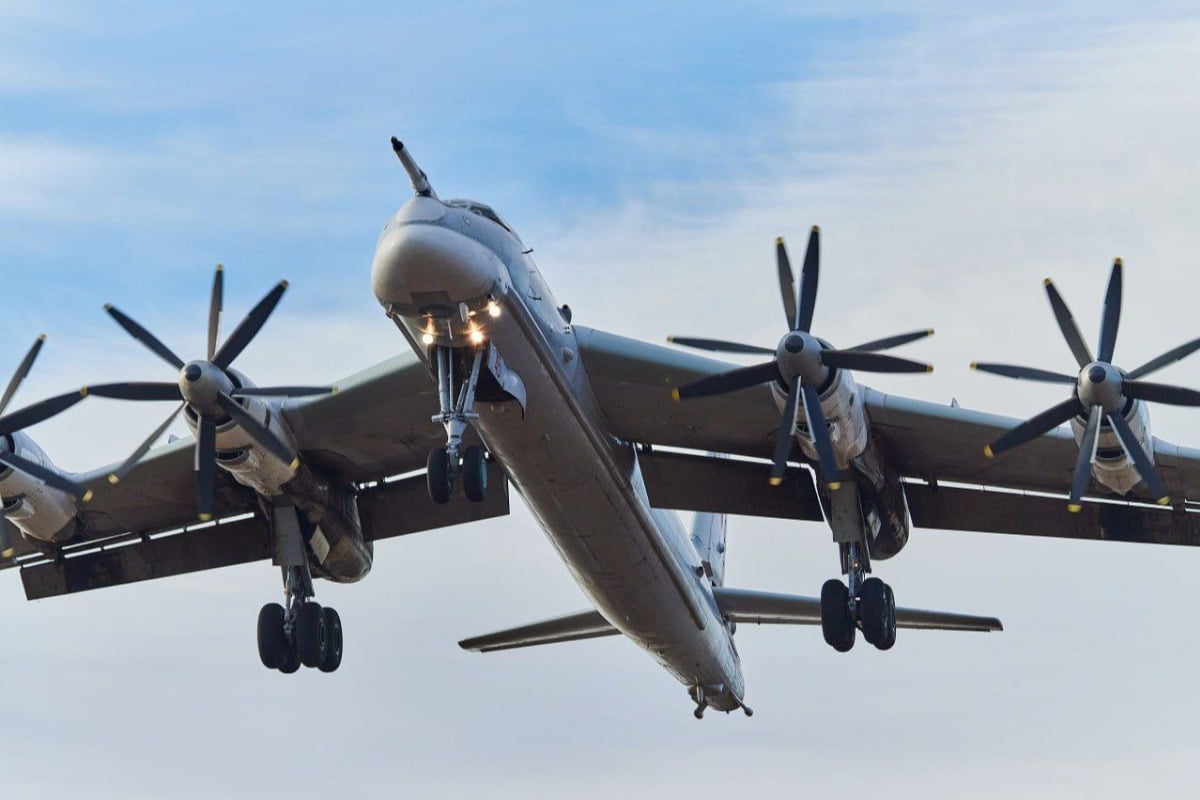
- President Zelenskyy said Ukraine's SBU destroyed a Tu-95 strategic bomber at Russia's Engels military airfield.
- Zelenskyy said Ukrainian forces also struck Russian oil industry facilities and military targets in occupied Ukrainian territory.
President Volodymyr Zelenskyy announced Friday that Ukraine’s Security Service, known as the SBU, destroyed a Tupolev Tu-95 strategic bomber at the military airfield in Engels, Russia, part of what he described as a new round of successful long-range strikes deep inside Russian territory.
Zelenskyy made the announcement in a socail media, saying Ukrainian forces also struck facilities belonging to Russia’s oil industry along with military targets in Ukrainian territory currently occupied by Russian forces. He said the destroyed Tu-95 had been used by Russia to launch missile strikes against Ukraine, and he described the Engels airfield as sitting roughly 800 kilometers (497 miles) from Ukraine’s state border, a notably longer distance than the roughly 600 kilometers (370 miles) most Western outlets have cited for the base’s distance from the front line, a discrepancy that may reflect Zelenskyy measuring from the internationally recognized border rather than the current line of contact.
“I am grateful to our warriors for their accuracy. Once again, there have been successful long-range sanctions against Russia for this war,” Zelenskyy wrote.
The Tu-95, a Soviet-era turboprop bomber that first flew in 1952, remains one of the oldest combat aircraft still in frontline service anywhere in the world, and Russia has continued relying on it specifically because each aircraft can carry up to 16 long-range cruise missiles, including the Kh-101 and the older Kh-55 and Kh-555 variants, launched from well outside Ukrainian air defense range before the missiles fly the rest of the way to their targets.
Engels air base, formally known as Engels-2, sits in Russia’s Saratov region and hosts two of Russia’s heavy bomber regiments, the 184th and the 121st Guards, making it one of the two primary staging grounds, alongside a base in Ukrainka in Russia’s Far East, from which Russia has launched the bulk of its long-range bomber strikes against Ukrainian cities since the full-scale invasion began.
Ukraine first struck the base on December 5, 2022, damaging two Tu-95s in an operation Britain’s Ministry of Defense called one of the most significant failures of Russian force protection since the invasion began. Ukraine returned in March 2025 with a strike that triggered secondary explosions across an ammunition depot, and Ukraine’s General Staff later said the attack destroyed roughly 96 air-launched cruise missiles that had been staged for three planned strikes against Ukraine. The base came under fire again just one day before this latest announcement, when drones struck Engels overnight into July 16, an attack the Defence Blog reported at the time based on Russian Telegram channels and satellite fire-detection data, though the extent of damage from that specific strike remained unconfirmed at the time. Friday’s confirmation from Zelenskyy appears to build directly on that same window of strikes, suggesting the July 16 attack and the destroyed Tu-95 may be connected, though Zelenskyy’s statement did not specify the exact date the bomber was destroyed.
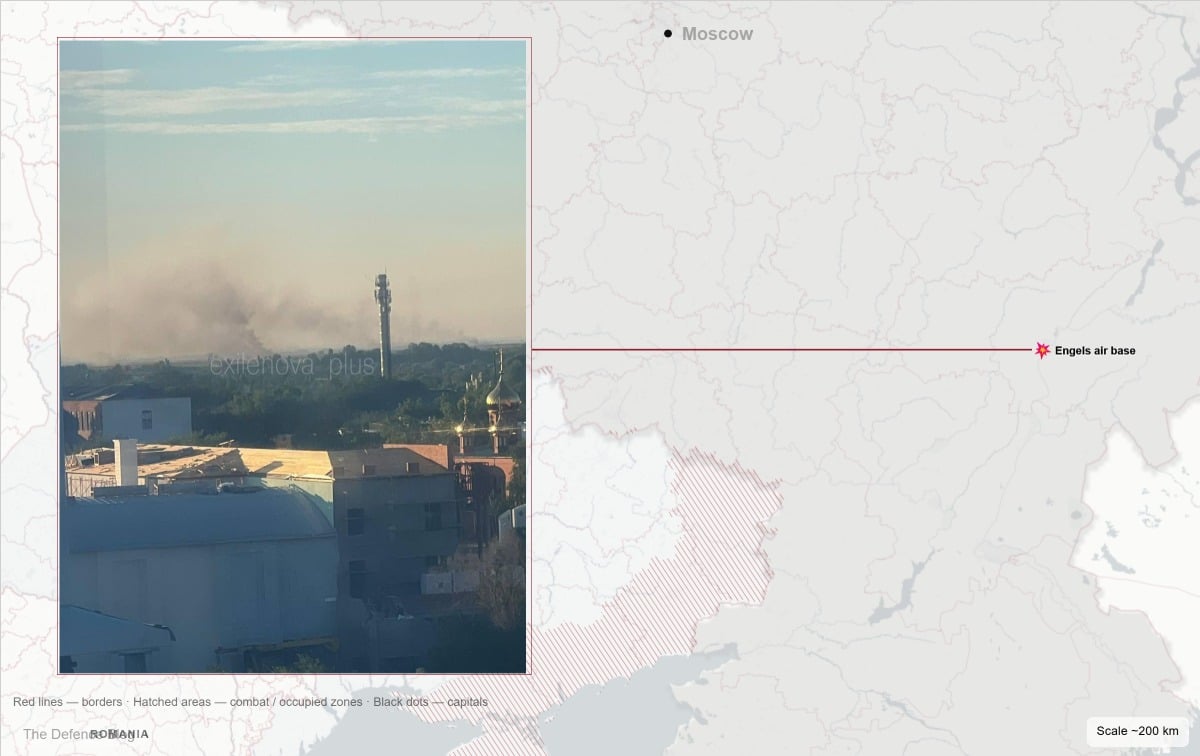
Russia’s strategic bomber fleet has taken a steady beating over the course of the war, and each additional loss carries outsized weight because Russia can no longer replace these aircraft the way it once could. The Tu-95 stopped rolling off Russian production lines decades ago, meaning every airframe destroyed represents a permanent reduction in Moscow’s ability to launch long-range cruise missile strikes rather than a temporary setback that new construction can eventually reverse. Ukraine’s most dramatic strike against this fleet came in June 2025, when the SBU executed Operation Spiderweb, a coordinated drone attack that struck four Russian airbases simultaneously, including Belaya, Dyagilevo, Olenya, and Ivanovo, an operation Ukrainian officials said damaged or destroyed dozens of aircraft including Tu-95s, Tu-22M3s, and an A-50 early warning plane, using first-person-view drones smuggled into Russian territory over the course of an 18-month planning effort personally overseen by Zelenskyy.

Following that operation, satellite imagery reviewed by Ukrainian outlet NV showed Russia had temporarily relocated its remaining strategic bombers away from Engels entirely, moving aircraft east toward bases in Russia’s Far East region in an apparent effort to place them beyond the reach of further Ukrainian strikes. Russia has since returned bombers to Engels and began constructing at least 17 new hardened shelters at the base starting in April 2025, work that satellite analysis has shown continuing in the months since, sized specifically to accommodate the Tu-95 and Tu-160’s large wingspans, a defensive measure that suggests Moscow now treats every parked bomber at Engels as a target rather than an asset it can safely leave exposed on open tarmac.
None of that construction appears to have stopped Friday’s reported strike, and that gap between Russia’s defensive spending and its continued losses tells its own story about where this particular contest currently stands. Every bomber Ukraine takes off the board chips away at a fleet Russia cannot rebuild at the rate it is losing it, and for a country that has spent years absorbing missile strikes launched from aircraft like this one, watching the launch platform itself burn on a Russian runway carries a weight that goes beyond any single tactical outcome.