

The U.S. Navy has concluded an experimental port damage repair exercise in Gulfport, Mississippi, reflecting growing attention to the vulnerability of maritime infrastructure in large-scale conflicts.
The limited objective experiment, held August 15, 2025, brought together multiple expeditionary combat units to simulate restoring a pier under hostile conditions.
The Navy Expeditionary Warfighting Development Center (NEXWDC) organized the event with participation from Naval Mobile Construction Battalion (NMCB) 11, Underwater Construction Team (UCT) 1, and Maritime Expeditionary Security Squadron (MSRON) 2. The combined effort focused on identifying both construction and security requirements for reestablishing port operations when infrastructure has been damaged in a contested environment.
The exercise comes as the Pentagon studies lessons from the war in Ukraine, where conventional warfare has renewed focus on strikes against critical infrastructure. Unlike previous decades of peacekeeping and counterterrorism missions, planners are now preparing for high-intensity conflicts where ports, bridges, and other entry points could be primary targets.
UCT 1 conducted the underwater survey portion of the scenario, deploying sonar systems and remotely operated vehicles to map hydrographic conditions and locate submerged obstacles. The data allowed commanders to assess whether vessels could safely transit in and out of the harbor during a repair operation.
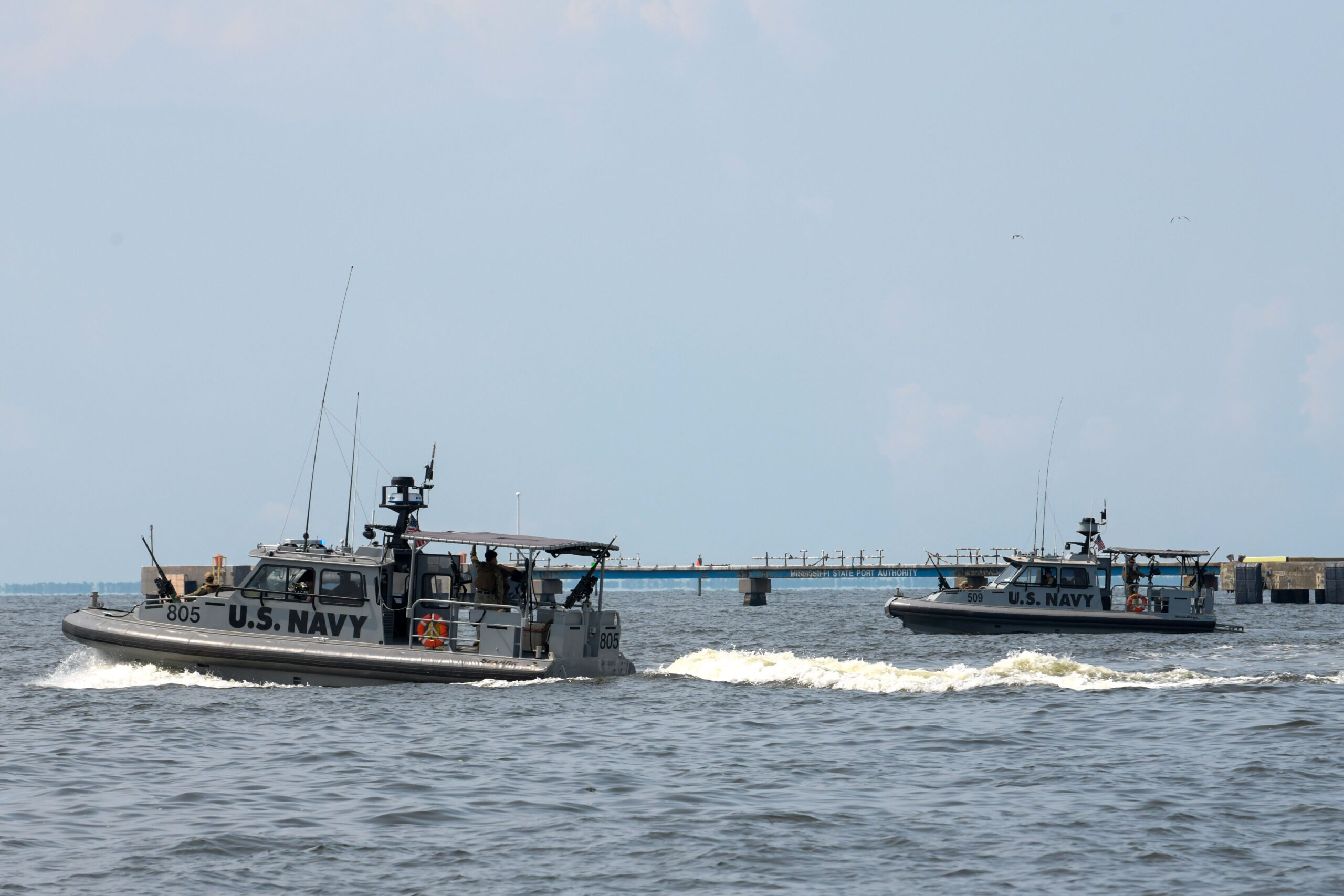
MSRON 2 provided layered security for both personnel and assets at the pier. The squadron conducted land-based patrols and static defenses while also deploying patrol craft to enforce security on the water. Mines were placed in surrounding approaches to create a protective perimeter around the work zone.
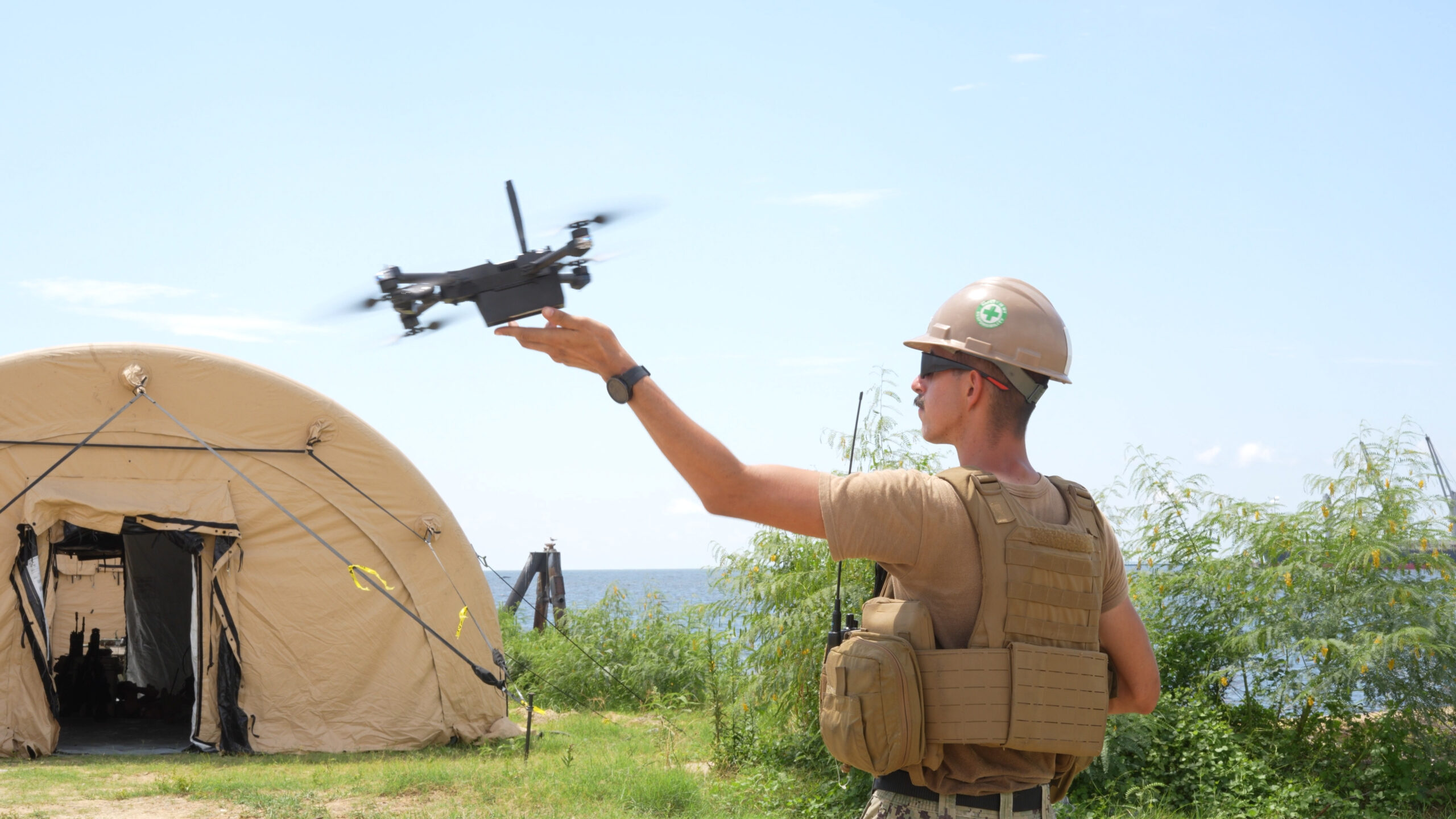
NMCB 11, known as the “Seabees,” led the construction element. The unit set up a forward operating camp, built a concrete boat ramp, and employed newly acquired survey drones to produce three-dimensional assessments of pier damage. This approach enabled engineers to prioritize repair efforts quickly while operating under simulated combat conditions.
Back at the Naval Construction Battalion Center in Gulfport, the headquarters company of NMCB 11 established a watch floor to manage command-and-control functions for all units engaged in the experiment. The coordination allowed leaders to integrate construction, underwater survey, and security elements into a single operational picture.
NMCB 11 is assigned to Naval Construction Group (NCG) 2, which is responsible for organizing, training, and equipping the Navy’s construction regiments and units. According to the Navy, NCG 2 provides expeditionary engineering forces capable of both general and limited combat engineering across a wide spectrum of military operations.
In a release, the Naval Mobile Construction Battalion 11 said the experiment helped refine expeditionary tactics for reopening damaged ports, an essential mission in maintaining maritime logistics during a conflict. Restoring port access under fire is considered a critical task for sustaining naval and joint force operations, particularly in the Indo-Pacific and other regions where contested environments are expected.
The emphasis on port repair highlights a broader shift in U.S. defense planning. The Navy is preparing for scenarios where adversaries could strike logistics hubs, making the ability to rapidly restore them central to operational endurance. Exercises like the one in Gulfport allow units to test not only their technical skills but also their coordination in environments designed to replicate modern warfare challenges.
As the Pentagon continues to incorporate battlefield observations from Ukraine, the U.S. Navy’s investment in expeditionary combat readiness underscores its focus on preparing for future conflicts where infrastructure resilience could decide the pace and effectiveness of military campaigns.