

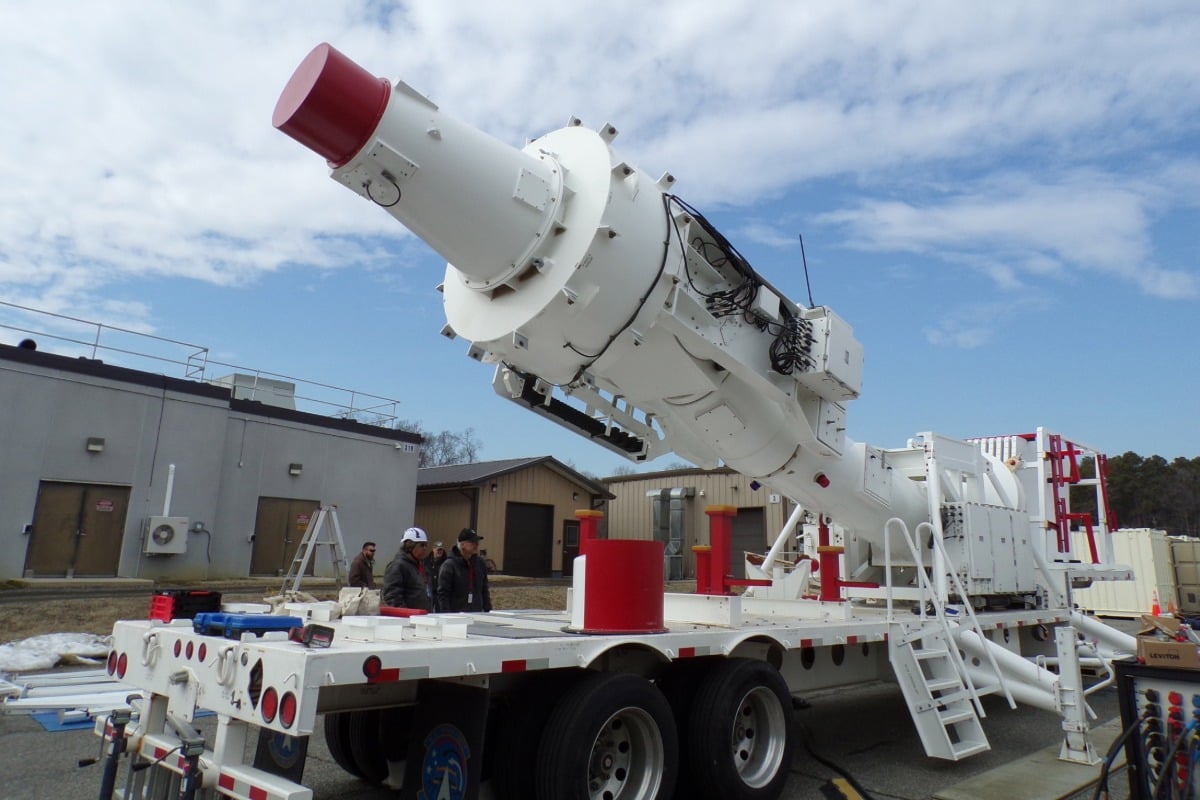
- The Naval Research Laboratory received a transportable satellite tracking antenna from Space Force's System Delta 81 for NRL's Blossom Point Tracking Facility in Welcome, Maryland, announced June 10, 2026.
- The antenna increases Blossom Point's capacity for multi-band communications testing, interoperability assessments, and space experimentation supporting joint naval and Space Force missions.
The United States Naval Research Laboratory, the scientific and technology development arm of the Navy and Marine Corps, has received a transportable satellite tracking antenna system from the Space Force’s Space Systems Command, transferred from a unit called System Delta 81 to NRL’s Blossom Point Tracking Facility in Welcome, Maryland, in a move that quietly but meaningfully expands the military’s ability to test, track, and communicate with satellites during a period when space has become a contested operational domain that every branch of the armed forces depends on for survival in modern warfare.
NRL announced the transfer on June 10, 2026; the Department of War republished the story on June 12. The transfer gives a facility that has supported satellite command and control and orbital research for decades a new layer of capability specifically suited to the evaluation of emerging space technologies and the development of joint operational concepts that neither the Navy nor the Space Force could easily test using their existing infrastructure alone.
NRL’s Blossom Point Tracking Facility, located on the Potomac River in Charles County, Maryland, has operated as a ground station for satellite communications experimentation and orbital research since the early years of the space age, when the Naval Research Laboratory, which played a foundational role in the development of the Vanguard satellite program in the late 1950s, established the site as a location where the geometry of the Potomac River corridor and its distance from major urban radio frequency interference sources made it suitable for sensitive space communications work. The facility’s long operational history means it already possesses the infrastructure, the cleared workforce, and the established relationships with satellite operators and military space commands that allow a new antenna system to become operationally useful relatively quickly, rather than requiring years of site preparation and workforce development before any meaningful testing can begin.
The system increases Blossom Point’s capacity to support multi-band communications testing and interoperability assessments, expanding the facility’s ability to work across the range of frequency allocations that different services, different mission types, and different generations of satellites use, which is precisely the kind of cross-domain evaluation capability that historically fell through the cracks between service-specific test ranges each optimized for their own systems. The antenna’s transportable design adds a further dimension by allowing the system to be deployed to different locations when the fixed site’s geometry or local conditions make a different position preferable for a specific mission, giving the laboratory flexibility that a permanently installed system at a single location cannot provide.
System Delta 81, the Space Force unit that transferred the antenna, operates within Space Systems Command with a mission focused on developing and fielding capabilities that enable realistic test and training environments for Space Force operations, which means its organizational purpose is specifically to create the kind of infrastructure that allows space systems to be evaluated under conditions that replicate actual operational demands rather than controlled laboratory settings that may not capture how systems behave when subjected to real-world interference, orbital mechanics, and communication geometry. Transferring one of its assets to an NRL facility rather than retaining it within Space Force infrastructure reflects a judgment that the joint testing value of placing the capability at Blossom Point exceeds the value of keeping it within a purely Space Force environment, a judgment that aligns with broader Department of War efforts to strengthen joint testing and training infrastructure across service boundaries.
The operational context that makes this kind of joint space testing infrastructure increasingly urgent is the fundamental transformation of space from a permissive environment where satellites operated largely without threat into a contested domain where adversary nations have demonstrated the ability to track, jam, blind, and in some cases physically destroy satellites, and where the United States military’s dependence on space-based communications, navigation, targeting, and surveillance has made space systems both essential to every military operation and potentially the most valuable target an adversary could attack in the opening hours of a major conflict. The Naval Research Laboratory’s announcement confirms this operational driver, noting that the antenna supports “critical space-enabled capabilities for future operations” and will contribute to “long-duration performance monitoring” of emerging space technologies, language that describes the sustained evaluation of systems whose reliability over extended periods in orbit determines whether the military can count on them when it matters most.
The transfer also supports the Naval Research Laboratory’s role as the Navy and Marine Corps’ corporate laboratory, the central institution responsible for translating scientific research into technology that operational forces can actually use, a role that has historically focused on naval domains but has expanded progressively into space as the Navy’s dependence on space-based capabilities has grown. The laboratory’s involvement in space research stretches back to the Vanguard program and has continued through decades of satellite communications, electronic intelligence, and space surveillance work that has contributed to American military space capabilities across multiple generations of technology. The addition of a Space Force antenna to its ground station infrastructure represents a continuation of that trajectory, giving the laboratory tools suited to the current generation of space technology challenges rather than the generation that the facility’s existing infrastructure was built to address.
Analysis remains underway to determine which future experiments, exercises, and operational events the system will support, and NRL notes that potential deployment locations for the transportable antenna are also being evaluated to maximize its mission utility, which leaves open the question of how the system will ultimately be used and whether Blossom Point will serve as its permanent home or simply as its initial integration site. That ambiguity is not unusual for a capability transfer at this stage; the evaluation and planning process for new ground station capabilities typically takes months to complete, and the confirmation that analysis is underway suggests the organizations involved are taking a systematic approach to maximizing the investment rather than simply adding a new antenna to an existing site without a clear experimental and operational roadmap.
Satellites now underpin every aspect of American military power, from the GPS signals that guide precision munitions to their targets to the communications links that allow commanders to coordinate forces across thousands of miles of ocean, and every one of those satellites depends on ground stations like Blossom Point to be commanded, monitored, and kept in operational condition across their years of orbital service.