

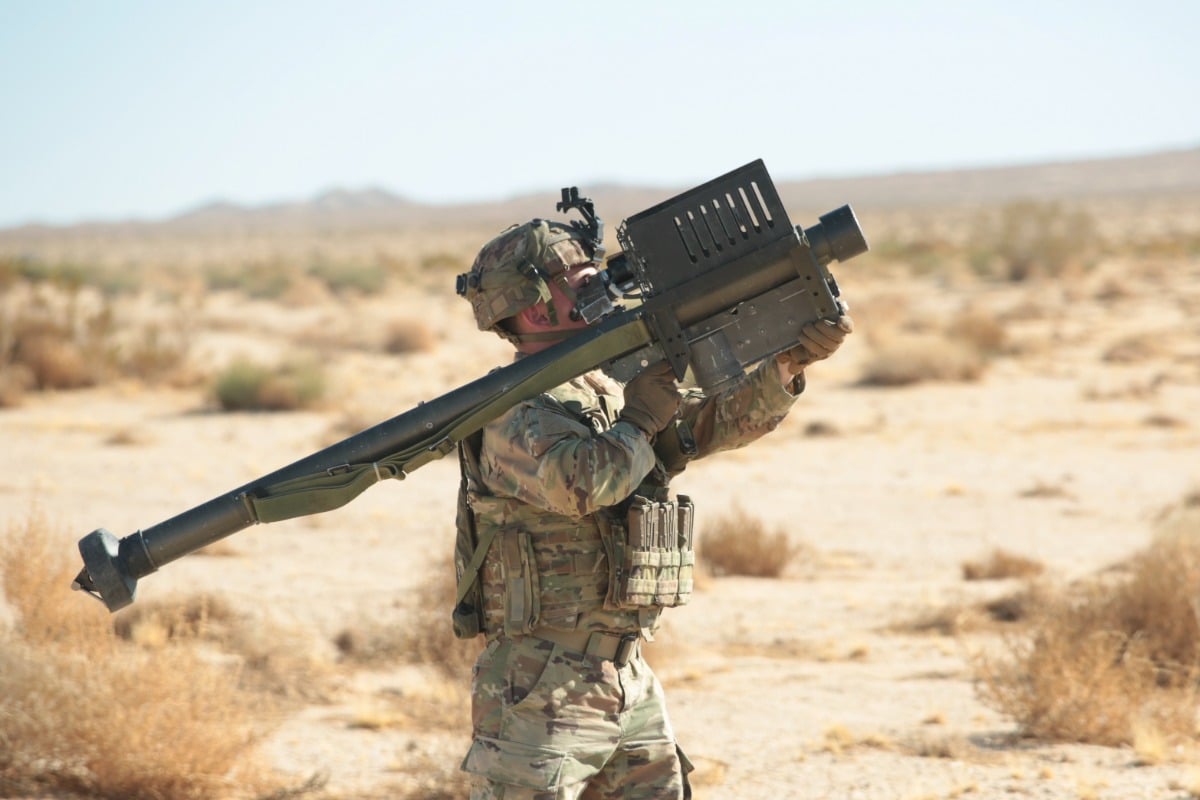
- The U.S. State Department approved a possible $330 million Foreign Military Sale to Brazil on June 11, 2026, covering 100 FIM-92K Stinger Block I missiles and related support equipment.
- Principal contractors are RTX Corporation of Arlington, Virginia and Lockheed Martin of Syracuse, New York; the sale includes gripstocks, engineering assistance, and logistics support.
Washington has approved Brazil’s request to purchase 100 FIM-92K Stinger Block I missiles to enhance the country’s short-range air defense capability, in a transaction valued at $330 million that upgrades South America’s largest military’s ability to protect its own airspace, with the State Department saying the sale would support Brazil’s territorial security and counter narco-terrorist operations.
The U.S. Department of State approved the possible Foreign Military Sale on June 11, 2026, covering 100 FIM-92K Stinger Block I missiles along with gripstocks, which are the shoulder-fired launcher assemblies that soldiers use to aim and fire the missiles, plus engineering assistance, integration support, and comprehensive logistics services, with RTX Corporation of Arlington, Virginia and Lockheed Martin of Syracuse, New York named as the principal contractors.
The FIM-92 Stinger is one of the most widely deployed man-portable air defense systems in the world, a shoulder-fired infrared-guided missile that a single soldier can carry and fire against low-altitude aerial threats, tracking the heat signature of a target’s engine exhaust and guiding itself to intercept without requiring the operator to maintain a lock after launch. The Stinger entered American military service in 1981 and has been continuously upgraded through multiple variants over more than four decades, with the system proving operationally effective in multiple conflicts, most famously during the Soviet-Afghan War of the 1980s when CIA-supplied Stingers gave Afghan Mujahideen fighters the ability to shoot down Soviet Mi-24 Hind attack helicopters, fundamentally changing the tactical dynamics of that conflict, and more recently in Ukraine where Stinger missiles have been among the Western air defense systems most actively used against Russian aircraft operating at low altitude.
Brazil’s military rationale for acquiring the Stinger combines two distinct but related requirements that both involve controlling low-altitude airspace over some of the most difficult terrain on earth. The conventional air defense requirement reflects Brazil’s ongoing efforts to modernize the armed forces of South America’s largest and most populous country, a nation of 214 million people that maintains the largest military in Latin America and has been systematically working to replace Cold War-era equipment with more capable modern systems across all service branches. Brazil’s territorial scale, with a land area of approximately 8.5 million square kilometers (3.3 million square miles) that encompasses the world’s largest tropical rainforest, creates air defense requirements that are uniquely challenging because the country must monitor and control airspace over territory where fixed radar coverage is limited and rapid response to airborne threats requires weapons systems that ground forces can position and operate without the support infrastructure that more complex air defense systems demand.
The counter-narco-terrorism dimension of the sale is equally central to its strategic rationale, and the State Department’s notification explicitly identifies Brazil’s counter narco-terrorist operations and illicit trafficking operations as a core justification, describing the sale as supporting Brazil’s effort to “secur[e] South American airspace from illicit trafficking operations.” A man-portable infrared-guided missile like the Stinger is practically suited for deployment in remote areas where permanent air defense installations would be logistically impractical, allowing forces operating deep in difficult terrain to engage low-altitude threats without relying on fixed infrastructure that simply does not exist across much of Brazil’s interior.
RTX Corporation, formerly known as Raytheon Technologies, is the primary manufacturer of the Stinger missile system and has produced more than 70,000 Stinger missiles across all variants since the program began, making it one of the highest-production surface-to-air missile systems in American defense history and one of the few man-portable air defense systems with a genuine multi-decade track record of production, support, and operational use across dozens of countries. Lockheed Martin’s involvement as a named co-contractor reflects the system’s complex production and support structure, in which multiple major defense companies contribute components, integration work, and sustainment services across the weapon’s lifecycle rather than a single manufacturer controlling all aspects of production and delivery.
The proposed sale’s estimated value of $330 million for 100 missiles reflects not just the missiles themselves but the comprehensive support package that modern Foreign Military Sales typically bundle with the hardware, including technical documentation, training programs, engineering assistance, and the logistics infrastructure needed to maintain complex precision weapons systems in operational condition over their service lives. The Stinger’s portable, shoulder-fired design does not mean it is a simple or cheap weapon to sustain, because the infrared seeker that guides the missile requires careful calibration and maintenance, the propulsion system has defined storage life limits, and the electronic components of more modern variants add complexity that demands sophisticated technical support.
Brazil’s acquisition places it in company with more than 30 nations that operate various Stinger variants, including NATO allies and partner nations that have used the system as a key element of short-range air defense layered beneath longer-range systems covering higher-altitude threats. For Brazil specifically, the 100 missiles represent a meaningful but not overwhelming initial capability relative to the scale of the territory and the variety of airborne threats the country faces, and the State Department’s statement that the sale “will not alter the basic military balance in the region” reflects the assessment that this is a defensive modernization rather than a destabilizing offensive acquisition.