

U.S. Navy awards Lockheed Martin $184M for advanced electronic warfare systems

The Lockheed Martin announced Monday that the company was awarded
a $184 million modification to exercise options for full rate production of Surface Electronic Warfare Improvement Program (SEWIP) Block 2 systems.

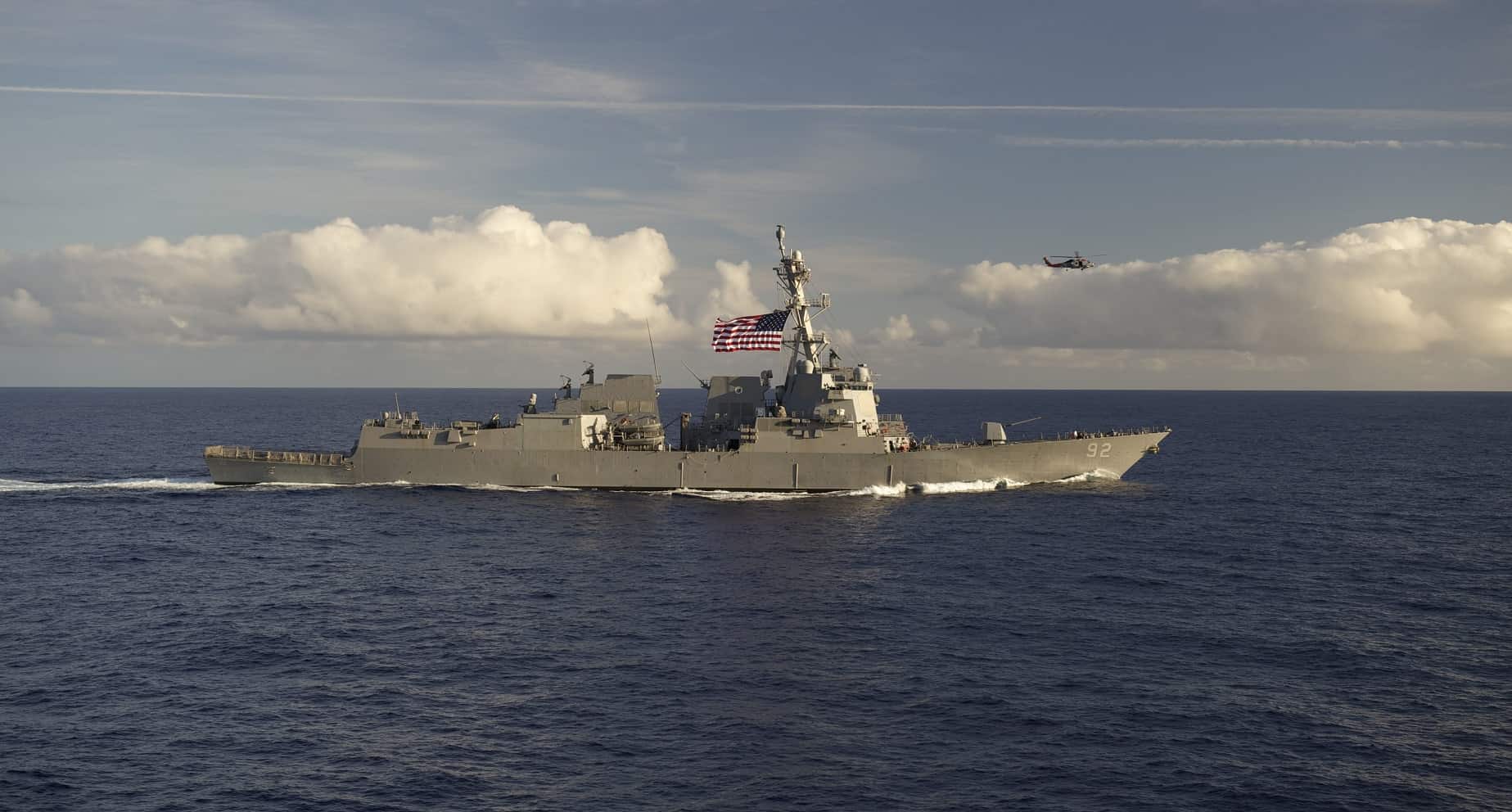
The defense firm has said that Lockheed Martin continues to support the U.S. Navy’s aircraft carriers, cruisers, destroyers and warships with advanced electronic warfare capabilities. 

“We are honored to continue to provide this critical fleet defense capability that our warfighters rely on while they perform their mission worldwide,” said Joe Ottaviano, Integrated Electronic Warfare program director, Rotary and Mission Systems. “Threats are changing and evolving faster with advanced technologies and the SEWIP system will give the U.S. Navy the advantage of remaining one step ahead of our adversaries.”

- ADVERTISEMENT - CONTINUE READING BELOW -

SEWIP is an evolutionary acquisition and incremental development program to upgrade the existing AN/SLQ-32(V) electronic warfare system. SEWIP Block 2 will expand upon the receiver/antenna group necessary to keep capabilities current with the pace of the threat and to yield improved system integration.

Under this full-rate production contract, Lockheed Martin will continue providing and upgrading the AN/SLQ-32 systems on U.S. aircraft carriers, cruisers, destroyers and other warships with key capabilities that determine if the electronic sensors of potential foes are tracking the ship.

The U.S. Navy awarded the company an initial $148.9 million contract for full rate production of SEWIP Block 2 systems in 2016 with four additional option years to upgrade the fleet’s electronic warfare capabilities so warfighters can respond to evolving threats.

Lockheed Martin has provided the U.S. Navy with SEWIP Block 2 development, production and engineering services since 2009 and has been delivering and supporting the installation of SEWIP Block 2 systems as the Navy upgrades electronic warfare defenses against anti-ship missile threats fleet wide. 

Readers who wish to follow our weekly coverage can subscribe to the Weekly Defense Roundup.

If you wish to report a grammatical or factual error in this article, please let us know by using the online form.

Executive Editor
  • In this story
  • USA

Support The Defence Blog

Independent reporting takes resources. Join us on Patreon.

Become a patron

More Like This

U.S. Army Reserve tests Pyka’s autonomous cargo aircraft in live exercise

Pyka's autonomous cargo aircraft DropShip flew a 32 km (20-mile) resupply mission entirely without a human pilot from Gulfport to Diamondhead, Mississippi, then executed...

Mayman Aerospace CEO: autonomous drones must replace helicopters in contested battlespace

At 3 a.m. in a contested forward operating base, a patrol thirty kilometres out is taking casualties. They need blood, plasma, and ammunition, not...

U.S. Army buys more of its toughest Arctic combat vehicle

The U.S. Army awarded BAE Systems Land and Armaments a $35 million contract modification on June 30, 2026, for additional production of the general-purpose...

AEVEX wins $50M deal for GPS-resistant strike drones

AEVEX Corp. secured a $50 million contract from the United States Air Force on June 30, 2026, to continue expanding unmanned mission-support capabilities for...

U.S. Air Force spends $471M to fix tanker parts supply problem

The U.S. Air Force awarded a combined $471 million in contracts to 28 different companies on a single day, spreading the work of exchanging...

U.S. Marines deploy Iron Dome-based missile system to Guam

U.S. Marines from III Marine Expeditionary Force were photographed calibrating and evaluating the Medium-Range Intercept Capability system on Mason Range, Guam, on June 24,...