

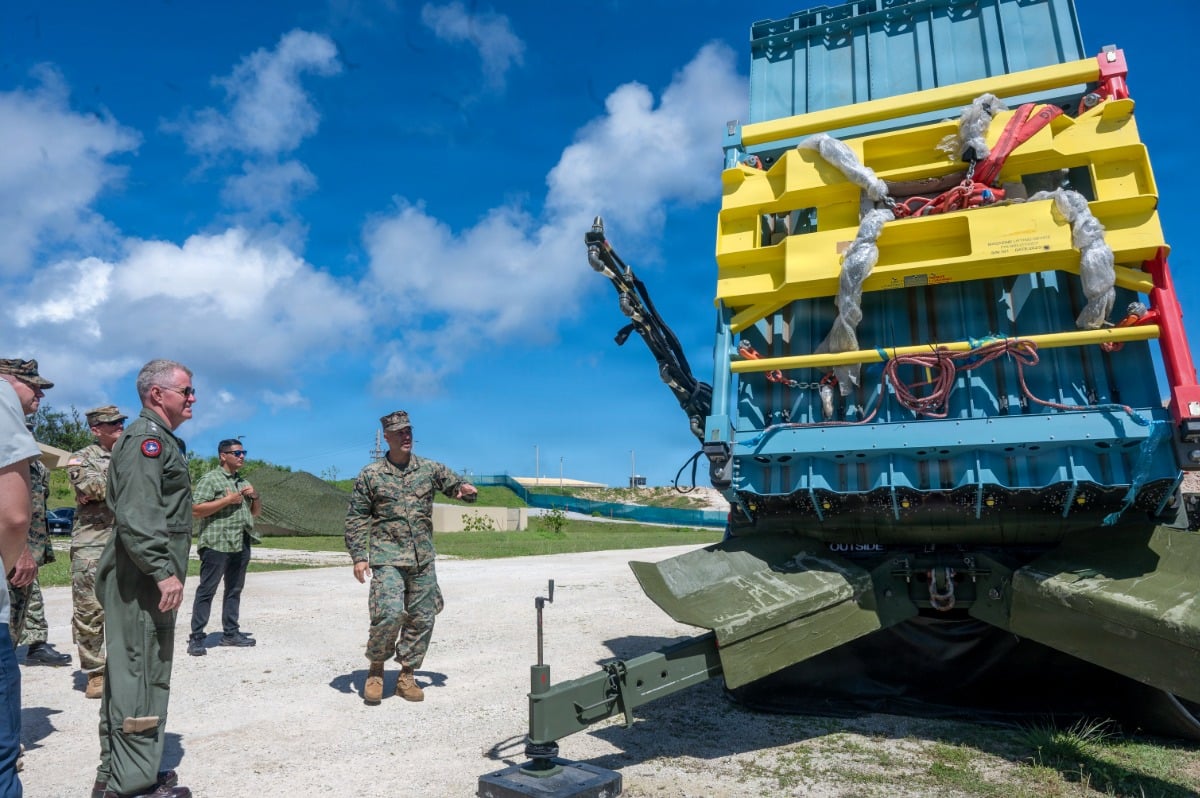
- U.S. Marines from III Marine Expeditionary Force successfully test-fired the Medium-Range Intercept Capability system on June 30, 2026, during Exercise Valiant Shield 2026 at Camp Blaz, Guam.
- The MRIC system fires Raytheon's SkyHunter missile, based on Israel's Tamir interceptor, with a range of 4 to 70 km (2.5 to 43 miles).
U.S. Marines on a remote Pacific island just proved they can shoot down cruise missiles using a weapon system built around the same technology that has protected Israeli cities from rocket attacks for over a decade. Marines from III Marine Expeditionary Force successfully fired the Medium-Range Intercept Capability, or MRIC, system on June 30 during Exercise Valiant Shield 2026, one of the largest multi-domain military exercises conducted in the Pacific, intercepting an aerial target during a live-fire test at Marine Corps Base Camp Blaz on Guam.
The service divested its last mid-range air defense system, the MIM-23 Hawk missile battery, back in the late 1990s, leaving Marines with only the shoulder-fired Stinger missile for close-in protection against aircraft, a weapon that requires an operator to visually track and lock onto a target’s heat signature before firing, making it poorly suited against drone swarms or coordinated attacks launched from multiple directions simultaneously.
MRIC closes that gap by pairing a radar-guided interceptor with the Marine Corps’ existing AN/TPS-80 Ground/Air Task Oriented Radar, letting the system autonomously search for, track, and engage complex aerial threats rather than depending on a human spotter to find the target first.
“Before the MRIC, we were primarily a short-range air defense capability,” said Maj. Emi Gutierrez, commander of the firing battery. “The Marine Corps employed the Stinger for years, but that capability is significantly different. With the evolution of air defense weapon systems, we saw a need to adapt.”
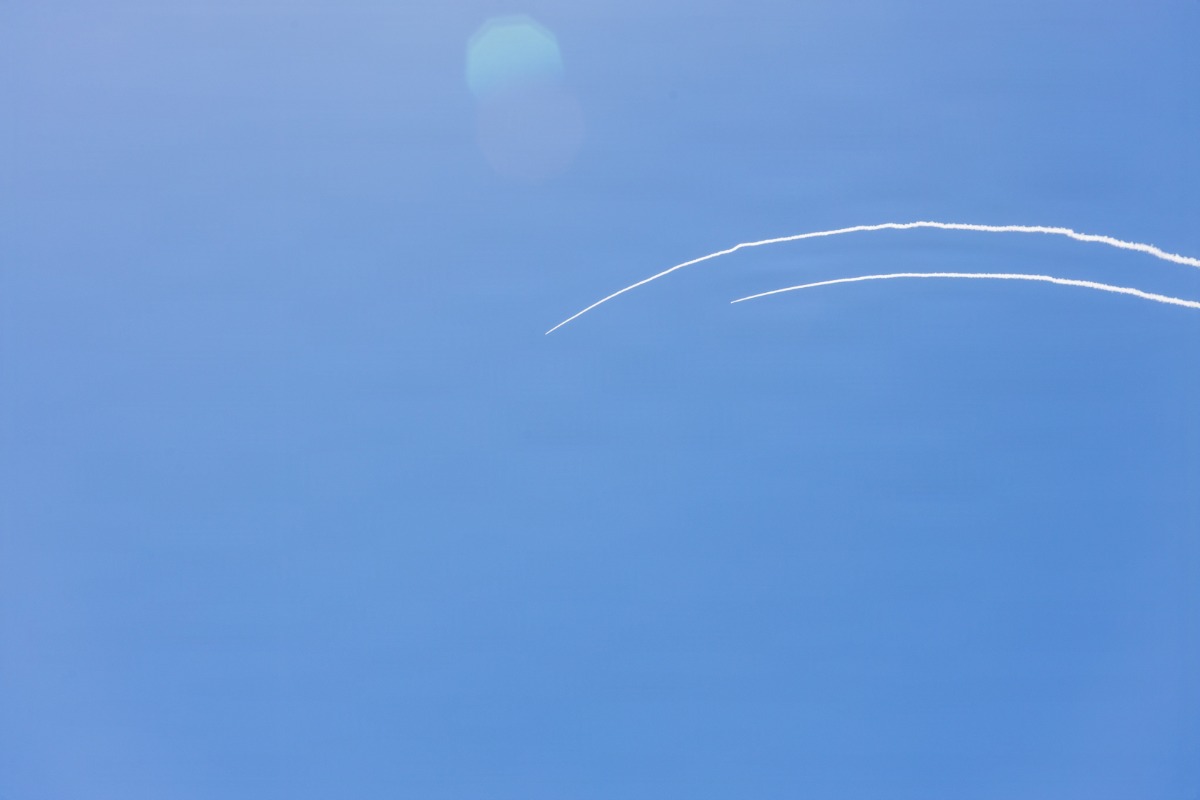
The interceptor missile at the heart of MRIC has an unusually proven combat record for a system just entering U.S. service. MRIC fires the SkyHunter, Raytheon’s American-built version of Israel’s Tamir interceptor, the same missile that powers Israel’s famous Iron Dome air defense system, which Raytheon says has intercepted more than 1,500 incoming targets with a success rate exceeding 90 percent since first being fielded in 2011. Each trailer-mounted MRIC launcher carries up to 20 SkyHunter missiles arranged in four rows of five, and the interceptor itself has a range spanning 4 to 70 km (2.5 to 43 miles), giving Marine units roughly eight times the reach of a Stinger missile and letting them defend a substantially larger stretch of ground around forward-deployed positions.
“The MRIC fills a gap in Marine Corps air defense by bridging the Stinger Man-Portable Air Defense System and long-range Patriot missile system,” according to the exercise summary. That positioning matters strategically because it gives Marine units something they have never had in the modern era: the ability to maneuver deep inside contested territory, inside what military planners call an adversary’s weapons engagement zone, while still carrying meaningful air defense coverage with them rather than depending entirely on Navy warships or allied aircraft to provide that protection from a distance.
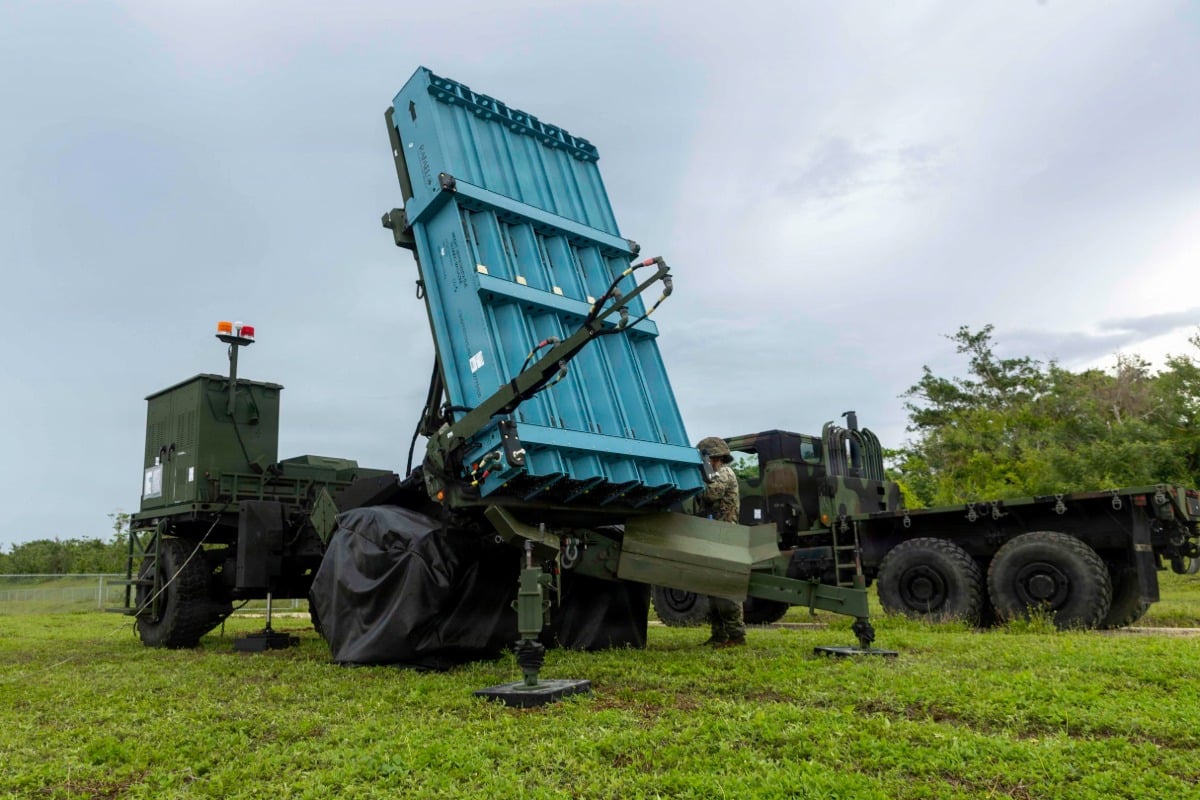
“Our ability to rapidly insert and fill critical gaps within an integrated air defense system is critical not only to the Marine Corps but also the joint force as a whole,” Gutierrez said. “The MRIC fits into expeditionary warfare perfectly because of its ability to be rapidly deployed.”
Getting Marines proficient enough to actually operate MRIC in combat took nearly two years of dedicated training, according to the exercise account, covering the system’s radar operations, command and control interfaces, and interceptor engagement protocols. That training culminated in two weeks of range work at Camp Blaz specifically refining the physical choreography of setting up and firing the system under realistic conditions.
“The Marines have been practicing setting up and tearing down long before they arrived at the range,” said Master Sgt. John Lukasiewicz, an operations chief. “Now they are refining the movements, timelines, and communication pathways to allow that interceptor to leave the canister and engage the target.”
For the Marines actually running the system in Guam, the shift represents more than learning new equipment, it reflects a fundamental change in what their job now requires.
“These Marines have gone from being known as just low-altitude air defense to ground-based air defense professionals,” Gutierrez said.
One of the system’s primary operators described the practical value MRIC adds to the broader air defense picture Marine units now have to manage.
“It helps us with an extra layer of defense with something in front,” said Sgt. Nicholas Hulitt Jr. “It allows us to defend against the current warfare threats that we see with drones and missiles.”
Camp Blaz, activated on Guam’s northern coast, represents the Marine Corps’ first entirely new base in 72 years, purpose-built to support advanced training and serve as a forward hub for joint force readiness west of the International Date Line, deep inside what military planners call the second island chain, the string of Pacific territories including Guam that sits further from mainland China than the first island chain running through Japan, Taiwan, and the Philippines.
“The Marine Corps hasn’t had a brand-new base in 72 years,” said Dr. Monte Powell, operations officer for Camp Blaz. “We have the opportunity to provide a modern forward operating facility with ranges and training facilities for Marines and joint forces who are forward-deployed.”
Joint Region Marianas provided 12.5 miles of ocean range off Guam’s coast specifically to allow the MRIC interceptor to safely engage its target during the live-fire event, a logistical arrangement that let III MEF conduct the test using Camp Blaz’s ranges in what Lukasiewicz described as a non-traditional application of the base’s normal training footprint.
“Valiant Shield allows us to operate in the second island chain,” Lukasiewicz said. “The joint force across Guam has been supportive during the whole exercise. Camp Blaz allowed us to use their ranges in a non-traditional way. It is the best way to execute this mission because of the safety measures that they provided.”
The island sits within range of Chinese ballistic and cruise missile threats and has increasingly become a focal point for American Pacific military planning, a status underscored by the roughly $233.6 million the Marine Corps requested for the MRIC program in its fiscal year 2027 budget request as it works toward equipping all three of its Low Altitude Air Defense Battalions with the system between 2026 and 2028.
Gutierrez credited the success of the June 30 intercept to the years of preparation behind it rather than treating it as a simple equipment demonstration.
“We have continued to evolve,” Gutierrez said, “and therefore our Marines have become smarter, faster, and better with these weapon systems. Their skills grow, and the overall capability of the ground-based air defense community grows.”
Gutierrez closed by crediting the Marines themselves for carrying the program to this point.
“The Marines are working hard and without a doubt are motivated,” Gutierrez said. “They took the initiative and the opportunity in years of work to come out here and lead this live fire. Without their commitment to the mission, we would not be here, and we would not be successful. For that I’m extremely proud of our Marines.”