


U.S. Marines are testing the next generation of battlefield logistics with the Tactical Resupply Unmanned Air System (TRUAS), a heavy-lift cargo drone designed to deliver critical supplies directly to small units in remote and contested environments.
Marines with Combat Logistics Battalion 7, Combat Logistics Regiment 1, 1st Marine Logistics Group conducted field trials of the system at Range 800, Marine Corps Air Ground Combat Center, Twentynine Palms, California, in September 2025.
The tests focused on evaluating the system’s performance and operational value under demanding field conditions. TRUAS is intended to become an integral part of Marine Corps logistics formations, enabling company and platoon commanders to conduct rapid resupply operations without relying on conventional ground convoys or vulnerable manned aircraft.
Developed by British manufacturer Malloy Aeronautics Ltd., the drone — known commercially as the TRV-150 — is part of the company’s family of tactical cargo UAVs specifically designed to support secure resupply missions. The system was selected by the U.S. Marine Corps under the NAVAIR PMA-263 program and reached Initial Operational Capability (IOC) in November, the service said.
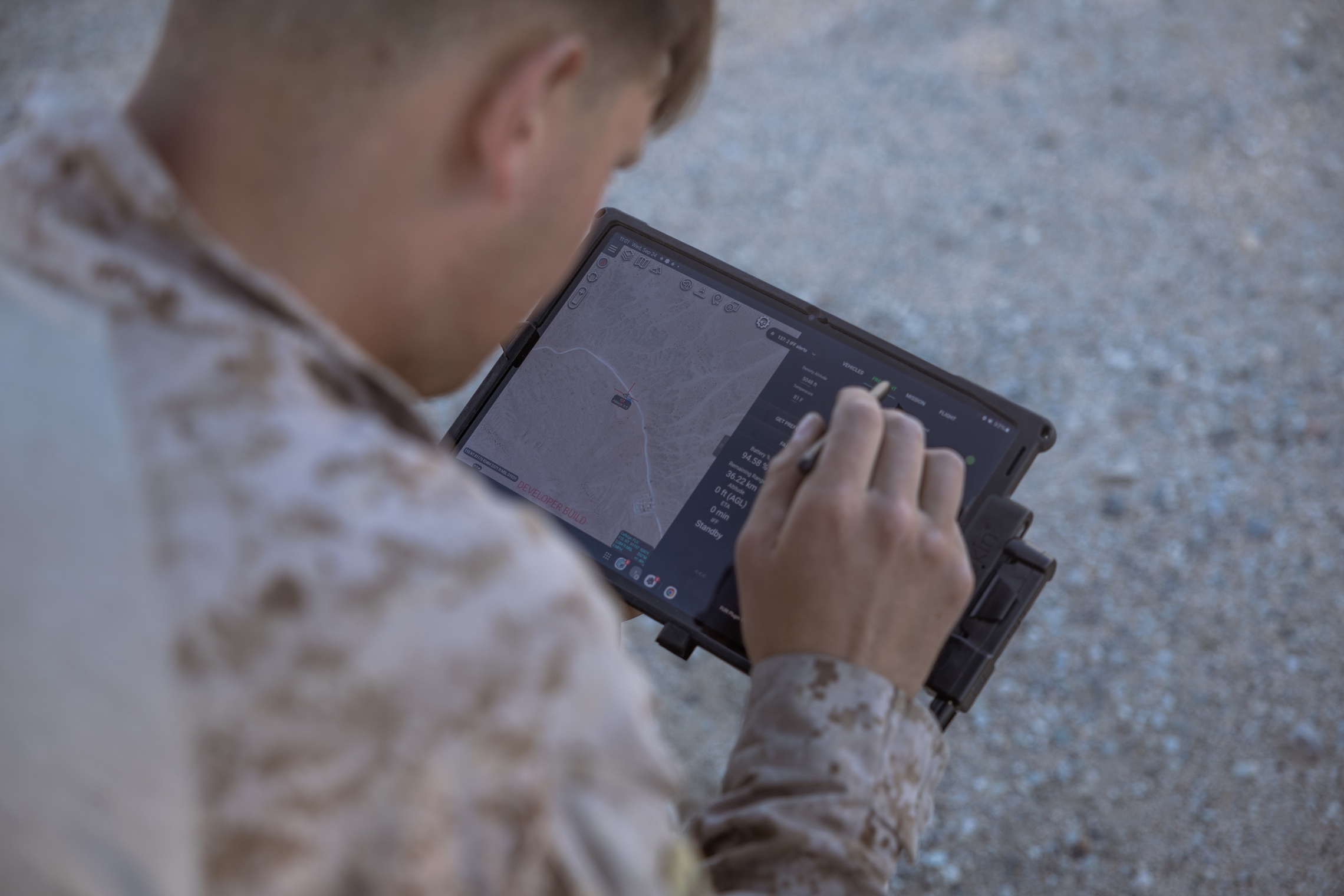
“The goal of the TRUAS is to be integrated within logistics formations as a tool for company and platoon commanders to conduct rapid resupply to small units in hard-to-reach locations,” the Marine Corps said in a statement.
The TRV-150 platform, referred to as TRUAS in Marine Corps service, has been engineered to deliver “speedbags” — pre-packed payloads containing ammunition, medical supplies, rations, or mission-essential equipment — to forward-deployed units. The aircraft’s heavy-lift capabilities are tailored to meet the demands of distributed operations, where speed, flexibility, and autonomy are crucial.
The Marine Corps operates a specialized variant known as the TRV-150C, designated by the manufacturer as the P4-C. This version offers a payload capacity of up to 440 lbs (about 200 kg) and can deliver supplies over a distance of 20 kilometers with a full payload.

The testing at Twentynine Palms reflects a broader shift in U.S. military logistics toward unmanned systems capable of operating independently in contested environments. As potential adversaries develop capabilities to disrupt supply chains, drones like TRUAS offer a way to maintain the flow of materiel while reducing risks to personnel and equipment.
Malloy Aeronautics’ bases T-150 family has been described as a “workhorse” solution, with modular payload options and a design intended to support a range of missions beyond logistics — including casualty evacuation, reconnaissance support, and emergency supply delivery. For the Marine Corps, its integration into field operations could dramatically change how small units sustain themselves during dispersed, high-tempo missions.