


The U.S. Marine Corps is increasing its reliance on logistic drones to support front-line units, turning to a combat-tested system already in service with Ukraine.
The Tactical Resupply Vehicle 150 (TRV-150), designed by the U.K.’s Malloy Aeronautics, has now reached operational use within Marine Corps logistics units following a series of training and integration milestones.
The Corps has identified resupply as a critical mission area where unmanned systems can reduce risk to personnel. Drones like the TRV-150 can deliver ammunition, food, medical supplies, or retrieve captured enemy equipment without requiring vulnerable vehicle convoys in contested zones.
The TRV-150 gained early battlefield credibility after the British government supplied units to Ukraine, where they were used to sustain forward elements and evacuate sensitive captured materiel from Russian positions. That record helped influence U.S. interest.
In April 2023, the U.S. Navy awarded Malloy Aeronautics and its U.S. reseller Survice Engineering an $8.4 million contract for 21 TRV-150 systems. The decision followed the drone’s first-place finish in the Navy and Marine Corps Tactical Resupply UAS Challenge in 2019, sponsored by PMA-263.

By October 27, 2023, the Marine Corps announced Initial Operational Capability (IOC) for the TRV-150C at a Hawaii base, equipping and training the 3rd Landing Logistics Battalion to operate the system. Officials described the milestone as part of a broader push to strengthen distributed sustainment and ensure that small units operating far forward remain supplied.
The TRV-150 is an electric, vertical takeoff and landing (eVTOL) cargo drone capable of transporting up to 68 kilograms of payload over a distance of 70 kilometers at a cruise speed of 108 kilometers per hour. With a flight endurance of 36 minutes, it uses waypoint navigation for autonomous mission planning and can deliver loads either by landing or air-dropping.
The design includes eight electric motors powering its rotors, quick-swap batteries, and modular components for ease of storage and transport. Folding rotor arms and fixed landing gear enable compact packaging, while the entire system can be deployed by a single Marine. Developers say the drone can operate in diverse environments, from desert heat to Arctic cold, and continue to fly in rain and wind.
The drone’s operational advantages are clear. By removing the need for manned convoys, it reduces exposure to ambushes and improvised explosive devices. It can also reach remote or hazardous areas quickly, ensuring that ammunition, medical kits, and other supplies arrive without delay.
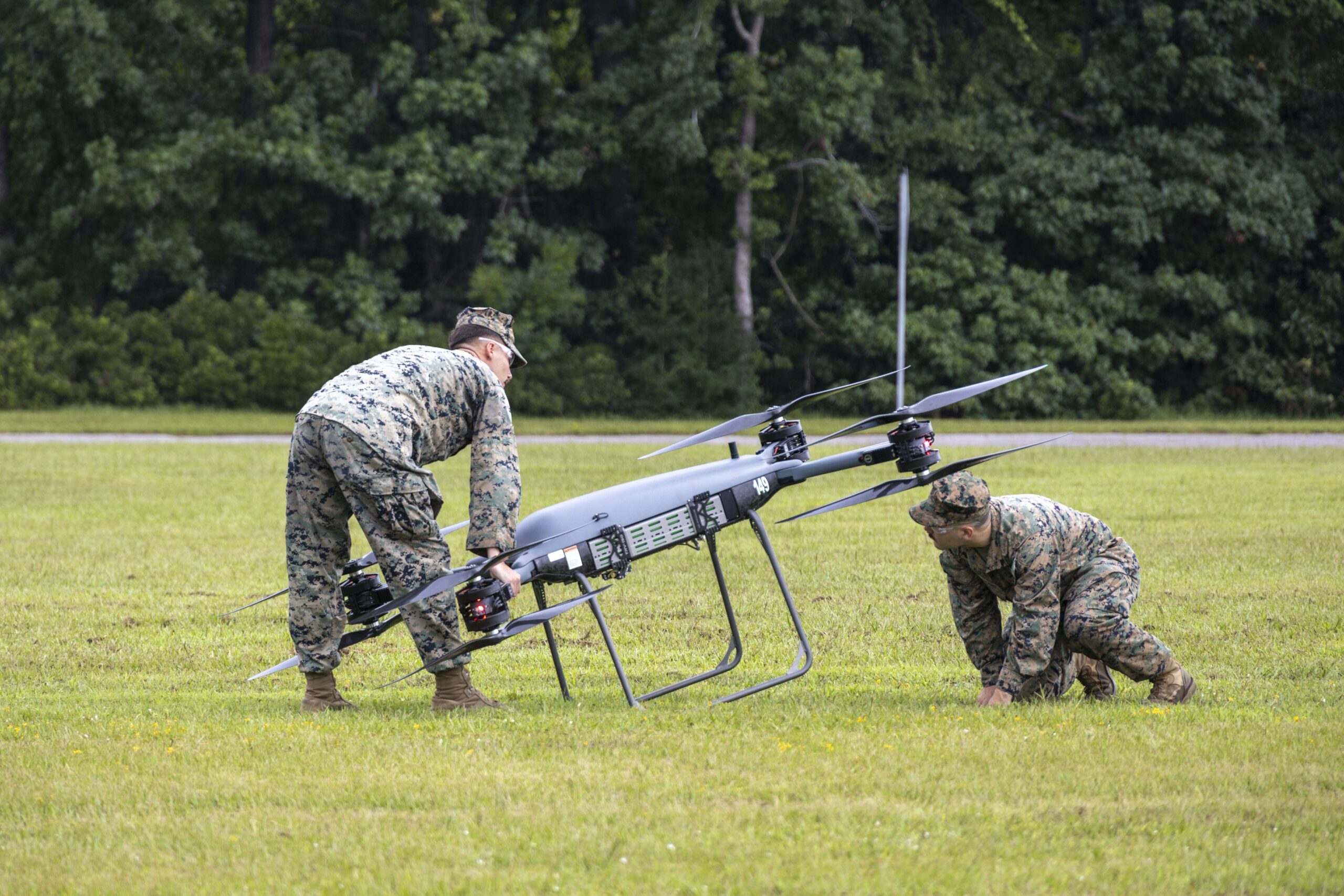
Commanders note that the system’s value lies in versatility. The TRV-150 can deliver cargo under combat conditions, support humanitarian missions, or conduct rapid retrieval of sensitive equipment. Its proven performance in Ukraine under real battlefield stress has reinforced Marine Corps confidence in its effectiveness.
The system’s modularity and ruggedness allow Marines to keep it in service with limited support infrastructure, while its autonomous flight features reduce operator workload.
As with other unmanned initiatives, the Marine Corps envisions TRV-150 drones as part of a broader logistics network that blends crewed and uncrewed systems. The intent is to sustain dispersed forces while minimizing vulnerabilities.
The introduction of the TRV-150 comes as U.S. forces continue to study Ukraine’s extensive use of drones in combat. Observers have noted that logistics platforms, though less publicized than armed drones, may have equal impact in sustaining combat effectiveness and saving lives.