


- The U.S. Army confirmed it used plywood tanks during JPMRC 26-01 in Hawaii to simulate armored threats for training.
- The imitation vehicles were mounted on Humvees and commercial pickups to create realistic opposing-force scenarios at lower cost.
The United States Army confirmed in an official release that it deployed “wooden tanks” during the Joint Pacific Multinational Readiness Center (JPMRC) Rotation 26-01 at Schofield Barracks, Hawaii, on Nov. 6, 2025.
The service referred to these systems as an “opposing force tank simulation set,” describing them as an effective and economical tool to support large-scale training.
The replicas are built from plywood and basic structural materials, designed to imitate the visual profile of armored vehicles. Mounted on commercial pickup trucks, they help create a realistic battlefield picture for Soldiers participating in force-on-force scenarios. This method allows units to train against simulated armor threats without the cost and logistics of deploying actual tanks.
During JPMRC rotations, units face a dedicated opposing force that uses a mix of real vehicles, drones, sensors, and improvised platforms to replicate enemy capabilities.
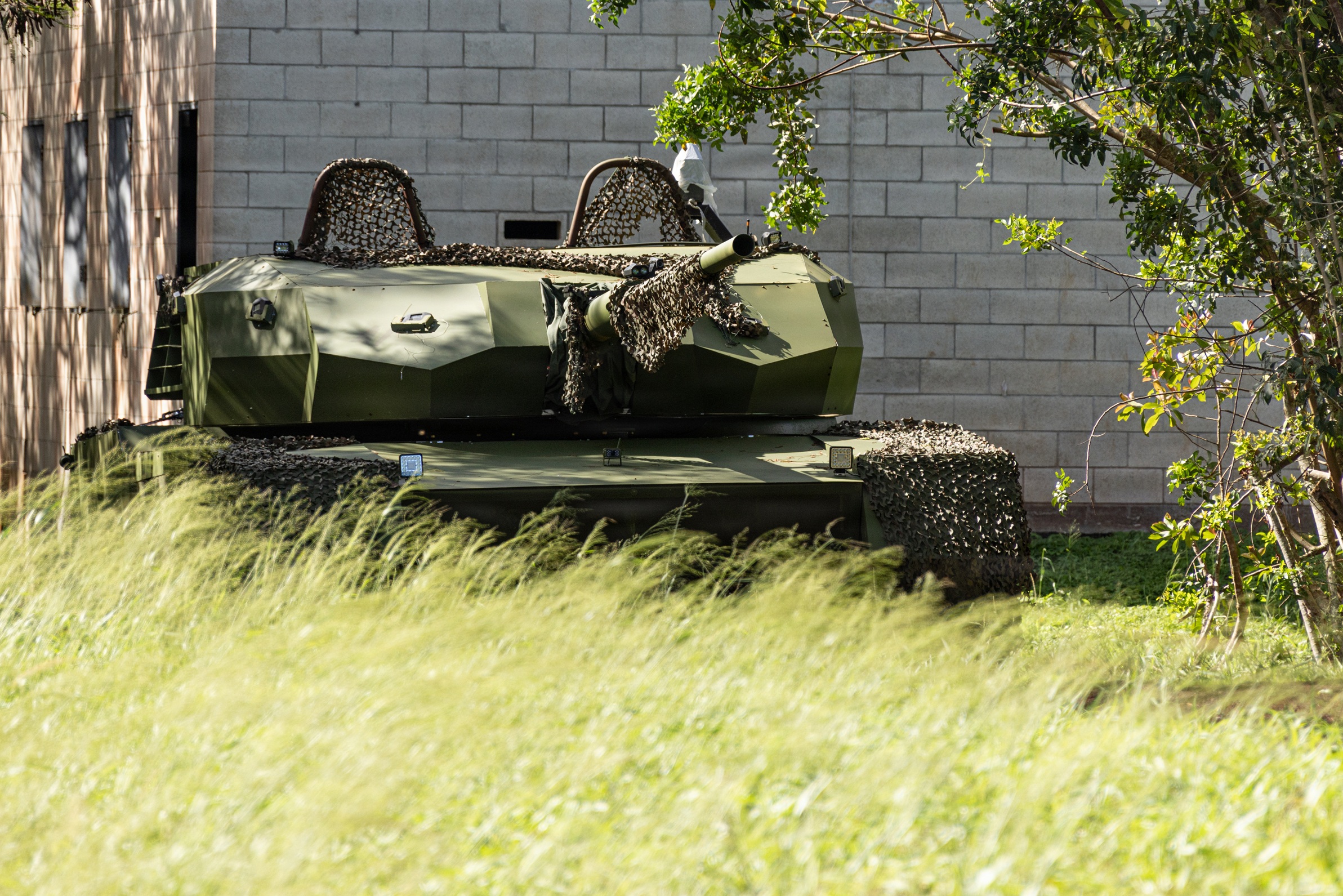
The wooden tank mock-ups were used to simulate armored maneuver elements during several engagements, forcing participating units to adjust their tactics, reconnaissance methods, and engagement procedures. By presenting Soldiers with what appears to be a mechanized threat, the Army says the replicas play a useful role in testing reaction times and decision-making under pressure.
Such imitation systems help preserve the lifespan of operational vehicles, especially heavy platforms that are expensive to transport and maintain. Using low-cost decoy vehicles allows the Army to build larger and more diverse opposing forces, improving the overall training environment.
This approach is widely used across foreign militaries, which rely on mock-ups to represent enemy armor, air-defense systems, artillery, and command posts during major exercises. Countries in Europe and Asia have used similar plywood or metal-frame decoys to train mechanized brigades and airborne units, while some nations incorporate inflatable or composite decoy tanks to rehearse long-range strike procedures.