

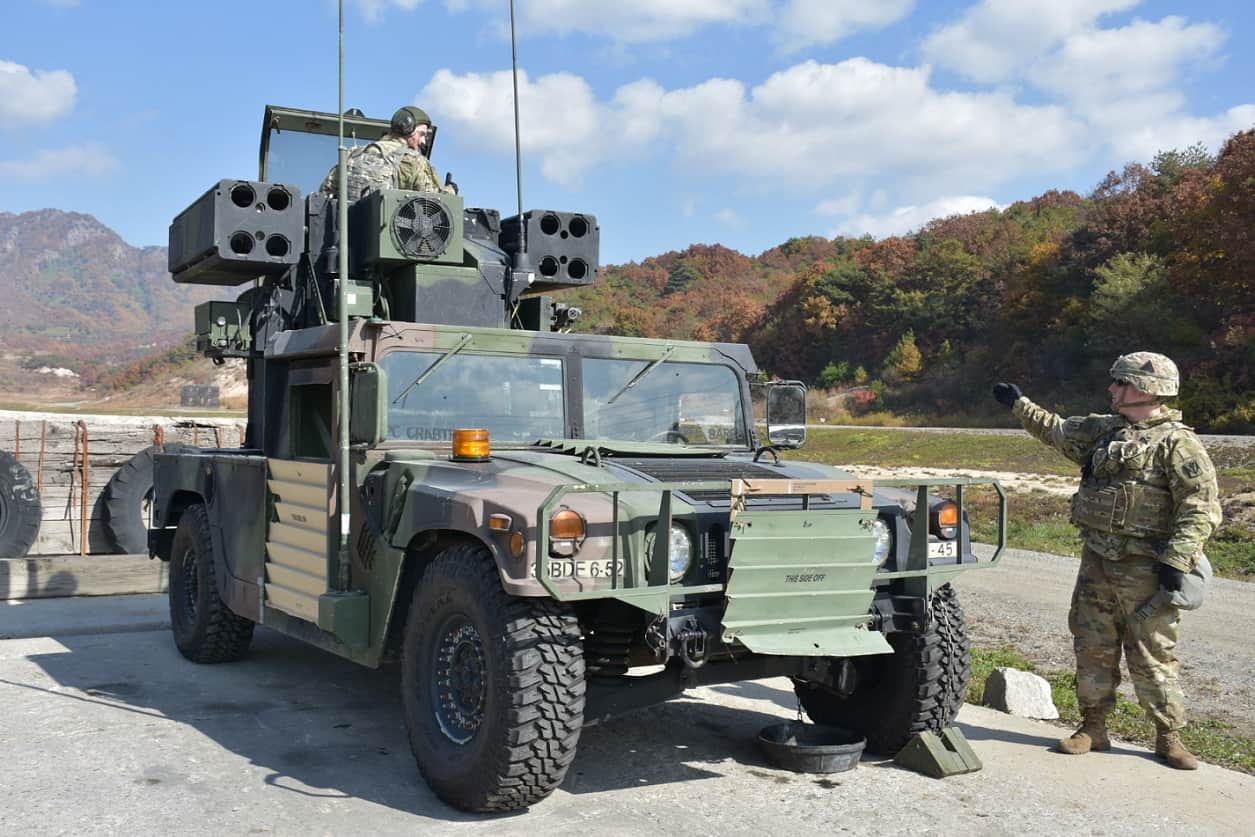
U.S. Army retrofits surface-to-air Stinger missiles

The aerospace giant Raytheon Company reported on Tuesday the U.S. Army is retrofitting surface-to-air Stinger missiles with proximity fuzes to help counter the growing threat of enemy unmanned aircraft systems.

According to a news release put out by Raytheon, the enhancement enables the lightweight, self-contained Stinger air defense system to destroy a wider array of battlefield threats by detonating its warhead near the target, while maintaining the missile’s proven hit-to-kill capability.

“The Stinger enhancement gives our troops exactly what they need – an affordable and effective way to defeat the growing number of enemy UAS targets in the skies above the battlefield,” said Sam Deneke, Raytheon Land Warfare Systems vice president. “The counter-UAS mission is so critical; several allied nations are interested in this upgraded Stinger.”

- ADVERTISEMENT - CONTINUE READING BELOW -

The Army completed qualification testing on the new proximity fuze and will begin delivering the enhanced Stinger missile to soldiers later this year.

During recent testing at Eglin Air Force Base in Florida, the upgraded weapon system scored a perfect 100 percent hit rate against a variety of targets. The missiles were shoulder- and vehicle-launched.

Combat proven in four major conflicts, the Stinger missile has over 270 fixed- and rotary-wing intercepts. Eighteen nations and all four U.S. military services have procured the missile that can be rapidly deployed by ground troops and on military platforms. Stinger is also used on Apache helicopters for air-to-air engagements.

Readers who wish to follow our weekly coverage can subscribe to the Weekly Defense Roundup.

If you wish to report a grammatical or factual error in this article, please let us know by using the online form.

Executive Editor
  • In this story
  • USA

Support The Defence Blog

Independent reporting takes resources. Join us on Patreon.

Become a patron

More Like This

U.S. Army tests balloon-carried solar stratospheric aircraft

U.S. Army soldiers attached a solar-powered fixed-wing aircraft to a high-altitude balloon at Orote Airfield on Naval Station Guam on June 24, 2026, and...

U.S. Marines deploy Iron Dome-based missile system to Guam

U.S. Marines from III Marine Expeditionary Force were photographed calibrating and evaluating the Medium-Range Intercept Capability system on Mason Range, Guam, on June 24,...

U.S. Army engineers test drone that breaches wire obstacles

A drone climbed into 40 km/h (25 mph) gusts above a high desert training range in Oregon on June 22, 2026, carrying a live...

Two U.S. destroyers get new electronic warfare suites

Two U.S. Navy guided-missile destroyers have completed a comprehensive mid-life modernization that gives them the most advanced shipborne electronic warfare capability the Navy has...

U.S. Air Force wants a new infrared sensor for its F-15 jets

The U.S. Air Force is looking for industry solutions to upgrade one of the most tactically valuable but persistently underdeveloped sensors on its F-15...