

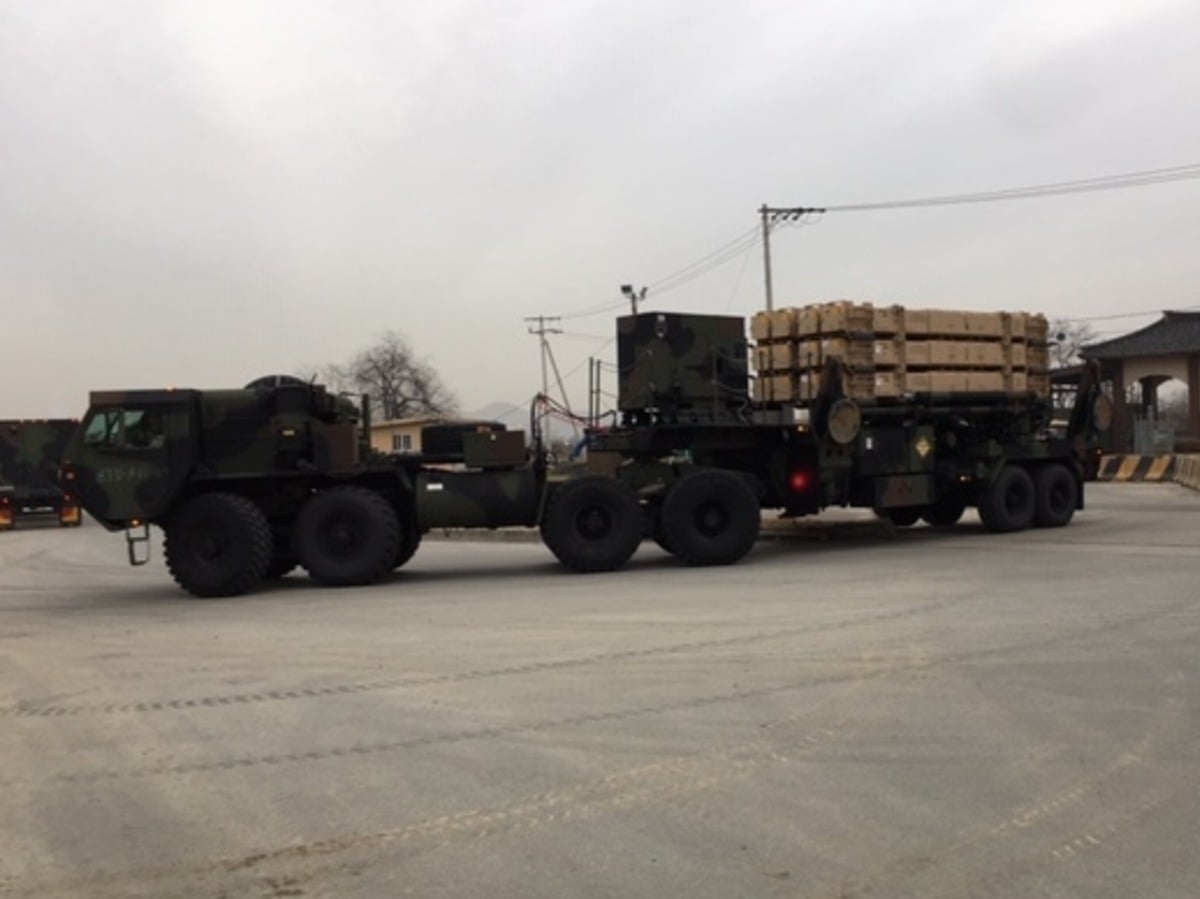
- Lockheed Martin was awarded up to $347,500,000 to develop a containerized Patriot missile launcher and RIG-360 guidance system for the Army.
- Army Contracting Command at Redstone Arsenal, Alabama, issued the sole-source contract on July 1, 2026, citing Lockheed Martin's proprietary technical data.
Patriot missile batteries have a blind spot, a literal gap in their radar coverage that an enemy missile or drone could exploit simply by approaching from the wrong direction, and the U.S. Army has committed another $347.5 million to closing it for good.
Lockheed Martin Missiles and Fire Control, based in Grand Prairie, Texas, has been awarded a contract worth up to $347,500,000 covering the next phase of development for a new containerized Patriot missile launcher and its companion guidance system, according to a federal contract award notice dated July 1, 2026.
The award, formally the Phase 2 contract for the Missile Segment Enhancement Containerized Launcher and Remote Interceptor Guidance 360 Degrees Containerized System program, builds directly on a $61 million Phase 1 contract the Army issued to Lockheed Martin in May 2026 to begin developing and demonstrating the same two pieces of hardware, as The Defence Blog reported.
That earlier reporting laid out exactly why this program exists, and the reason has nothing to do with hiding a launcher inside a shipping container. Conventional Patriot batteries rely on the AN/MPQ-65 radar, a sensor that only tracks threats within a fixed, sector-shaped arc rather than scanning the full 360 degrees around a defended site. When a missile or aircraft approaches from outside that sector, the radar cannot generate the precise fire control tracking data the PAC-3 interceptor needs to guide itself to a successful hit, leaving the battery effectively blind to attacks from the wrong angle, as The Defence Blog detailed in its coverage of the Phase 1 award. That gap is the real problem this $347.5 million contract is paying Lockheed Martin to solve.
The first is the Missile Segment Enhancement Containerized Launcher, a Patriot missile launcher built into a standard shipping container rather than mounted on the boxy M903 vehicles that have carried Patriot missiles for decades. Packaging the launcher this way lets any sufficiently powerful truck transport and drop it at improvised locations, spreading interceptors across a wider area and making individual launch sites harder for an enemy to locate and target during a saturation attack.
The second piece is RIG-360, short for Remote Interceptor Guidance 360 Degrees, a hemispherical guidance device designed to eliminate the radar’s blind spot entirely by providing the missile with tracking and guidance data regardless of which direction a threat approaches from, directly addressing the tactical limitation The Defence Blog identified in its original reporting on the program.

Both systems connect into the Integrated Battle Command System, or IBCS, the Army’s networked air defense architecture that lets a missile fired from one launcher be guided using radar and sensor data collected somewhere else on the battlefield entirely. The Army first proved that networked approach in a successful PAC-3 MSE engagement using IBCS in 2021 and has since moved the system into full-rate production, fielding it operationally with allied forces in Poland, according to prior reporting from Army Recognition. Layering a 360-degree guidance capability and a dispersible, container-based launcher on top of that existing network would give the Army a Patriot force that is both harder to spot and harder to blind.
Work under the new Phase 2 award breaks into eight separate development increments, five covering the containerized launcher and three covering the RIG-360 system, moving progressively from hardware-in-the-loop laboratory testing and a design maturity review through environmental qualification testing, live-fire flight test events, and final validation of the manufacturing processes needed for wider production. That staged approach lets engineers catch design problems early, address deviations discovered in earlier increments, and confirm the hardware and software baseline works before committing to full production, according to the contract’s own scope description.
This new contract lands amid a broader surge in Patriot-related spending that shows no sign of slowing. Lockheed Martin separately won a $4.76 billion Army contract in April 2026 to keep producing PAC-3 MSE interceptors through mid-2030, with roughly 94 percent of that funding coming from Foreign Military Sales customers rather than the U.S. military itself, according to Army Recognition, a reflection of how heavily allied nations are now driving Patriot production as global demand for the interceptor outpaces supply. The company has also rolled out a cheaper companion interceptor called PAC-3 ACE, unveiled at the Farnborough International Airshow in July 2026 and priced below half the cost of a standard MSE round, intended to stretch Patriot magazine depth so the pricier interceptors can be reserved for the fastest and most dangerous threats.