

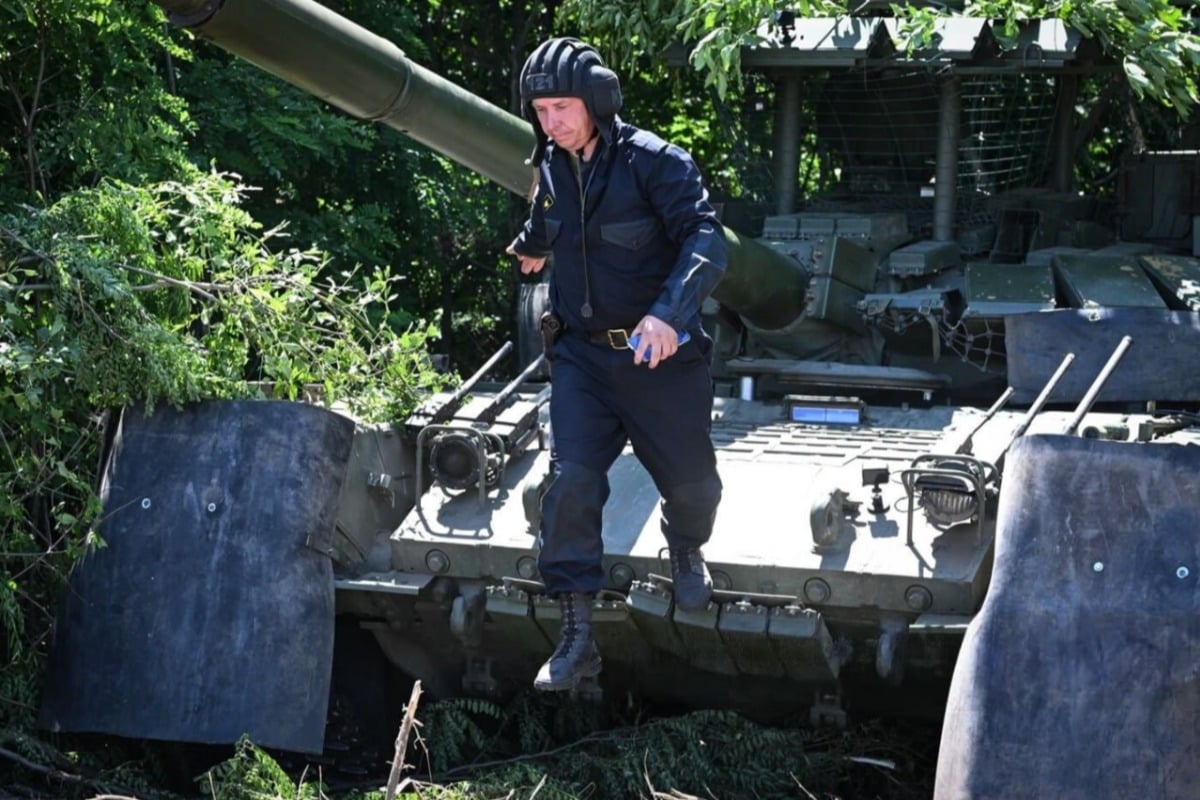
- RIA Novosti published images of a T-72B3A with Arena-M active protection operating with Russia's Center group on the Dnipropetrovsk direction.
- The tank reportedly fired from a closed firing position, an indirect method more typical of artillery than tank combat.
A Russian tank fitted with the country’s signature radar-guided missile defense system has turned up again on the Ukrainian battlefield, this time firing from a hidden position rather than facing the enemy head on.
Photographs published by Russian state media outlet RIA Novosti show a T-72B3A main battle tank equipped with the Arena-M active protection system operating with Russia’s “Center” group of forces along the Dnipropetrovsk direction, with the tank shown firing from what the accompanying caption describes as a closed firing position, meaning the crew fired indirectly from behind cover rather than engaging targets they could directly see, a tactic more commonly associated with artillery than with tanks.
This is not the first such sighting; the appearance is another instance of an Arena-M equipped T-72B3A showing up in that same sector, though the outlet’s report does not specify an exact date for the images or independently confirm how many such tanks Russia currently has deployed there.
Arena-M works by using onboard radar to detect an incoming anti-tank guided missile or rocket-propelled grenade, then automatically firing a countermeasure munition that detonates and creates a lethal fragmentation field roughly 5 to 10 meters (16 to 33 feet) from the tank, destroying the incoming threat before it reaches the armor. Russia’s KBM Design Bureau first demonstrated a version of the system on a T-72 back in 2013, and the Ground Forces began formal trials in 2017 aimed at eventually installing it across both the T-72 and T-90 tank families, with a public television demonstration following in June 2021 that showed the system operating on a T-72B3. That decade-long development timeline stands in contrast to how slowly Arena-M actually reached frontline units once Russia’s full-scale invasion of Ukraine began, since The Defence Blog first reported a confirmed battlefield sighting of an Arena-M equipped T-72B3M only in March 2025, more than three years into the war and a full decade after the system’s initial public unveiling.
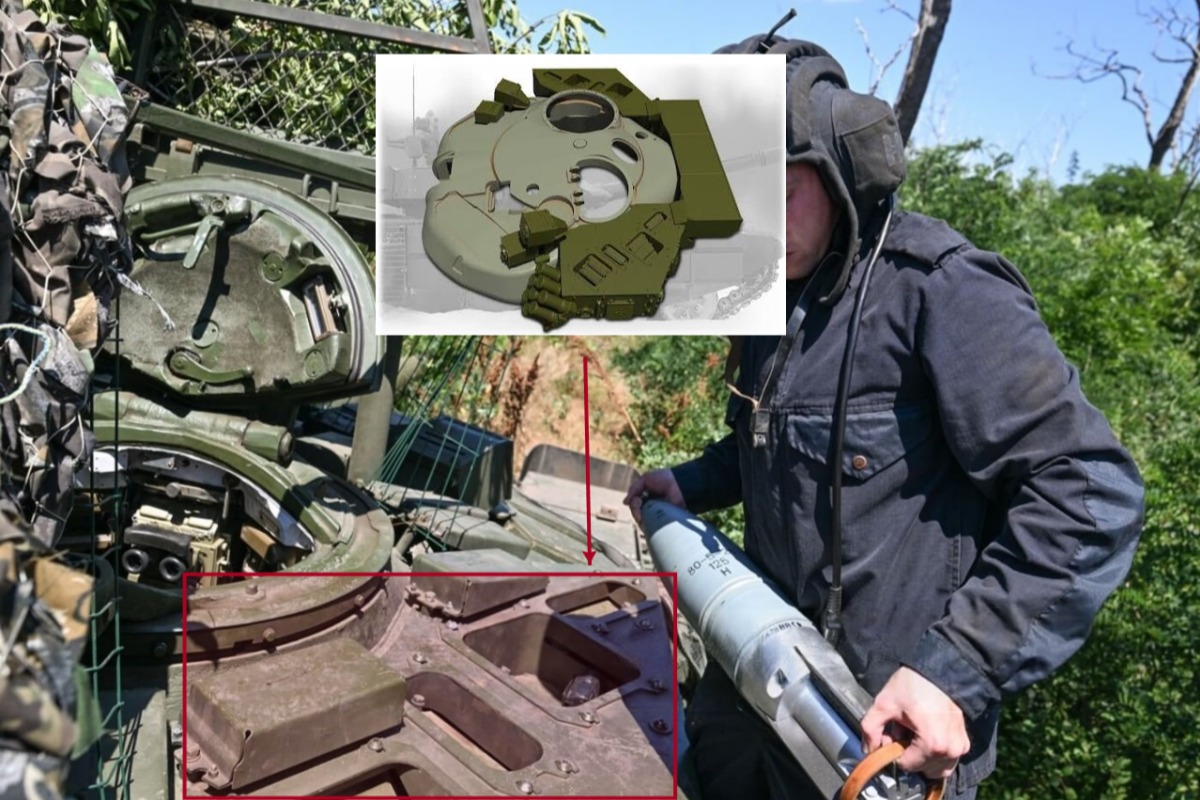
Russian military-linked reporting described an Arena-M equipped T-72B3M appearing at a rear training ground in May 2026, where Center Group assault troops were conducting pre-combat preparation, a sighting that outlet described at the time as the first publicly known case of the upgraded tanks moving toward frontline deployment in that sector. If the new Dnipropetrovsk images accurately represent continued forward movement of these tanks from training areas into actual combat positions, that would mark a meaningful step from preparation to operational use, though nothing in the available reporting independently confirms exactly when this specific tank left a training environment or how long it has been operating in its current sector.
The tactical detail buried in RIA Novosti’s own caption, that this particular tank fired from a closed position rather than direct-fire range, deserves more attention than a passing mention, since it reflects a pattern that has become common across Russian armor throughout the drone-saturated later years of the war. Tanks operating in the open, in direct line of sight of enemy positions, face a much higher risk of being spotted and destroyed by first-person-view attack drones or anti-tank missiles before they can even fire, pushing crews on both sides toward using their vehicles more like mobile artillery pieces lobbing shells from concealed positions rather than the direct-engagement role tanks traditionally filled.