


- Russian company Gumich RTK unveiled the Impulse-PVO, an unmanned air defense system designed to launch kinetic interceptors against reconnaissance drones.
- The system was showcased at Interpolitex 2025 and features eight 1.35 kg projectiles with a top speed of 200 km/h, operating across 700 to 6,200 MHz.
Russian defense firm Gumich RTK has introduced its new robotic air defense system, the Impulse-PVO, at the Interpolitex 2025 international exhibition in Moscow.
The system, designed to engage low-flying reconnaissance drones using kinetic interceptors, is presented as a mobile, unmanned response to evolving aerial threats.
Impulse-PVO is equipped with eight “interceptor drone” projectiles, each weighing 1.35 kilograms and capable of reaching speeds up to 200 kilometers per hour. The system is engineered to defeat small unmanned aerial systems (UAS) without the use of missiles, using direct-impact kinetic rounds launched from a ground-based robotic platform.
According to the company, Impulse-PVO operates across a frequency spectrum from 700 MHz to 6,200 MHz, allowing it to function in complex electromagnetic environments. The compact system is designed to be controlled remotely, forming part of a broader strategy to automate short-range air defense for mobile formations or critical sites.
The Impulse-PVO platform joins a new class of robotic systems in Russia that prioritize autonomous or remotely operated force protection. While the system’s exact deployment timeline remains undisclosed, its public debut comes amid a broader national effort to adapt to the growing use of drones in modern conflict.

The Impulse-PVO’s approach offers a low-cost alternative to traditional missile-based short-range air defense systems, potentially enabling wide-area deployment across vehicle convoys, forward operating bases, or civilian infrastructure.
Notably, a handheld variant of the same interceptor drone system was spotted earlier this year in St. Petersburg, being carried by Russian President Vladimir Putin’s personal security team. During a public appearance in the city, a member of the presidential protection unit was observed with a compact, FPV-style drone configured for counter-UAS operations. The presence of the interceptor drew attention due to its size and clear combat-focused configuration.
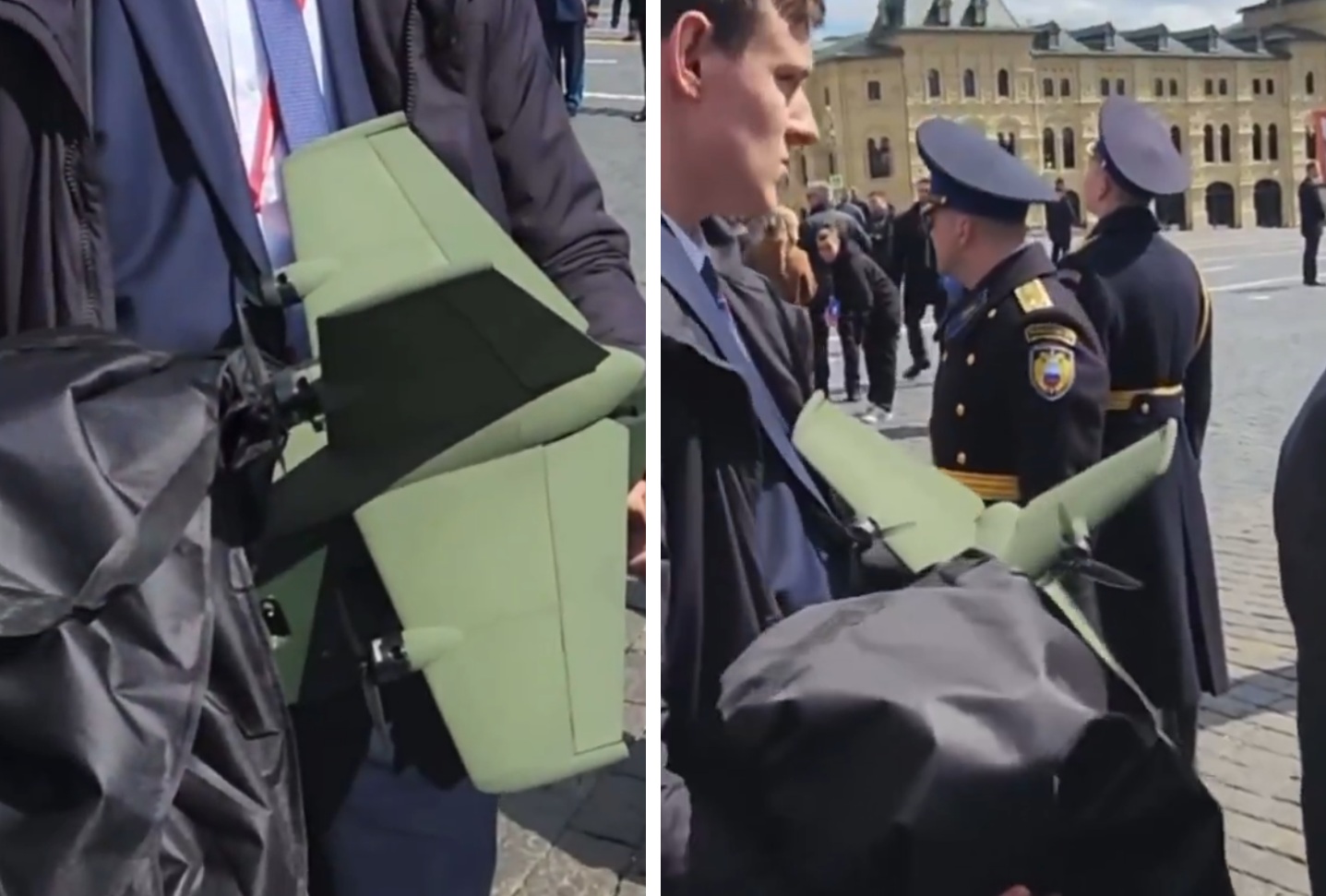
While officials did not comment on the device, the public sighting suggests that the technology underpinning the Impulse-PVO is already being adapted for close protection and VIP security missions, in addition to conventional military use.