


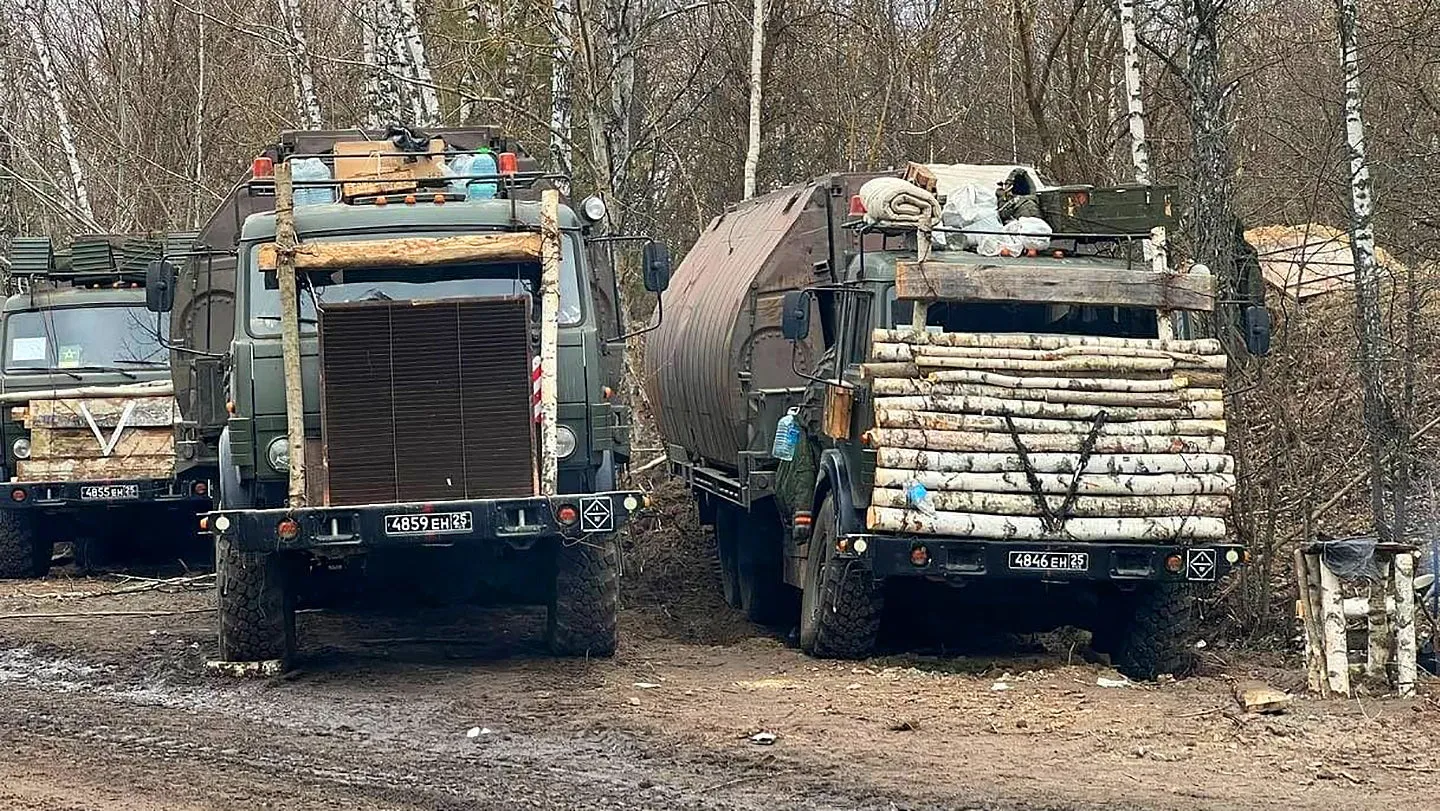
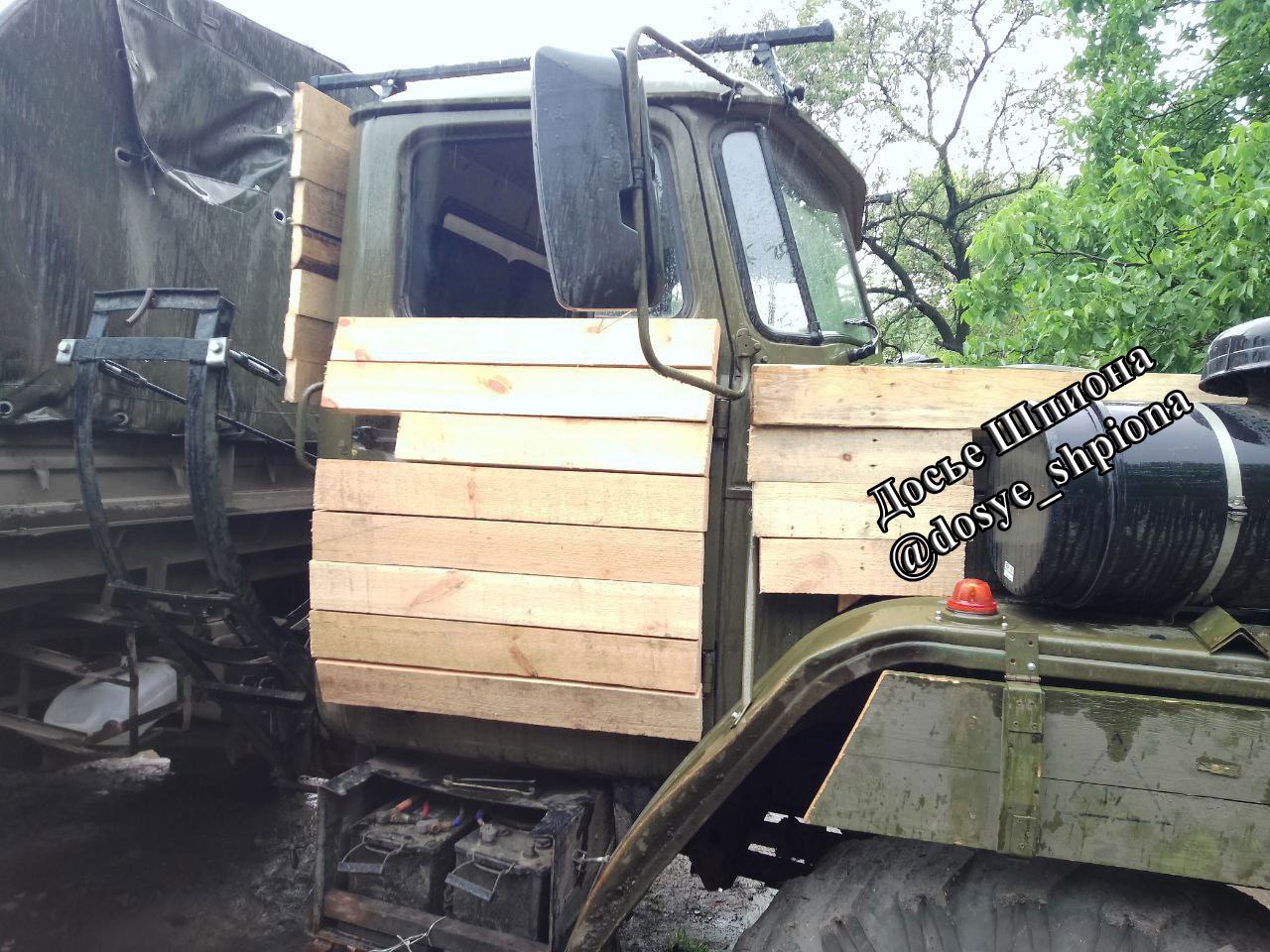
Desperate Russian forces are once again resorting to crude battlefield modifications, shielding their artillery systems with wooden logs in an effort to withstand relentless Ukrainian drone strikes and counter-battery fire.
Images emerging from the front lines show 2S19 Msta-S self-propelled howitzers encased with makeshift wooden armor stacked along their sides. The modifications echo similar tactics seen during the opening months of Russia’s full-scale invasion of Ukraine in 2022, when wooden reinforcements became a common feature on Russian vehicles.
Russian troops, facing sustained attacks from Ukrainian first-person-view (FPV) drones and precision-guided artillery, appear to be improvising to bolster the survivability of their aging artillery platforms. Alongside the wooden logs, crews have also mounted so-called “cope cages” – steel mesh structures designed to deflect explosive drone munitions.
The widespread use of such improvised defenses underscores the severe challenges Russia faces on the battlefield. The Ukrainian Armed Forces have significantly expanded their use of drones and counter-battery radars, forcing Russian units to adapt or risk destruction.
“This isn’t the first time Russian units have turned to wooden reinforcements,” a Ukrainian military official said, speaking on condition of anonymity. “We’ve seen them use logs to reinforce engineering vehicles and light armored platforms earlier in the war. Now, they’re trying the same with heavy artillery.”
The 2S19 Msta-S, a Soviet-era 152mm self-propelled howitzer, is a critical component of Russia’s artillery corps. Its high rate of fire has been instrumental in supporting ground operations, but it remains vulnerable to Ukraine’s growing arsenal of drone-delivered munitions.
While wooden logs may offer limited protection against shrapnel and small FPV drones, they are unlikely to survive direct hits from modern anti-armor weapons or loitering munitions.
The fact that Russian forces are relying on such primitive measures highlights the inability to field adequate protection systems.
As Russia enters its fourth summer of large-scale operations in Ukraine, the improvisation of its troops raises questions about the long-term sustainability of its campaign.