


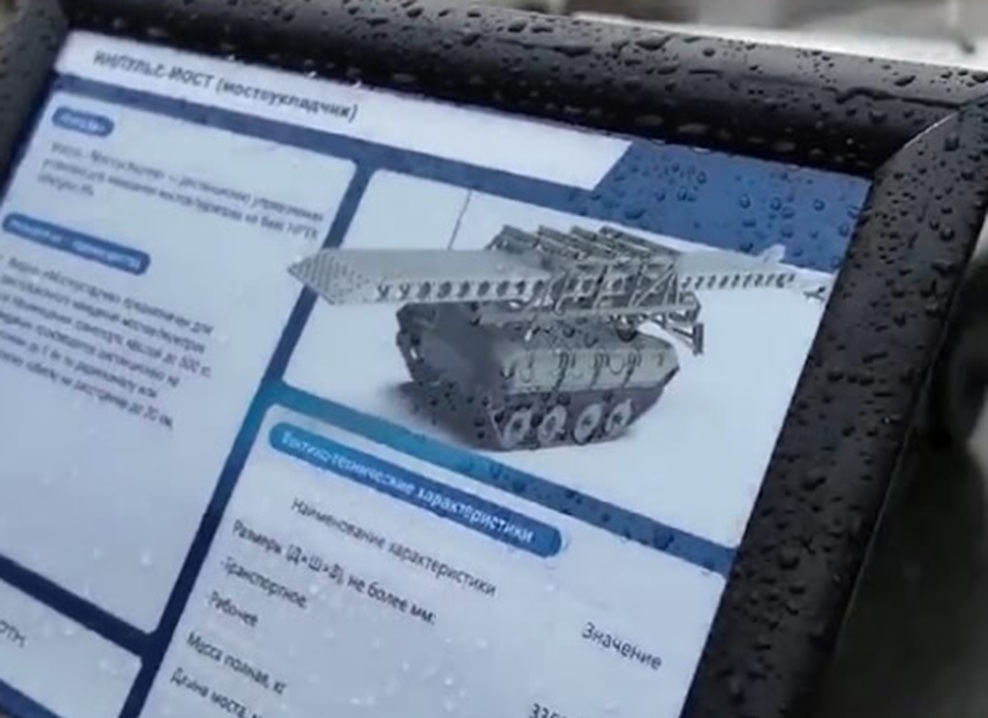
- The Impulse-M is a new Russian robotic bridge-laying system designed to deploy a six-meter bridge remotely for loads up to 500 kg.
- The platform weighs 280 kg and can be controlled via radio at distances up to 5 km or through an optical cable up to 20 km.
Russian engineers have developed a remotely operated assault bridge system called Impulse-M, presented as one of the first robotic bridge-laying platforms intended to speed river and ravine crossings without exposing engineers to frontline risk.
The vehicle, built on the NRTK “Impulse” chassis, is designed to emplace a six-metre bridge and has a reported full mass of 280 kg, with a bridge payload capability described in presentation materials as able to support vehicles weighing up to 500 kg.
The system is operated remotely by radio out to 5 km or by an optical tether out to 20 km, giving commanders a choice between a shorter-range wireless link and a longer-range, cable-based control option depending on the threat environment. Its primary mission, the developers said in accompanying material, is to enable safe emplacement of temporary crossings so assault units or unmanned ground vehicles can traverse obstacles and continue movement.
As shown at the exhibit, the Impulse-M combines remote control, modular bridge sections, and an emplacer mechanism to deploy a six-metre span across small rivers, gullies, or similar obstacles. The platform is aimed at enabling mobility for light robotic convoys and assault elements while reducing the need for direct engineer exposure during contested approaches.
Remote bridge-laying systems address a longstanding operational problem: establishing crossings quickly under threat without sending personnel into exposed positions. By using a tethered control option, commanders can operate the system from a greater stand-off distance where radio jamming or electronic attack might otherwise limit wireless control. The optical cable mode also reduces the risk of signal interception or spoofing in contested environments.
Operational planners view bridging as a force multiplier for maneuver operations, particularly where fixed infrastructure is absent or damaged. A remotely operated bridge emplacer that can deliver a six-metre crossing for light vehicles and robotic systems could shorten breaching timelines and preserve unit momentum in complex terrain. At the same time, the limited payload class — a stated support weight of up to 500 kilograms — defines the scope of vehicles that can cross without additional engineering support.