


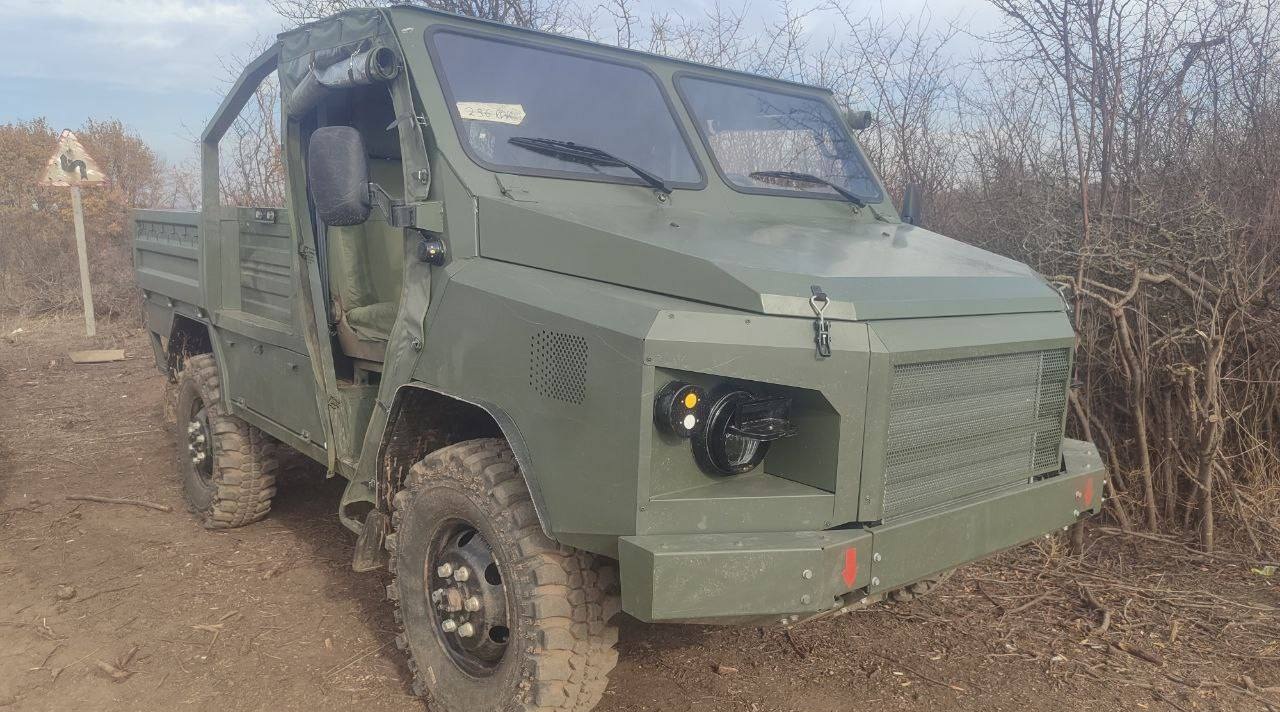
Russia has introduced an updated version of its light tactical transporter, the Ulan-2, developed on the chassis of the GAZ Sobol light van.
The new vehicle has been spotted in use within the area of Russia’s so-called “special military operation,” according to Russian sources.
The Ulan-2 expands the line of improvised military vehicles being built on civilian automotive platforms. Earlier versions of the Ulan were based on the Niva SUV, featuring an open cab, a cargo platform, reinforced bumpers, and power sockets for additional equipment. The Ulan-2 follows a similar design philosophy but offers greater capacity and load-bearing capability due to its van chassis.
Images circulating on Russian social media show the Ulan-2 equipped with what appears to be an electronic warfare (EW) system mounted on its roof. This addition is reportedly intended to provide protection against enemy drones, a growing threat across the front line.
According to Russian defense commentators, the development of these light tactical transports stems from operational necessity. With Russia facing shortages of modern armored vehicles, military units have increasingly turned to modified civilian platforms to meet logistical and mobility demands.
The GAZ Sobol, the base for the Ulan-2, is a light commercial truck produced in Russia and commonly used for cargo and passenger transport. Adaptations for the battlefield reportedly include ruggedized suspension, protective modifications, and integration points for military equipment such as EW modules or light weapons mounts.
The Ulan line represents Russia’s broader trend toward rapidly adapting civilian technology for front-line use. These vehicles are typically assembled in small batches, often with local modifications, to address specific battlefield requirements such as reconnaissance, supply transport, or counter-drone operations.
Russian sources claim that lessons learned from operating Chinese-made Desertcross 1000-3 utility vehicles helped shape the design and function of the Ulan. The new transporter, built with similar tactical mobility goals in mind, reflects Russia’s effort to fill capability gaps under wartime production constraints.
While the Ulan-2 may not match the protection levels of dedicated military vehicles, its low cost and ease of production make it attractive for widespread deployment. The addition of an onboard electronic warfare system marks an attempt to adapt even light vehicles to the evolving realities of drone warfare.