


Poland’s Ministry of National Defence has signed a major contract worth more than 2 billion złoty ($550 million) for the delivery of mobile communications nodes to support the second phase of the country’s Wisła air and missile defense program.
The agreement, signed on September 24, 2025, at the headquarters of Wojskowe Zakłady Łączności Nr 1 S.A. (WZŁ Nr 1) in Zegrze, provides for the production and delivery of 56 Mobile Communications Nodes (MCC) between 2027 and 2030. The contract was concluded between the Armaments Agency, representing the State Treasury of the Republic of Poland, and WZŁ Nr 1, one of the country’s leading military communications companies.
“This is an important moment as we sign another contract with a Polish company, with Polska Grupa Zbrojeniowa and with the domestic defense industry,” said Deputy Prime Minister and Defence Minister Władysław Kosiniak-Kamysz at the signing ceremony. “It is an even more important moment because we are building a multi-layered air defense system for the Polish state — a shield against drones and a shield against missiles.”
The Wisła program is Poland’s flagship air defense project, designed to integrate advanced technologies into a multi-layered shield compatible with NATO systems. It aims to ensure secure, real-time communication and coordination between sensors, command units, and interceptors — a critical capability for detecting and neutralizing incoming aerial threats.
“Today, the best capability for communication between the sensor and the effector — from detection and visualization to transmission and engagement against a drone, a missile, an aircraft, or any aerial platform entering our airspace and threatening our security — is being developed right here in Poland,” Kosiniak-Kamysz said. “Wojskowe Zakłady Łączności Nr 1 has been operating for about 70 years. I have the honor of being the first defense minister to sign a contract here. I am especially pleased that this major agreement for 56 Mobile Communications Nodes under Phase II of the Wisła program is being signed on-site.”
The MCC systems, developed and manufactured by WZŁ Nr 1, will form a key element of Poland’s tactical and operational communications infrastructure. They are designed to provide secure, encrypted, and interference-resistant communication links, enabling command-and-control systems to coordinate air defense responses effectively and reliably under combat conditions.
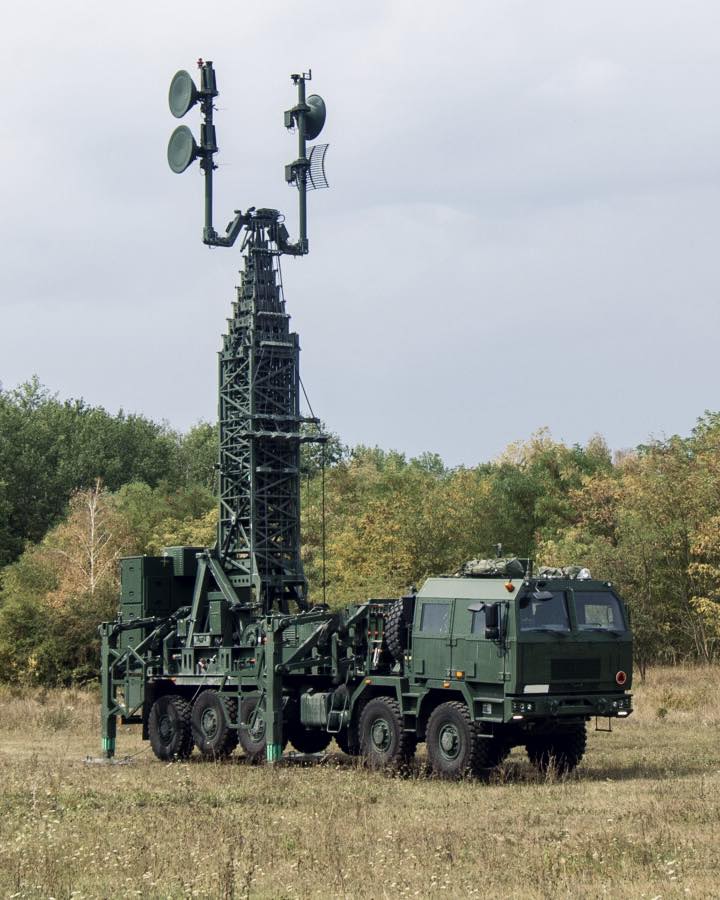
The contract also includes a comprehensive logistics package and a training program to support the integration and long-term operation of the new systems. With a total value exceeding 2.09 billion złoty, it is one of the largest contracts in WZŁ Nr 1’s history.
“I am very pleased that this investment, worth 2 billion and 90 million złoty, is being concluded with a Polish company, within Poland’s defense industry,” Kosiniak-Kamysz added. “The government is investing in the national economy and creating new jobs. The defense sector is becoming a driving force for economic growth, for the Polish economy, and for Polish families. More and more funds will be directed to companies for the procurement of drone, counter-drone, missile defense, and air defense systems.”
The minister also thanked Polish taxpayers for their support of increased defense spending. “Thank you to all taxpayers for the enormous public support for investing in armaments. Thank you for every tax paid, because only from this can we develop these capabilities,” he said.
The MCC delivery is a central element of the second phase of the Wisła program, which focuses on integrating Poland’s command-and-control infrastructure with advanced sensor and interceptor systems. Once deployed, these mobile communications nodes will enable seamless coordination across Poland’s layered air defense network — enhancing response speed, situational awareness, and resilience against evolving threats.
The project is part of Poland’s broader push to modernize its armed forces and strengthen national defense amid a rapidly changing security landscape. With the war in Ukraine underscoring the importance of secure communications and integrated air defense, Warsaw is accelerating investments in systems that improve coordination, reaction time, and operational flexibility across its armed forces.