


- Peru inaugurated a new FAME assembly plant that will produce K808 armored vehicles and KLTV tactical vehicles under partnership with South Korea.
- The government plans to import 99 K808s and 46 K2 tanks between 2026 and 2028 before starting licensed production of 181 K808s and 104 K2s from 2029 to 2040.
Peru has taken a major step toward building a modern defense industrial base, inaugurating a new assembly plant that will produce advanced armored vehicles under a long-term partnership with South Korea.
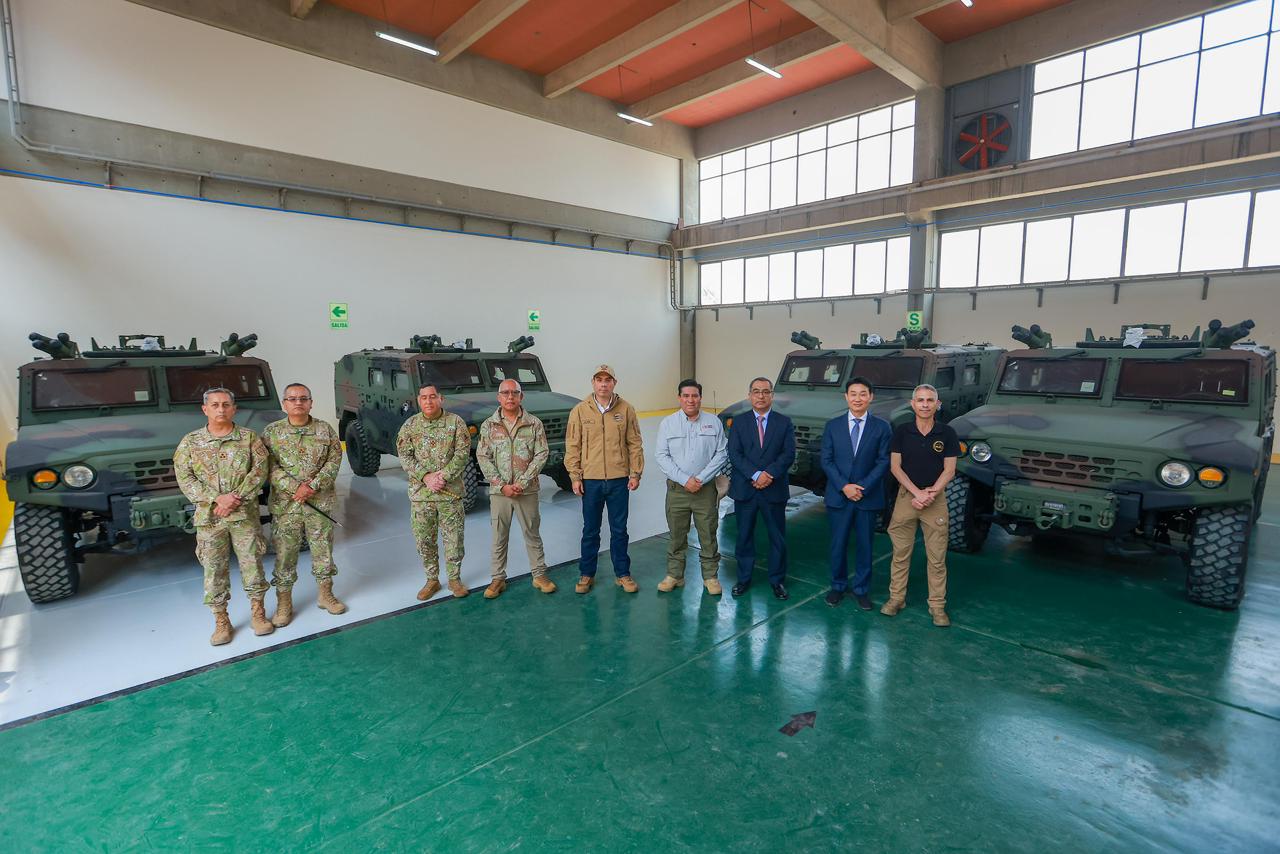
Peruvian President Jose Enrique Jeri Ore officially opened the Special and Military Vehicle Assembly Plant of FAME S.A.C. in Lurigancho, Chosica, an event the government describes as part of a broader plan to strengthen national technological autonomy and expand domestic defense production.
According to the announcement, the plant will assemble the 8×8 K808 armored personnel carrier and the KLTV 4×4 light tactical vehicle. Both platforms originate from South Korea’s defense industry and are already in use across the region. The government states that the new facility is intended to support Peru’s transition away from an aging armored fleet and toward modern systems that can be produced and sustained locally.
FAME, the Army’s state-owned arms and munitions manufacturer, will lead the assembly work in cooperation with South Korean partners. President Jeri Ore said the opening of the facility underscores Peru’s intent to build long-term capacity within the country, linking industrial development with national security goals. The effort aligns with plans to modernize ground forces, which currently rely on vehicles and tanks dating back to the 1970s.
The regional spread of Korean-made vehicles illustrates why Peru selected the platforms. The Chilean Army recently expanded its fleet of Kia Light Tactical Vehicles with a new communications variant. In Europe, Rosomak—a subsidiary of Poland’s PGZ—locally produces Legwan Light Reconnaissance Vehicles, adapted versions of the KLTV, following a Polish order for Raycolt KLTVs placed in 2023. These examples show how partner nations are integrating South Korean tactical vehicles into their force structures, often alongside local industrial participation.
Peru’s own plan is far more extensive. The government intends to replace its ground combat systems through a combined import-and-production model built around Hyundai Rotem’s K808 and K2 families. The timeline begins with imports: 99 K808 armored vehicles and 46 K2 tanks are scheduled to arrive between 2026 and 2028. Beginning in 2029, the new FAME plant will start domestic production under license, manufacturing an additional 181 K808s and 104 K2s between 2029 and 2040.
Officials say the model is designed not only to equip the Army with modern vehicles but also to build an industrial base capable of supporting them for decades. This includes local assembly, workforce development, and the gradual transfer of technical knowledge from South Korean firms Hyundai Rotem and STX.
Peru’s decision to invest in local production comes at a moment when more governments are reconsidering how to sustain armored fleets without relying entirely on foreign supply chains. Licensing agreements and hybrid production programs allow partners to acquire advanced vehicles while also developing national manufacturing capacity. For Peru, the initiative ties military modernization to broader economic and technological goals.