

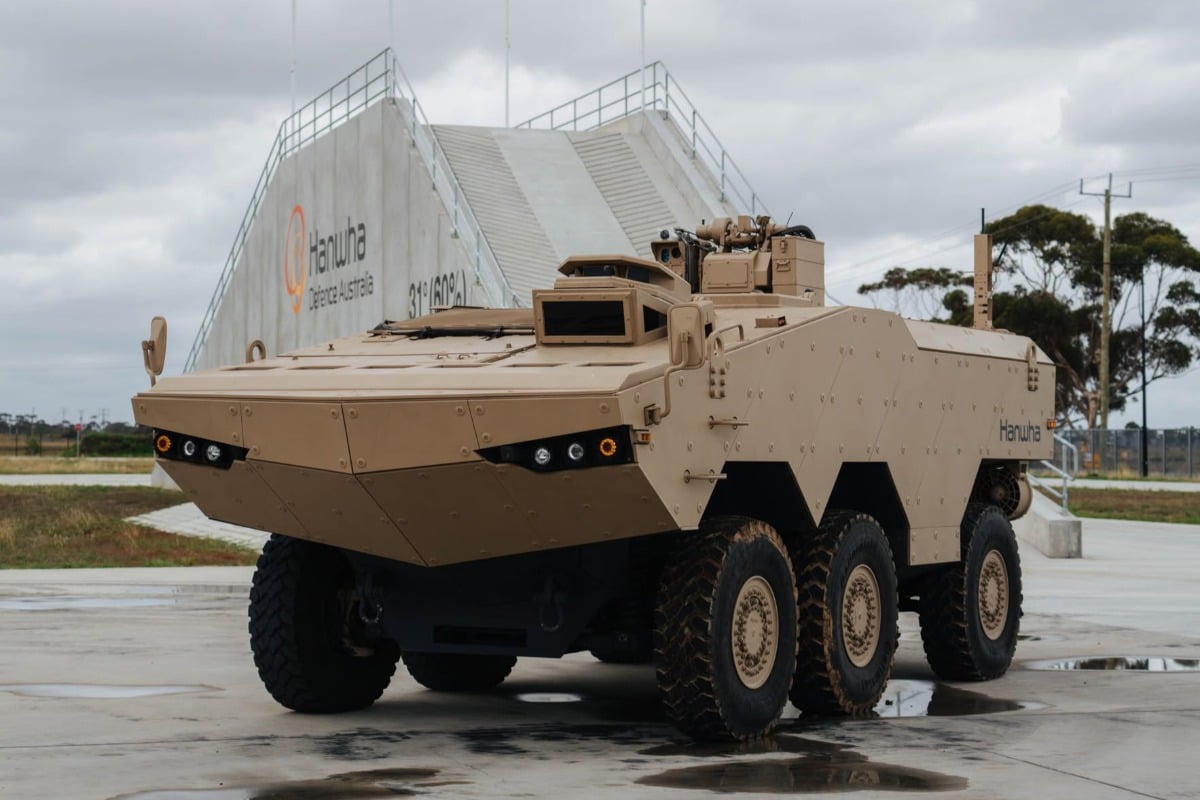
- S&P Global Ratings assigned Hanwha Aerospace an 'A-' issuer credit rating with stable outlook on June 22, 2026, the company's first global credit rating.
- Hanwha Aerospace reported 2025 revenue of $17.45 billion and an order backlog of $24 billion as of end-2025.
A South Korean defense company that was barely known outside Asia a decade ago has received the kind of financial endorsement that opens doors in the international capital markets, after S&P Global Ratings assigned Hanwha Aerospace an ‘A-‘ long-term issuer credit rating with a stable outlook on June 22, 2026, placing the maker of the K9 howitzer and Chunmoo rocket launcher in the same investment-grade tier as some of the world’s most established defense primes.
The rating is Hanwha Aerospace’s first from a global credit agency, and its significance reaches beyond financial housekeeping. An ‘A-‘ rating from S&P, one of the three most influential credit rating agencies in the world alongside Moody’s and Fitch, signals to foreign governments, sovereign wealth funds, and institutional investors that Hanwha carries a level of financial credibility comparable to defense companies that have spent decades building that reputation. It means Hanwha can now raise money directly in international bond markets on competitive terms, reducing its dependence on domestic South Korean financing and giving it the capital flexibility to pursue the kind of large-scale international expansion it has been accelerating since 2022.
S&P’s rationale for the rating rested on three pillars: the global growth trajectory of Hanwha’s flagship weapons platforms, a record order backlog of approximately 37 trillion Korean won (roughly $24 billion) as of the end of 2025, and the company’s demonstrated ability to deliver large quantities of hardware quickly, a differentiator that has repeatedly won contracts in Europe where established Western suppliers struggled to meet demand timelines. The agency also cited Hanwha Aerospace’s importance to South Korean national security as a structural support, a factor that effectively reduces the risk of the company facing existential financial pressure regardless of near-term market conditions.
The K9 Thunder, the self-propelled howitzer that sits at the center of Hanwha’s export success, is a 155 mm (6.1 in) caliber tracked artillery system that fires standard NATO-compatible ammunition to ranges exceeding 40 kilometers (25 miles) and, in its most advanced K9A2 variant, can fire up to eight rounds per minute with a crew of just three through an automated loading system. The system entered South Korean Army service in 1999 and began its export journey in 2001 with a sale to Turkey. Since then it has spread across more than 10 countries, with cumulative exports exceeding 1,500 units worldwide. Across Europe, K9 systems are operated or on order in Poland, Turkey, Finland, Norway, Estonia, and Romania, with combined orders and deliveries accounting for more than 1,300 units in that theater alone. Poland signed contracts for up to 672 units beginning in 2022, Finland added 112 units in a deal worth approximately $630 million in April 2026, and Romania became the tenth member of what Hanwha calls the K9 User Club in a July 2024 contract covering 54 howitzers and 36 K10 ammunition resupply vehicles. Hanwha opened its first European K9 production facility in Romania in early 2026, targeting up to 80 percent localization of production through Romanian industry participation.
The Chunmoo, Hanwha’s multiple launch rocket system, has followed a comparable export arc. The system fires multiple munition types from a single launcher, including the 239 mm (9.4 in) CGR-080 guided rocket and the CTM-290 tactical missile, and can put up to 12 rockets in the air in under one minute. Poland has been the anchor customer since 2022, with contracts totaling billions of dollars, and Hanwha signed a $4 billion follow-on agreement with Warsaw in December 2025 to locally manufacture guided missiles for the system through a joint venture with Polish defense company WB Electronics. Norway selected the Chunmoo as its new rocket artillery system in February 2026, and Estonia placed an order in December 2025, with analysts noting that both countries chose the South Korean system over the American M270 MLRS and HIMARS partly on the basis of competitive pricing and shorter delivery timelines.
The financial results that underpinned the S&P assessment reflect a company operating at a scale that would have seemed implausible five years ago. Hanwha Aerospace posted consolidated revenue of approximately $17.45 billion in 2025, its highest annual result on record, alongside operating profit of approximately $2.02 billion, driven by defense growth and the consolidation of its shipbuilding business. Those numbers put Hanwha in a different financial category from most non-American and non-European defense companies, and the $24 billion order backlog provides visibility on revenue that extends years into the future, reducing the kind of earnings uncertainty that makes credit rating agencies cautious.
The speed at which Hanwha has closed the gap with Western defense primes is worth sitting with for a moment. Poland received its first K2 tanks and K9 howitzers just 15 weeks after signing contracts, according to reporting by Asia Sentinel, a timeline that European manufacturers building comparable systems could not match. That delivery record is not incidental to the S&P rating. It is central to it, because a defense company that can turn orders into hardware faster than its competitors generates revenue faster, sustains lower inventory risk, and builds the kind of customer loyalty that converts one-time contracts into multi-decade relationships. Hanwha now has that relationship with Poland, Finland, Norway, Estonia, and Romania, and is actively pursuing Sweden, Denmark, and Germany.
Kim Cheol-hong, Chief Financial Officer of Hanwha Aerospace, described the rating’s practical value in terms that go beyond balance sheet management.
“This rating, on a level comparable to the world’s leading defense companies, will help secure trust in discussions with foreign governments and in local investment talks,” Kim said. “Building on it, we will strengthen our global competitiveness across space and aviation as well as defense.”
Hanwha’s ambitions extend well beyond selling artillery to European NATO members. The company has been developing air defense systems, unmanned ground vehicles, infantry fighting vehicles, and satellite platforms, and displayed that full portfolio at Eurosatory 2026 in Paris the week before the S&P announcement. The Romanian production facility, which targets up to 80 percent local content and could eventually expand into infantry fighting vehicles and long-range precision strike systems, is the physical expression of a strategy that treats Europe not as an export market but as a home base.