

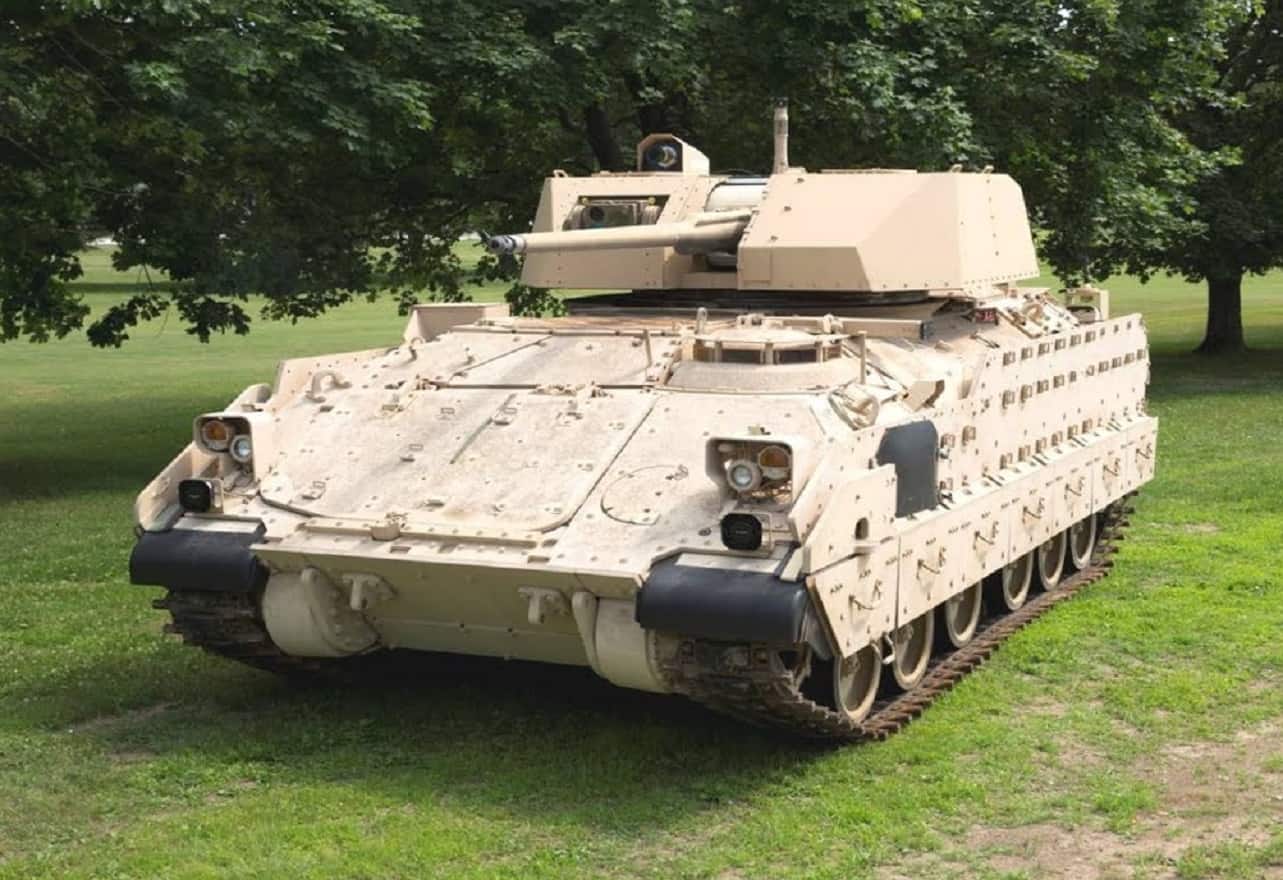
The U.S. Defense Department has issued a request for information for a new remote weapon system for combat vehicles to provide far more firepower and engagement range.
Pentagon asked the defense industry for information and planning purposes as a means for the Government to conduct market research, identifying interested parties and their capability to support the requirement for the XM813 Remote Weapon System and Unmanned Turret, according to a 6 March request for information (RFI) posted on Federal Business Opportunities (FBO).
According to the current information, the XM813 is an improvement of the 30mm MK-44 gun developed for the Future Combat Systems (FCS) program, and is a part of the broader Advanced Lethality and Accuracy System for Medium Caliber (ALAS-MC) Program that was developed by ARDEC in support of PM-GCV.
The purposes of this program are to achieve enhanced lethality in a medium caliber weapon system, meet the GCV IFV Primary Armament Objective requirements, and to support threshold requirements while simultaneously developing a system with growth integrated to meet future threats. The current XM813 is a 30mm medium caliber cannon that will demonstrate optimized effects against personnel in the open or behind cover, as well as behind walls with the use of a multi-purpose fuse that provides airburst effects (AB), point detonate delay (PDD), and point detonate (PD) in one warhead.
It can also provide optimized effects against like materiel targets with the kinetic energy penetrator (KE). The XM813 is an electrically driven, chain operated, dual-feed weapon system, has first round select capability, and fires a suite of 30mm linkless ammunition. The weapon system is flexible and can be fitted to a multitude of platforms, both turreted and RWS.
Also added that the potential weapon system must meet the following criteria:
- Primary Armament: XM813 30x173mm Automatic Cannon; Co-axial Armament: NATO 7.62mm (for example M240B or MK52);
- Sensors: Thermal camera with 70% identification to ranges outwards to 4 km of a NATO sized vehicle target (3.1 m x 3.1 m);
- Platform Integration: Compatible with a medium sized combat vehicle platform (for example Stryker, M113, and AMPV).
It does not constitute a Request for Proposal (RFP) or a promise to issue an RFP in the future.
The notice emphasizes that this notice does not constitute a commitment by the United States Government to contract for any supply or service whatsoever.