


North Korean state media said on Wednesday that a satellite launch failed when the carrier rocket could not reach orbit.
The Korean Central News Agency (KCNA) reported that the National Aerospace Development Administration (NADA) launched the Malligyong-1 spy satellite from the new Chollima-1 “space launch vehicle,” at 6:27 a.m. Wednesday and that the rocket “crashed into the west sea after abnormal ignition of the second stage engine.”
The extremely quick admission of the failure as well as the revelation of the cause of the failure is regarded as a rare case for the North Korean regime.
According to South Korea’s Joint Chiefs of Staff (JCS), it detected a rocket launched from Tongchang-ri in North Pyongan Province at 6:29 a.m., which fell into waters approximately 200 kilometers west of South Korea’s southwestern island of Eocheong, which is some 60 kilometers southwest of Gunsan, North Jeolla Province.
The JCS said the rocket “fell into the waters after an abnormal flight,” and the South Korean military retrieved several parts of the North Korean vehicle, including what was assumed to be a link between the first and second stages of the rocket.
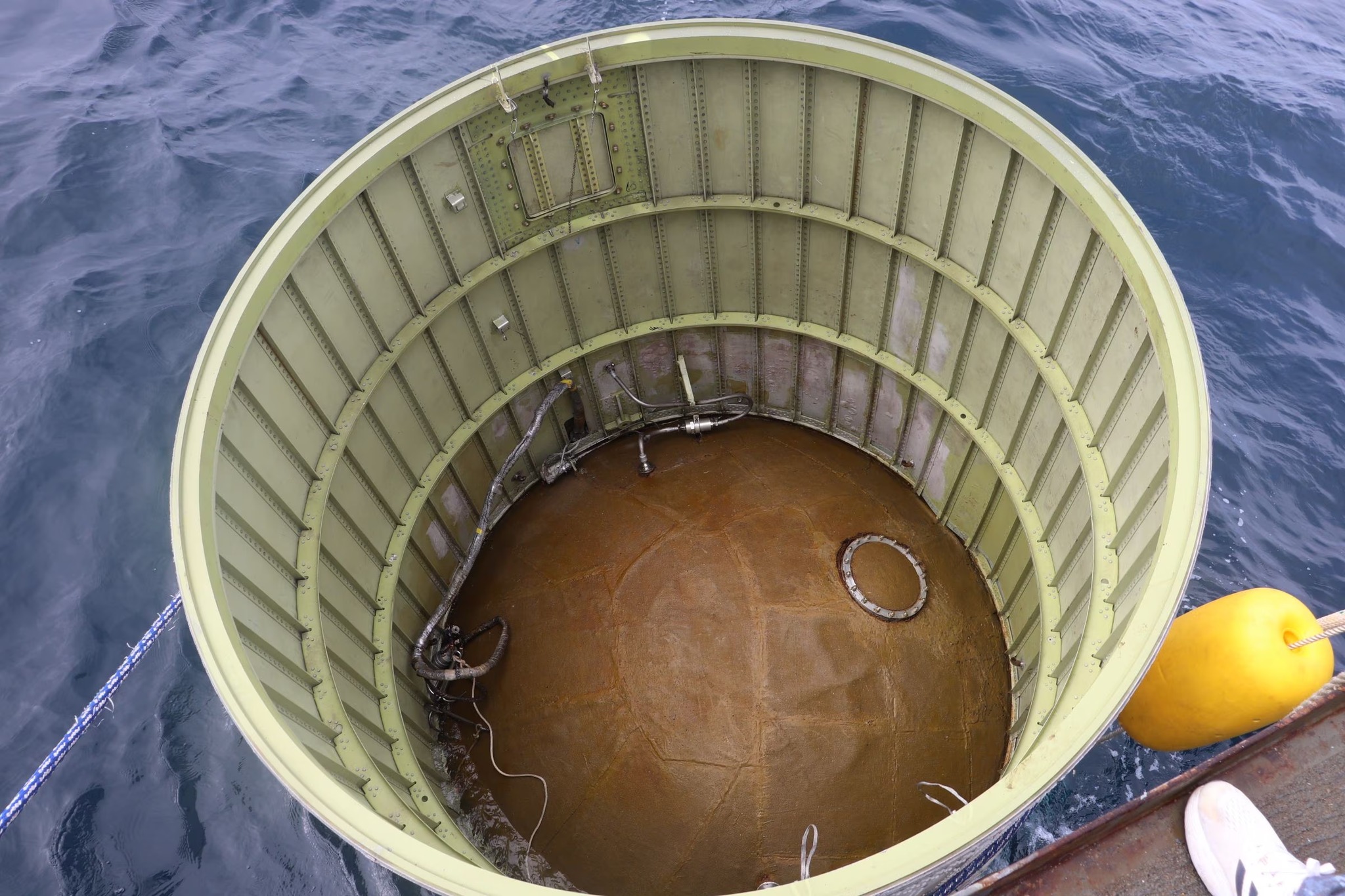
Citing the North’s National Aerospace Development Administration spokesperson, the KCNA said the failure was attributable to “the low reliability and stability of the new-type engine system applied to carrier rocket Chollima-1 and the unstable character of the fuel used.”
The latest launch was North Korea’s sixth satellite launch attempt and was intended to put North Korea’s first “spy satellite” into orbit.