


The Turkish-made Kirpi armored vehicle, once used in joint patrols alongside Russian forces in Syria, is now rolling through Ukrainian forests, serving on the front lines of a very different war.
Originally developed by Turkish defense company BMC in response to growing demand for mine-resistant ambush-protected (MRAP) vehicles, the Kirpi — meaning “hedgehog” in Turkish — was designed to protect troops from IEDs, mines, and small arms fire. With a V-shaped hull and reinforced armor, it quickly became a trusted vehicle for Turkish troops operating in high-risk regions like southeastern Turkey and northern Syria.
According to a former Turkish soldier who also took part in joint Turkish-Russian patrols in Syria, Kirpis were widely preferred over their Russian counterparts.
“The Russians had Tigr and BTR-82A vehicles with weak armor and almost no mine protection,” he said. “Russian commanders insisted that Kirpis lead every convoy.”
He recalled one operation when a joint convoy came under fire.
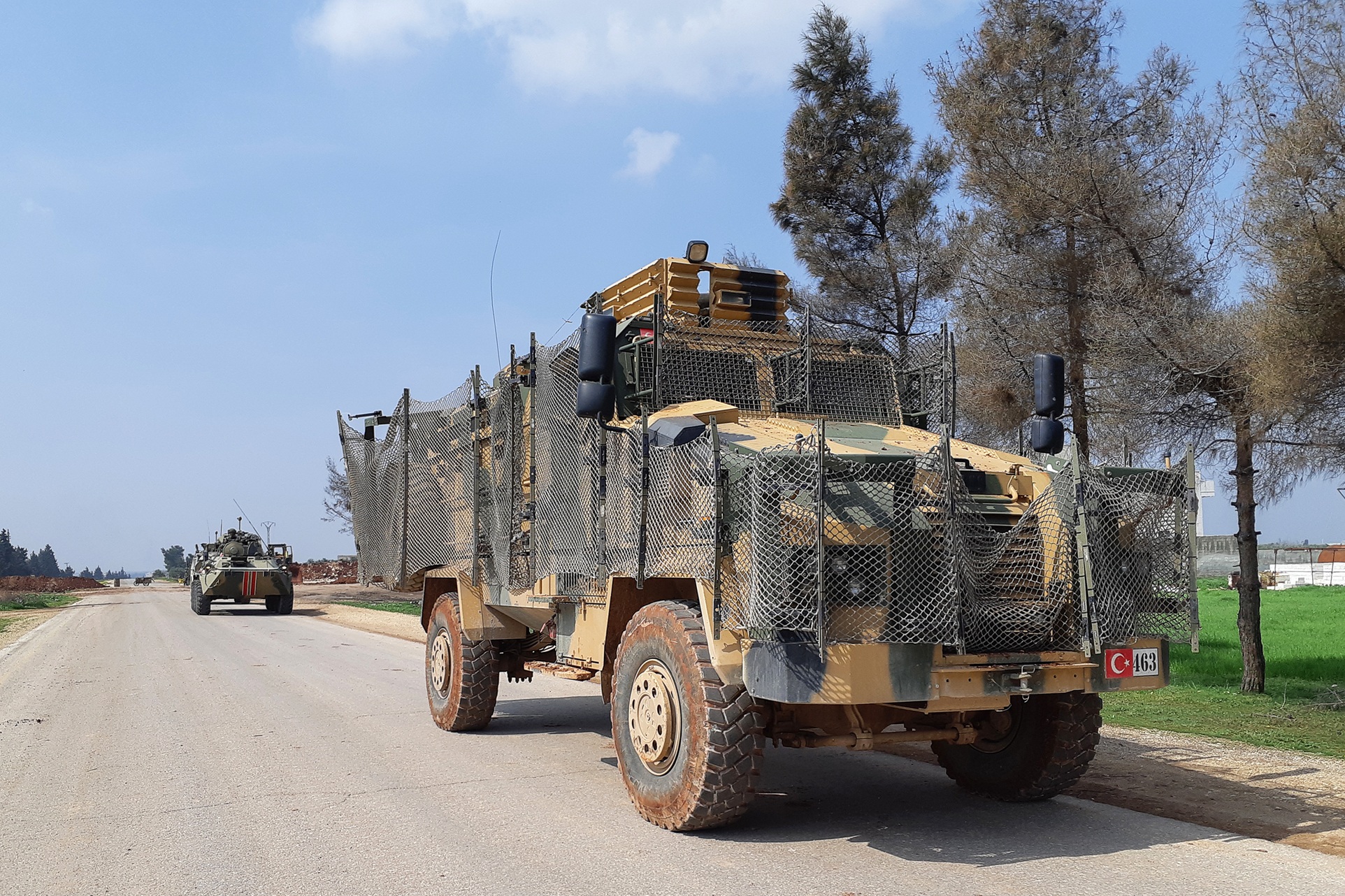
“The Russians were panicking over the radio, begging us to use the Kirpi to shield their BTR carrying senior officers and journalists,” he said. “In another case, a Russian personnel carrier was hit and its crew had to be evacuated by our Kirpi. Those vehicles were our mobile fortresses. We felt safe inside them. The Russians didn’t.”
The Kirpi’s legacy has taken an unexpected turn. Over 200 units were delivered to Ukraine as part of international military assistance following Russia’s full-scale invasion in 2022. Now, the same vehicle that once shielded Russian troops is helping Ukrainian forces push back against them.
Ukrainian soldiers operating the Kirpi in active combat zones describe it as generally reliable and well-suited to their needs, with some caveats.
“It handles obstacles and rubble well,” one Ukrainian serviceman said, “but it lacks power and struggles in mud — it bottoms out easily.” He added that while the size can be a drawback, the comfort and protection it provides are valued.
“In 2023, one of our Kirpis took two FPV drone hits to the front and still made it out of the fight — and that was without any mangals [cope cage armor],” the soldier said. “It’s a solid vehicle. Good ramp access, very comfortable for the troops inside, and the air conditioning works great.”
The Ukrainian military has adapted the vehicles to suit battlefield realities. Following lessons from Turkish deployments, Ukrainian troops began installing protective mesh screens — nicknamed “mangals” — to defend against rocket-propelled grenades and exploding drones. These were fitted in the field using improvised materials and personal funds.

Despite the Kirpi’s durability, one of the major obstacles to their continued use is the lack of spare parts. Ukrainian units report waiting months for critical components, leaving some vehicles idle and forcing troops to rely on unarmored pickups to carry out missions.
Originally developed between 2008 and 2009, the Kirpi was intended to help the Turkish Armed Forces close the gap with international MRAP standards. Its design was modular, allowing for customization with various mission-specific equipment. It has since proven itself across a range of operations — from urban patrols to cross-border campaigns — earning a reputation for its survivability and utility.
That reputation is now being tested in Ukraine, where Russian attacks include not only roadside explosives and small arms, but also frequent strikes by loitering munitions and FPV drones. Ukrainian crews have had to constantly adjust, improvising defenses and learning how to push the vehicle’s limits.
The Kirpi has become another symbol of adaptation on the battlefield — both in terms of how military aid is repurposed and how experience from one conflict zone is applied in another. As long as the parts keep coming, the “hedgehog” will continue rolling forward.