


- Laser Techniques’ BEMIS system uses laser-based profilometry to measure internal wear in artillery and tank barrels.
- The technology is used by major weapons manufacturers and militaries worldwide, including the U.S. Army, BAE Systems, Patria, and Ukraine’s Bohdana artillery manufacturer.
Laser Techniques Co. LLC has introduced a new generation of inspection systems that apply laser-based profilometry to measure wear and erosion inside artillery and tank gun barrels — a development reshaping how militaries maintain heavy weapons. The process of laser bore mapping, is proving a powerful tool to track degradation in barrels, producing rapid, accurate, and repeatable results.
In a conversation with Mr. Jason Waligura, Vice President of Business Development at Laser Techniques Co. LLC, he emphasized that the company’s Bore Erosion Measurement and Inspection System (BEMIS) represents a fundamental shift toward data-driven sustainment of large-caliber weapons. According to company materials, BEMIS provides rapid, non-contact, three-dimensional scans of weapon bores ranging from small-caliber rifles to large 155 mm howitzers. The system generates high-resolution surface maps that allow technicians to detect and digitally measure minute flaws, corrosion, and metal fatigue invisible to conventional visual inspection.
The company says the technology uses a laser sensor acting as a “laser caliper,” capable of measuring distance and surface changes with sub-millimeter precision. When scanned along the length and circumference of a barrel, it creates a digital reconstruction of the bore, enabling analysts to quantify erosion, concentricity, and structural deformation. Laser Techniques describes laser bore mapping as faster and more consistent than mechanical or replica-based inspections traditionally used in arsenals and proving grounds.
As noted by Laser Techniques, its systems have already been deployed across U.S. Army facilities, including Yuma Proving Ground (AZ), Aberdeen Proving Ground (MD), and Watervliet Arsenal (NY), where every 105 mm, 120 mm, and 155 mm cannon produced is inspected using BEMIS technology. Additional users include Benet Laboratories, Picatinny Arsenal, the U.S. Navy’s Surface Warfare Centers, and allied research organizations such as General Atomics and Northrop Grumman.
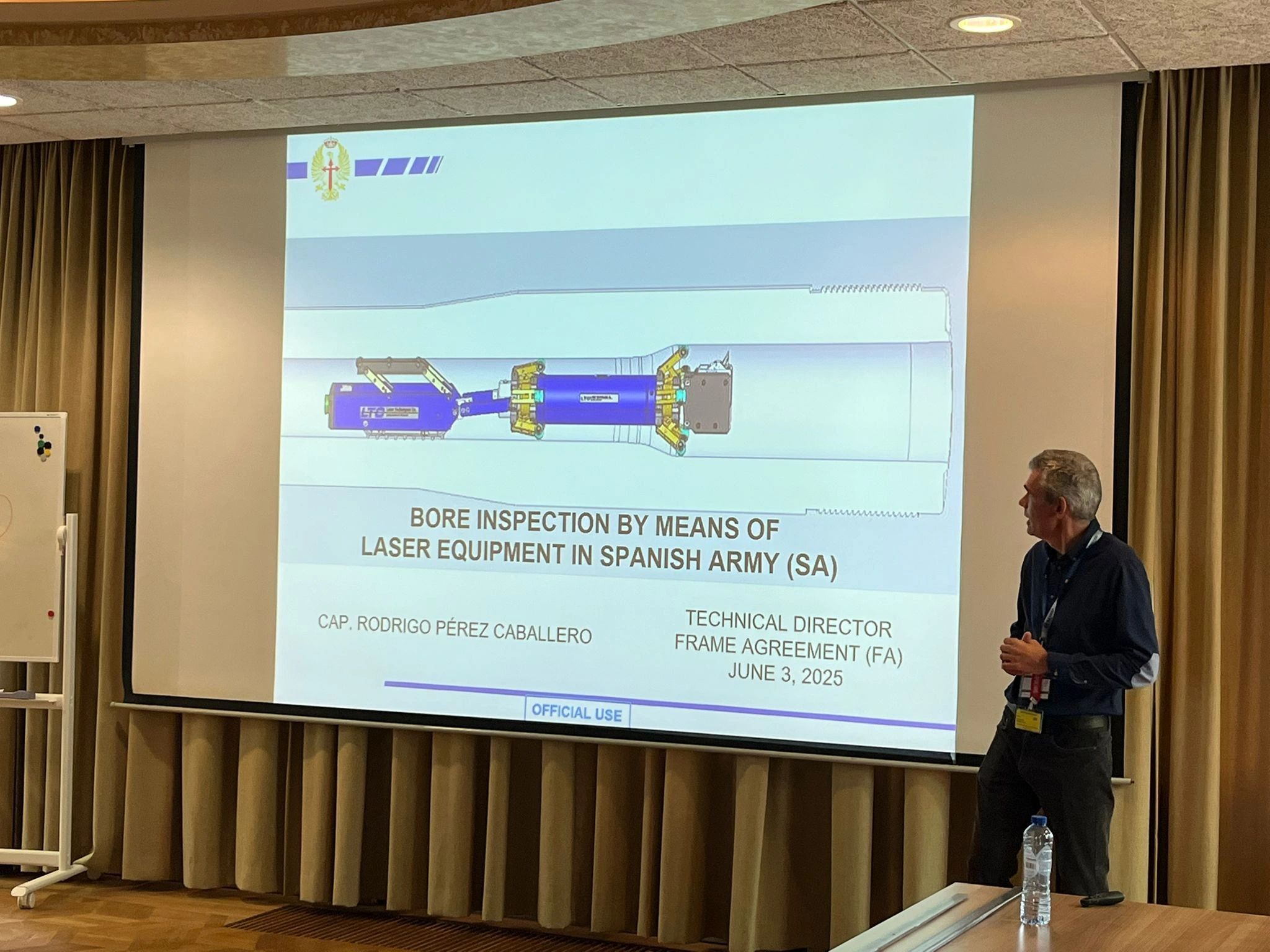
Internationally, the company lists defense clients in more than twenty countries, among them BAE Systems in the United Kingdom; FN Herstal and CMI Defence in Belgium; Krauss-Maffei Wegmann, and Diehl Defence in Germany; Patria in Finland; and the Republic of Korea’s Agency for Defense Development. The system has also been supplied to armed forces in Japan, Spain, France, Sweden, Italy, Austria, and Ukraine, as well as naval and research centers in Canada and Australia. Laser Techniques works closely with its Madrid-based distributor, Laser Techniques Europe, to provide operational support and sales in the European Theatre and beyond.
In Ukraine, the manufacturer of the Bohdana 155 mm self-propelled artillery system has adopted BEMIS technology to inspect and analyze barrel wear during production and post-firing evaluations. According to Waligura, the Ukrainian program’s integration of laser profilometry demonstrates “a growing international recognition that precision bore measurement is essential to sustaining modern artillery under wartime conditions.” It also appears to have given clients the confidence to extend barrel life beyond prescribed norms.
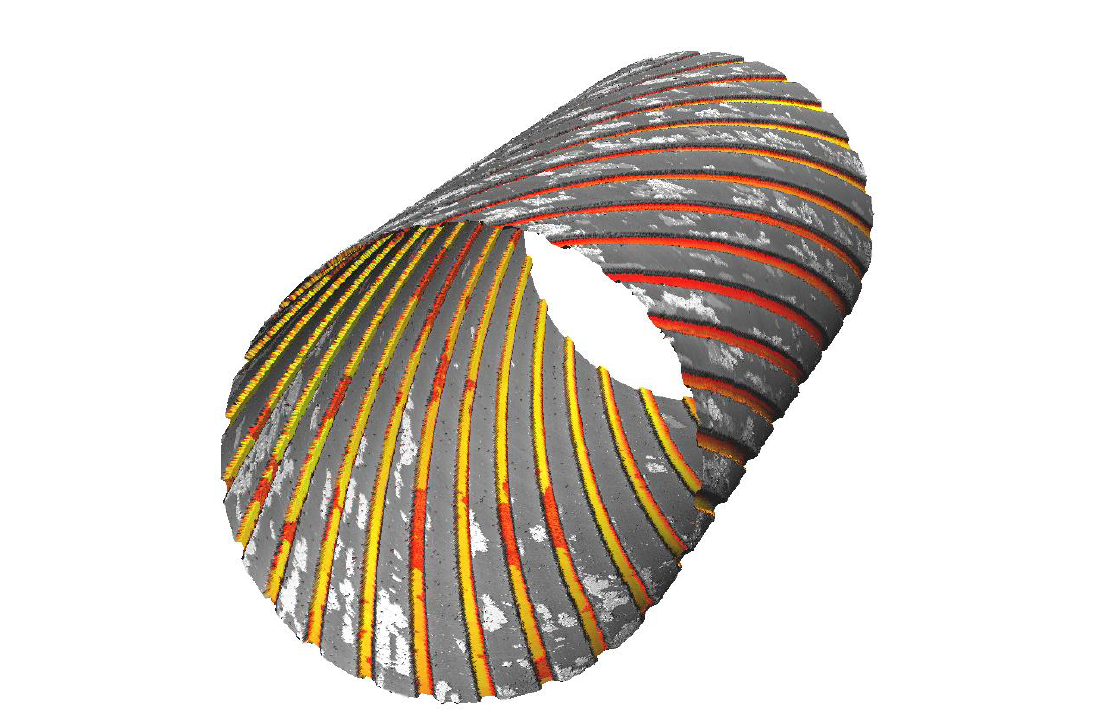
The BEMIS platform’s adaptability allows its use on nearly all weapon classes, from 5.56 mm small arms to large-bore 155 mm artillery and naval guns, in addition to mortar tubes of all sizes. Laser Techniques notes that the system’s modular design enables integration with both shop-floor and field environments, supported by software packages such as LaserViewer 3D and the Bore Erosion Report Generator. These applications provide automated detection of pitting, uneven erosion, and land-to-groove wear, producing both visual and tabular data for long-term monitoring. Add-on kits allow for the user to quickly and accurately measure straightness, and a camera add-on will be ready in early 2026.
One advantage emphasized by the company is speed. The guide tube can be loaded on the muzzle and, after a 5 minute calibration sequence, a high-resolution scan of a 76 mm naval gun, for example, can be completed in about twenty-three minutes at 0.025-inch axial resolution. Inspection results can be viewed in 2D, 3D, or LaserVideo formats, giving maintainers immediate insight into a gun tube’s internal condition. The system also supports data outputs including text, image, and CAD-compatible formats such as .STL and .DXF for integration with digital maintenance records.
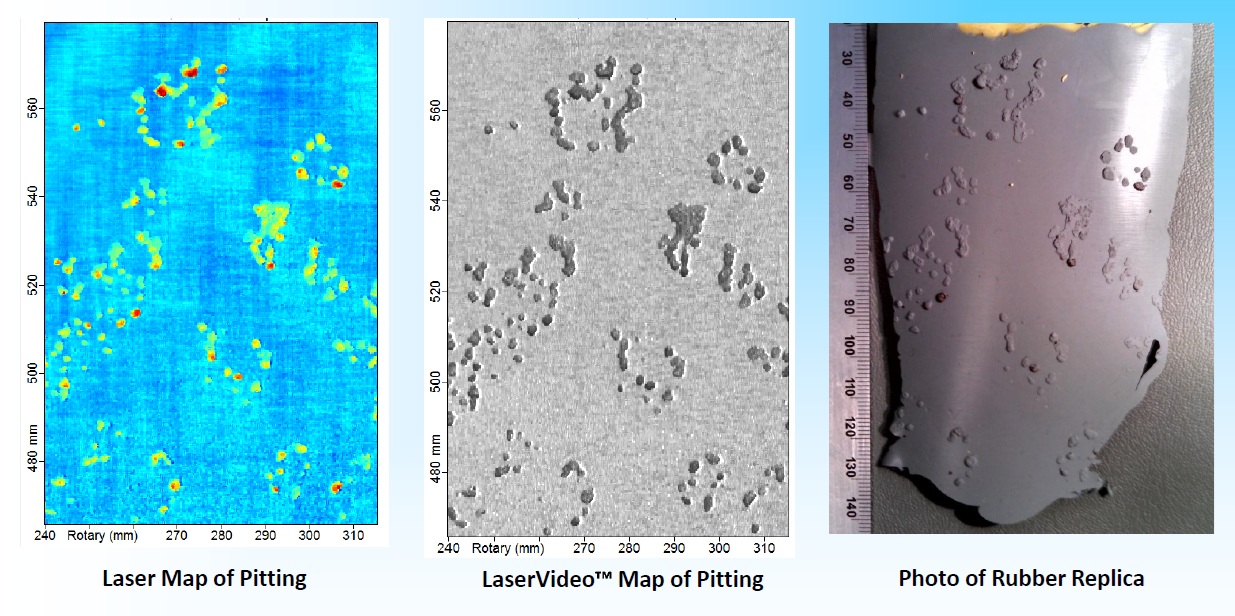
Laser Techniques acknowledges that laser profilometry cannot detect subsurface flaws, but its precision in surface characterization has proven critical in extending weapon life cycles and improving safety. By tracking changes in rifling origin, chrome loss, and pitting depth across firing cycles, operators can build predictive maintenance schedules instead of relying on routine replacement intervals.
From Stryker-mounted 30 mm cannons of the U.S. Army’s 2nd Cavalry Regiment to M777 howitzers in India and Ukrainian Bohdana artillery systems, the company’s technology has been used to document erosion patterns in active service weapons worldwide. For defense manufacturers and maintenance units, the technology represents a transition from manual craftsmanship to data-driven sustainment — one that could redefine how artillery fleets are managed for decades.