

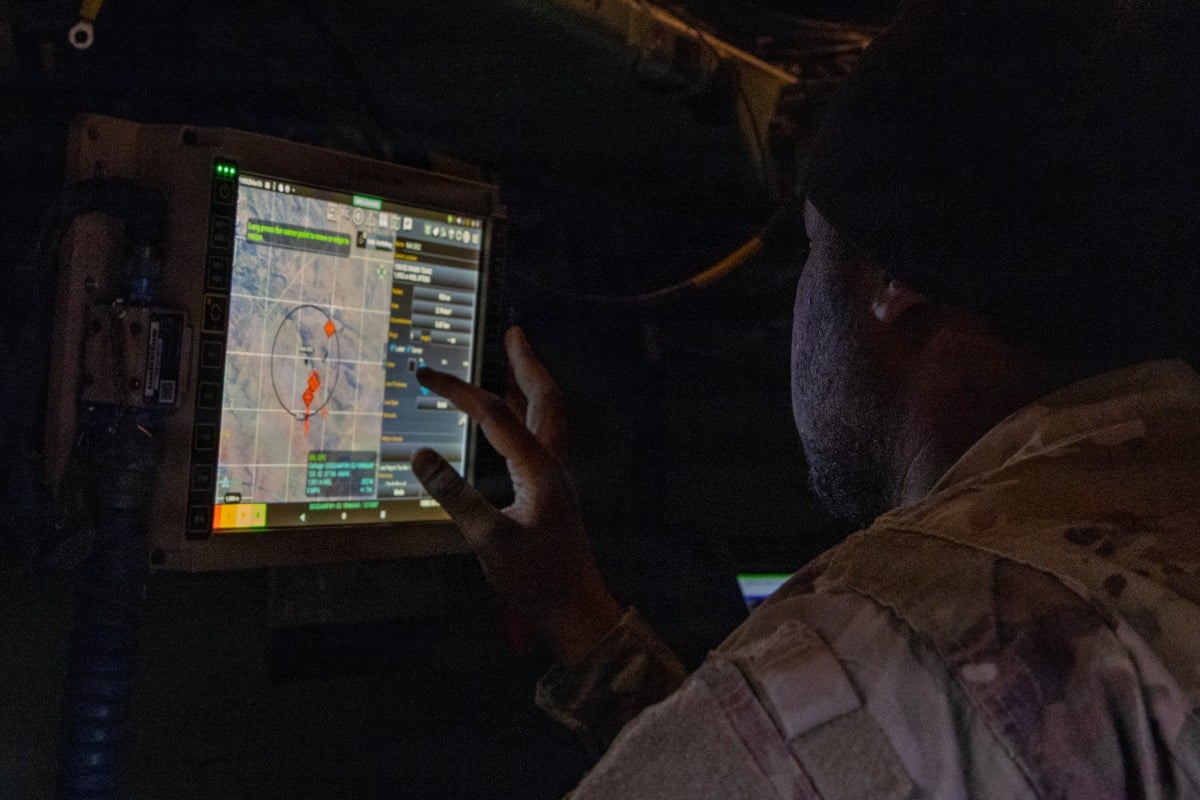
- NATO awarded contracts to Anduril, Palantir, and Athea SAS on July 7, 2026, for the Enhanced Air Command and Control data platform initiative.
- Anduril will deploy its Lattice software within NATO's environment during an initial nine-month evaluation phase before NATO selects one final solution.
NATO has handed three American and European tech companies the chance to reshape how the alliance’s 32 member nations talk to each other during a real air war, awarding contracts to Anduril, Palantir, and French firm Athea SAS on July 7 as part of a competition to build the software backbone for the alliance’s next-generation air defense coordination system.
The contracts, announced at the NATO Summit Defence Industry Forum in Ankara, Türkiye, mark the first implementation phase of a program called Enhanced Air Command and Control, or eAirC2, designed to let NATO’s Command Structure and member nations share operational information fast enough to keep pace with modern air and missile threats.
Coordinating a modern air war across 32 countries means synchronizing radar data, air traffic information, and threat assessments from dozens of different national systems, many built decades apart using incompatible software and security standards, a patchwork that can slow decision-making at exactly the moment speed matters most. NATO Communications and Information Agency General Manager Dr Dylan Browne framed the stakes plainly in the agency’s announcement.
“These contract awards represent an important milestone in delivering improved situational awareness, better coordination, and faster decision making across the NATO Command and Force Structures,” Browne said. “The project is a tangible demonstration of NATO innovation and cooperation with industry to ensure we’re deploying state of the technology that can evolve and be scaled as needed.”
Rather than picking a single winner outright, NATO structured this contract award as a competitive evaluation process. Each of the three companies, Anduril, Palantir, and Athea, will deploy its own software solution within actual NATO environments over the coming months, testing performance against realistic mission scenarios and operational requirements before submitting final offers, after which NATO will select just one company for long-term implementation across the alliance. Nils Schroeter, head of NATO’s independent Programme Office for enhanced AirC2, described the approach as designed for speed rather than a slow, traditional procurement cycle.
“Enhanced AirC2 transforms how NATO delivers Air Command and Control capability,” Schroeter said. “With these contracts, we are positioning the Alliance to meet increasingly complex threats and providing warfighters a platform that can rapidly adapt at the speed of relevance.”
Anduril’s specific piece of this competition centers on a software platform called Lattice, an AI-enabled command-and-control system the American defense technology company has built its business around since its founding in 2017. Anduril, working through its UK and broader European teams, will spend an initial nine-month evaluation period integrating Lattice into NATO’s environment, testing the platform’s ability to handle air traffic control, surveillance, and force management functions simultaneously. According to Anduril’s own description of the technology, Lattice is designed to connect existing national systems through an open architecture rather than replace them outright, letting operational data move securely between different countries’ military networks while each nation retains sovereignty over its own information, a distinction that matters enormously for an alliance where member states have historically guarded control over their own intelligence and operational data even while fighting alongside each other.
This NATO award is not Anduril’s first attempt at building large-scale military command infrastructure, and the company’s recent track record with the U.S. Army offers a preview of what NATO evaluators will likely be testing for. The U.S. Army selected Anduril in June 2026 to lead the common data layer baseline for its own Next Generation Command and Control program, a role that has Anduril’s Lattice software working alongside Palantir’s Foundry platform to create what officials describe as an edge-to-cloud data mesh connecting sensors, applications, and AI models across Army units. That Army relationship builds on a much larger foundation: in March 2026, the Army awarded Anduril an enterprise contract worth up to $20 billion over ten years, a sweeping agreement that consolidated more than 120 separate existing Anduril contracts into a single vehicle any federal agency can now use to purchase the company’s commercial products, with Lattice serving as the technical backbone across nearly all of it. Anduril has separately used Lattice as the command-and-control foundation for counter-drone operations under a Joint Interagency Task Force known as JIATF-401, where the software integrates radar, cameras, and signals intelligence sensors with jammers and interceptors to detect, track, and engage drone threats within seconds rather than minutes.
Palantir brings its own substantial track record to the NATO competition, having built a business over the past two decades specifically around helping government and military organizations fuse enormous volumes of disparate data into usable intelligence. The company’s Foundry platform already works alongside Anduril’s Lattice in the Army’s own next-generation command program, giving Palantir direct, relevant experience with exactly the kind of multi-vendor data integration challenge NATO’s eAirC2 evaluation will test. Athea SAS, the lone European company among the three finalists, gives NATO’s competition a domestic industrial option, a detail that carries political weight for an alliance increasingly focused on building defense technology capacity within Europe rather than relying entirely on American contractors.
The eAirC2 program’s phased delivery approach means capability gets fielded incrementally as it proves itself, rather than NATO betting everything on a single company’s software before confirming it actually performs under realistic conditions, a deliberately cautious structure for a system meant to coordinate life-or-death decisions across an alliance defending roughly a billion people.
For an alliance that has spent years warning about the danger of fragmented, incompatible command systems slowing down decisions during exactly the moments speed matters most, this week’s contracts represent NATO finally putting real money and real deployment timelines behind fixing that problem, rather than simply discussing it at another summit. Whether Anduril’s Lattice, Palantir’s Foundry, or Athea’s European alternative ultimately wins the long-term contract, the underlying bet NATO is making is the same: that a modern, data-centric command system built to survive disrupted communications and adapt to new threats will matter more to the alliance’s future readiness than any single new weapon platform currently on order.