

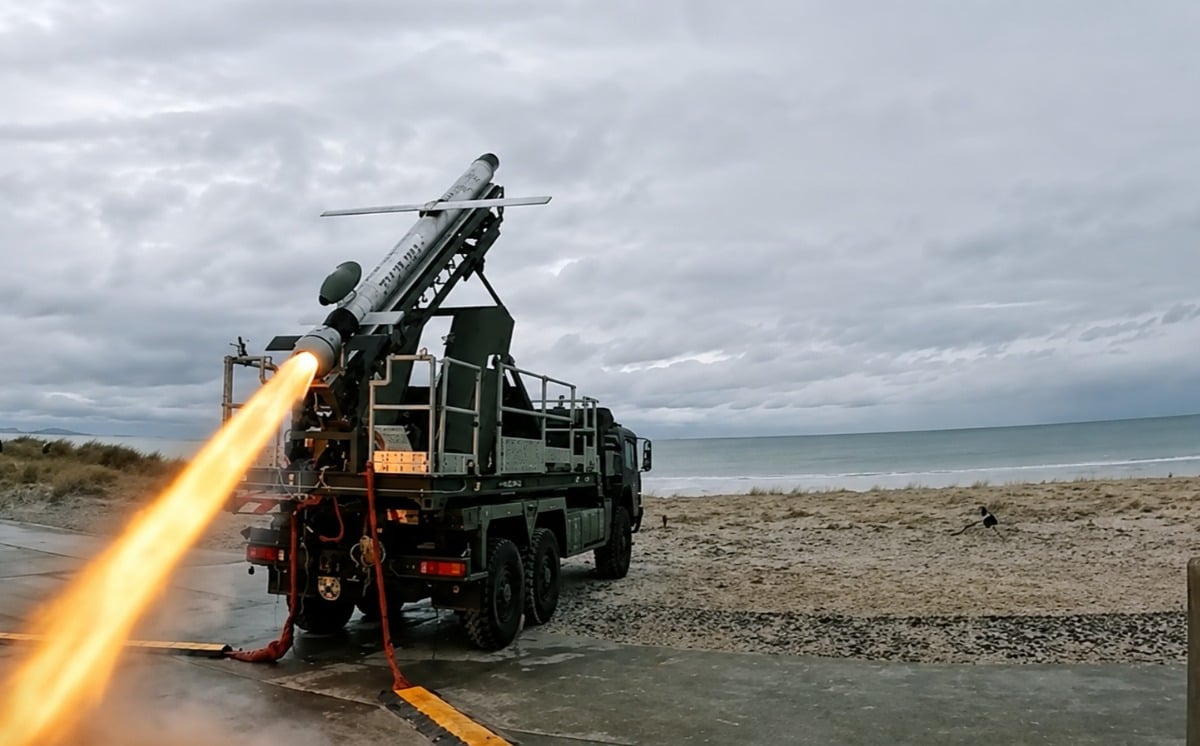
- MBDA completed two successful CROSSBOW ground-launched deep strike firings in December 2025 and February 2026, nine months after the weapon's design began.
- The modular OWE(H) system is described as market ready for production at scale in 2026, with MBDA targeting a 40% production increase across its portfolio compared to 2025.
Europe’s largest missile manufacturer has successfully fired its newest ground-launched deep strike weapon twice in the span of three months, completing a development cycle so compressed that the weapon went from drawing board to live firing in under a year, a timeline that would have been considered impossible by conventional defense industry standards a decade ago.
MBDA, the Franco-British-Italian missile consortium that produces some of NATO’s most capable air defense and strike systems including the Meteor air-to-air missile, the Brimstone anti-armor weapon, and the SCALP/Storm Shadow cruise missile, announced the successful firings of its CROSSBOW one-way effector heavy system, completed in December 2025 and February 2026. The weapon progressed from initial design to live demonstration in just nine months during 2025, a development pace that MBDA describes as evidence of a fundamentally different approach to bringing a new weapon to market, one that invests company resources ahead of any customer contract rather than waiting for a government order to begin engineering work.
CROSSBOW is a one-way effector, military terminology for a weapon designed to fly to its target and destroy it without returning, distinguishing it from reusable platforms like aircraft or loitering munitions that can be recalled. The heavy variant, designated CROSSBOW OWE(H), is designed for ground-launched deep strike, meaning it is fired from a land-based platform and intended to reach targets well behind the forward edge of a battlefield, engaging logistics nodes, command facilities, ammunition depots, and other high-value targets that conventional artillery and shorter-range missiles cannot reach. Deep strike capability has become one of the most actively sought capabilities among European NATO members since the war in Ukraine demonstrated how ground-based precision strike at operational depth can fundamentally disrupt an adversary’s ability to sustain combat operations.
CROSSBOW sits within what MBDA describes as its comprehensive strike portfolio response to the demand for affordable mass in the deep strike battlespace, a phrase that captures one of the defining strategic tensions in European defense planning since 2022. Expensive, highly capable precision missiles like Storm Shadow or the SCALP cost millions of dollars each and take years to produce in significant quantities, making it difficult to build and sustain stockpiles large enough to wage a sustained high-intensity conflict. The concept of affordable mass addresses that problem by developing weapons that are capable enough to matter operationally but cheap and simple enough to produce in the quantities that modern warfare consumes, rather than reserving precision strike for rare, carefully rationed missions because the inventory cannot support sustained use.
That strategic context gives CROSSBOW’s rapid development a significance that extends beyond the technical achievement of a fast development cycle. European governments watching their munitions stockpiles under strain from the demands of supporting Ukraine while simultaneously rebuilding their own inventories are actively looking for weapons they can procure at scale and relatively quickly, a market that CROSSBOW appears designed to serve directly. MBDA has already announced a 40 percent production increase planned for 2026 compared to 2025 across its product range, a capacity expansion that reflects both the scale of current demand and the company’s intent to position itself for the contracts that are expected to flow from the ongoing European defense spending surge.
A weapon conceived, engineered, and fired within a single calendar year, available for production in the year its first shots were fired: CROSSBOW is either a harbinger of how European defense industry can move when it decides to stop waiting for governments to lead, or a single exceptional data point that says more about this moment’s urgency than about any permanent change in how the business of making weapons works.