

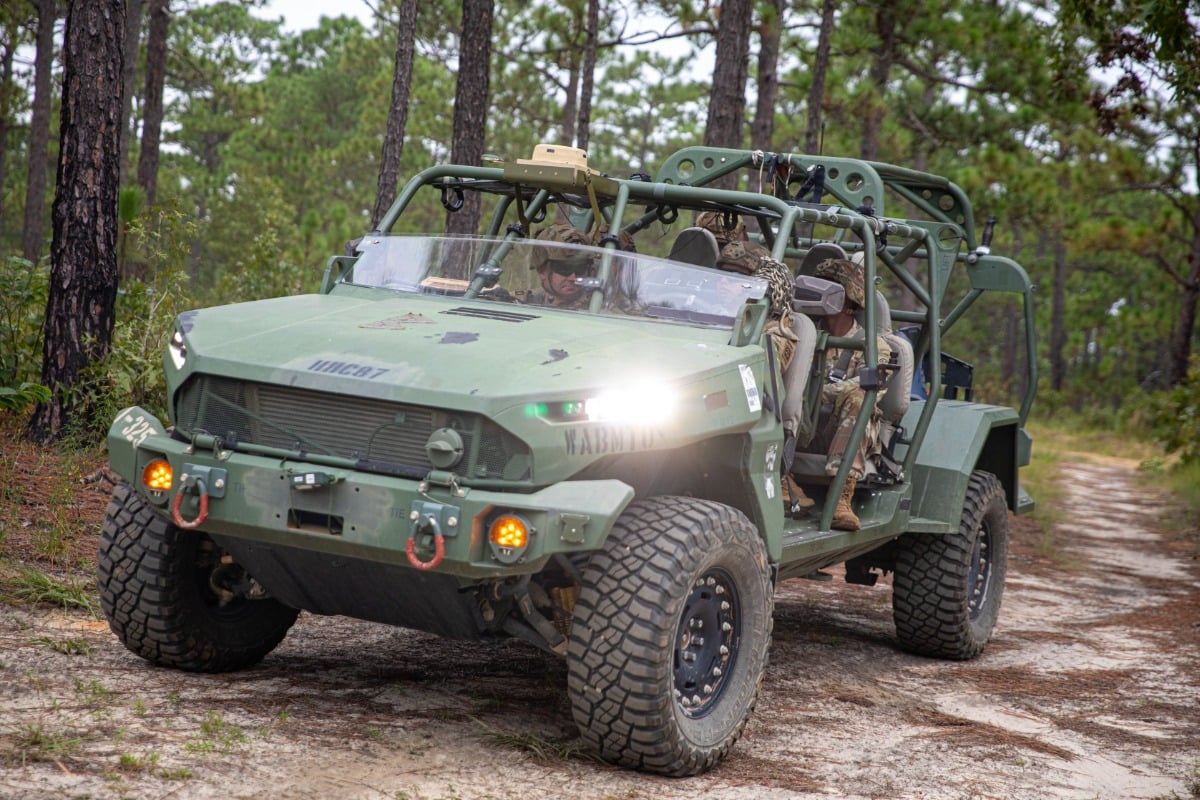
- Idaho Army National Guard's 2-116th Cavalry Battalion reorganized June 18, 2026, at Gowen Field, converting from armor to mobile infantry with Infantry Squad Vehicles.
- The unit surrendered M1 Abrams tanks and Bradley fighting vehicles as part of the Army's Transformation Initiative, with the full brigade transition expected complete by September 2026.
An Idaho National Guard cavalry unit that once rode into battle on horses and later trained on 70-ton tanks reorganized from an armored combined arms battalion into a mobile infantry battalion equipped with Infantry Squad Vehicles on June 18, 2026, in a ceremony that signals how profoundly the U.S. Army believes the character of ground combat has changed.
The 2nd Battalion, 116th Cavalry Regiment, part of the Idaho Army National Guard, officially reorganized at Gowen Field in Boise, Idaho, converting as part of the Army’s Transformation Initiative, which the Guard says is intended to adapt formations and integrate new technologies for future battlefields. The battalion’s two armor companies and one mechanized infantry company, the formations that previously operated M1 Abrams main battle tanks and M2 Bradley fighting vehicles, were all redesignated as mobile infantry companies. A newly formed multi-purpose company was activated, and the unit’s logistics support company was reorganized as a combat logistics company.
The Abrams tank that the 2-116th has now turned in is one of the most recognizable weapons in the American arsenal, weighing approximately 62,000 kilograms (68 tons) and carrying a 120 mm (4.7 inch) main gun designed to engage armored targets at long range. The Bradley fighting vehicle it also gave up weighs around 27,000 kilograms (30 tons) and carries a crew and a dismount infantry element, along with a 25 mm (1 inch) autocannon. What replaced them is strikingly different in almost every measurable dimension: the Infantry Squad Vehicle, a military-adapted version of the Chevrolet Colorado ZR2 pickup truck, weighing a fraction of what an Abrams weighs and designed to carry up to nine soldiers across terrain at speeds and with a logistical footprint that heavy armor simply cannot match.
The logic behind that trade involves a set of operational priorities the Army has built into its Transformation Initiative, which seeks to create forces that are more deployable, more agile, and capable of operating across complex and varied terrain without the massive logistical chains that heavy armored formations require. Heavy tanks and infantry fighting vehicles consume fuel at rates that strain supply lines under sustained combat conditions and present large, identifiable targets in environments where sensors and precision fires have become increasingly capable. The Infantry Squad Vehicle sacrifices the direct protection and firepower of armored vehicles in exchange for speed, deployability, and a considerably smaller logistical footprint, a trade that reflects where the Army believes ground combat is heading.
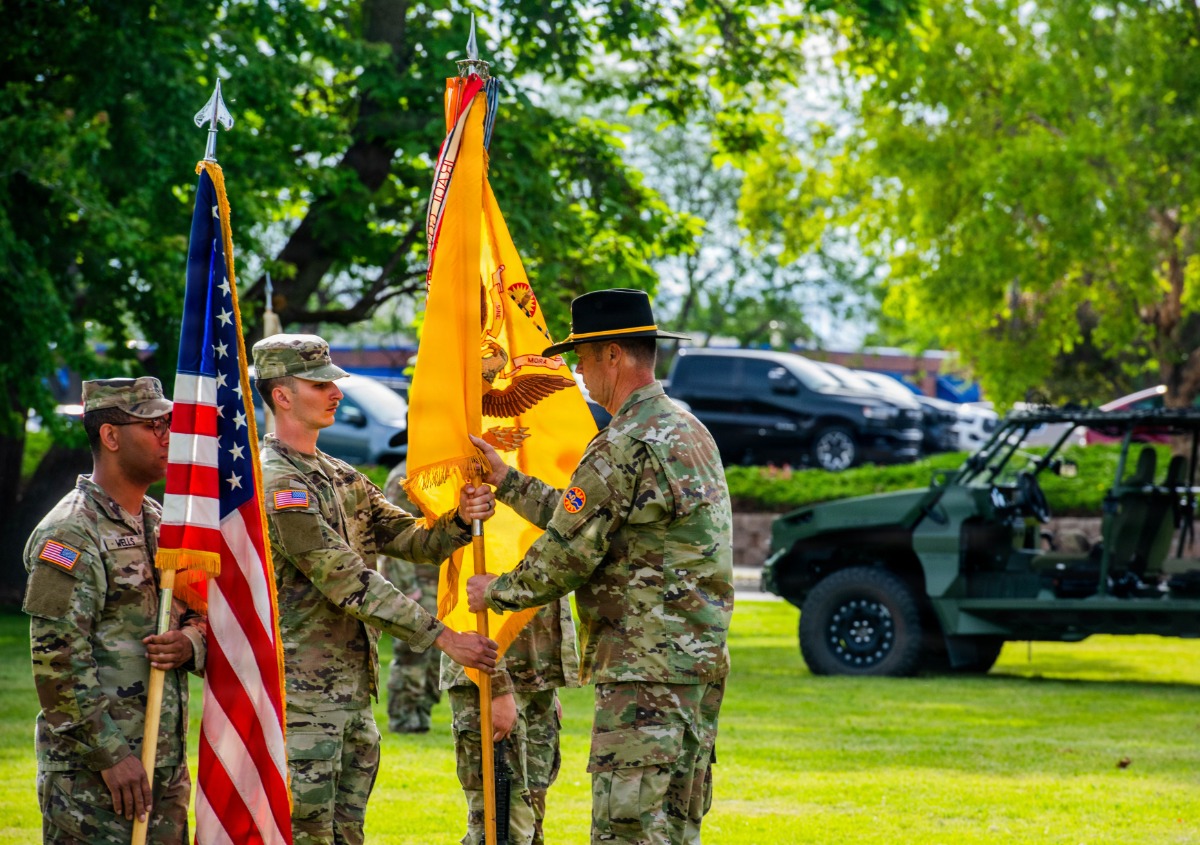
Lieutenant Colonel Jared McKie, the battalion’s executive officer, framed the transformation in terms that acknowledged both the difficulty of the change and the reasoning behind it.
“The nature of warfare is evolving, and so too must we. Defeating the adversaries of tomorrow requires a force that is more agile, more deployable and capable of operating across vastly different, complex terrain.”
That language about terrain is not abstract. The Idaho National Guard operates across one of the most geographically varied states in the country, from the high desert of the Snake River Plain to the rugged mountains of central and northern Idaho, environments where moving and sustaining a heavy armor battalion presents challenges that lighter infantry vehicles handle considerably more easily. The reorganization distributes the battalion’s companies across the state in ways that reflect both the new vehicle’s capabilities and the Guard’s recruiting and readiness footprint, with Alpha Company relocating from Emmett to Burley, Bravo Company remaining in Nampa, Charlie Company staying on Gowen Field, and the newly formed Delta Company establishing itself in Emmett to provide the regiment with organic strike, reconnaissance, and sensing capabilities.
McKie addressed the emotional dimension of giving up iconic weapons systems in a second statement that captured what the reorganization means to soldiers who trained on Abrams tanks and Bradleys.
“The tools we fight with are changing, but the mission remains the same: to find the enemy, fix them and destroy them. The vehicles we fight on will change, but the lethality, the discipline and the proud heritage of the 2-116th will remain intact.”
The 2-116th’s reorganization is one piece of a larger transformation unfolding across the entire 116th Cavalry Brigade Combat Team, which is converting from an armor brigade to a mobile brigade combat team under the same Army initiative. Earlier in June 2026, the brigade’s engineer battalion was inactivated, and signal, engineer, and military intelligence companies were reactivated in configurations suited to the new structure. In July 2026, the Idaho Guard will activate the 1st Battalion, 116th Cavalry Regiment as a mobile infantry unit headquartered in Lewiston, with logistics and engineer companies in northern Idaho converting to infantry roles. By August 2026, the 145th Brigade Support Battalion will relocate and reorganize as the 145th Light Support Battalion, moving to the new Jerome Readiness Center, which will be dedicated to former Idaho Governor Dirk Kempthorne on June 29, 2026. The full transition is expected to be complete by the end of September 2026, at which point Idaho Army National Guard units will be positioned in 19 communities across the state, and the region will gain nearly 275 additional part-time soldiers.
The reorganization also affects Guard units beyond Idaho’s borders, though not all in the same direction. Subordinate battalions from the Montana and Oregon Army National Guards, which had previously been affiliated with the 116th Cavalry Brigade, converted to infantry battalions and ended their affiliation with the brigade entirely. The 1st Battalion, 221st Cavalry Regiment, headquartered in Las Vegas, Nevada, will remain affiliated and convert to a mobile infantry battalion alongside the Idaho units.
The 116th Cavalry traces its lineage to the 1st Cavalry, constituted on March 4, 1920, and organized throughout Idaho’s Snake River Valley, redesignated as the 116th Cavalry on October 12, 1921, and headquartered in Boise since December 9, 1930. The regiment’s predecessor organizations have served in every major American conflict from the Spanish-American War through the Global War on Terrorism, a century-plus record of adaptation that the current transformation continues rather than interrupts. A unit that exchanged horses for tanks is now exchanging tanks for trucks, and the soldiers making that trade are betting their futures on the Army’s read of tomorrow’s battlefield.