

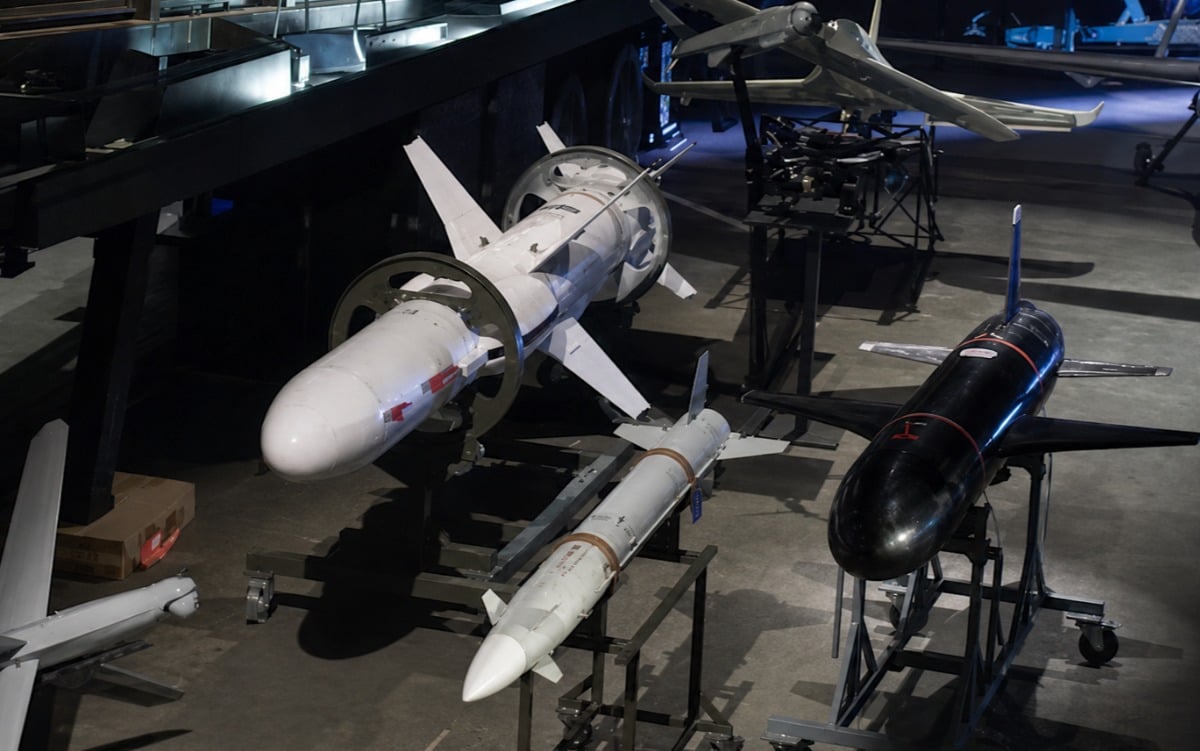
- MBDA signed a memorandum of understanding with Ukraine's LUCH Design Bureau on June 16, 2026, at Eurosatory in Paris.
- The agreement covers joint development of NEPTUNE2, the next generation of Ukraine's Neptune cruise missile, with no funding or timeline disclosed.
Europe’s biggest missile maker has agreed to help Ukraine build a successor to the weapon that sank Russia’s cruiser Moskva, the flagship of its Black Sea Fleet. MBDA signed a memorandum of understanding with Ukrainian defense company LUCH at Eurosatory in Paris on June 16, 2026, agreeing to jointly pursue what both companies call disruptive innovation in developing NEPTUNE 2, the next generation of Ukraine’s homegrown Neptune cruise missile family.
The agreement is a memorandum of understanding rather than a signed production contract, meaning it sets out an intent to collaborate without committing either side to specific funding, timelines, or delivery numbers, but the symbolism of the partnership runs deeper than the paperwork suggests.
The original Neptune missile, designated R-360 and built by Ukraine’s state-owned LUCH Design Bureau, was never supposed to become a household name. LUCH developed it as an anti-ship weapon in the years following Russia’s 2014 annexation of Crimea, drawing on the Soviet-era Kh-35 design and giving it a longer reach and modernized guidance electronics, and the missile entered limited service in 2021 with a range of roughly 280 kilometers (174 miles). Then in April 2022, two Neptune missiles struck the Moskva, the flagship cruiser of Russia’s Black Sea Fleet, and sank it, marking one of the most consequential naval losses any country has suffered in decades and turning a little-known Ukrainian weapons program into a name recognized by defense planners worldwide.
Engineers adapted Neptune for land-attack missions starting in 2023, adding GPS and infrared guidance on top of the original anti-ship targeting system, and by 2025 a long-range land-attack variant nicknamed Long Neptune had entered combat use with a reported range stretching to 1,000 kilometers (620 miles) and a larger 260-kilogram (570 lb) warhead, according to Ukrainian officials. That range puts Long Neptune in the same general class as far more expensive Western systems like the U.S. Tomahawk, and Ukrainian President Volodymyr Zelensky has noted publicly that the domestically produced missile carries none of the usage restrictions that allied governments have sometimes attached to weapons they’ve donated to Ukraine, since Kyiv builds and controls it entirely on its own.
MBDA describes itself as the European leader in complex weapon systems, a fair characterization for a company that produces the Storm Shadow and SCALP cruise missiles, the Meteor air-to-air missile, and the Exocet anti-ship missile, among dozens of other weapons fielded across NATO militaries. The company is a joint venture owned by Airbus, BAE Systems, and Leonardo, headquartered outside Paris, and employs close to 13,000 people spread across France, the United Kingdom, Italy, Germany, and Spain, giving it engineering depth and manufacturing capacity that dwarfs what a single Ukrainian design bureau can muster on its own, even one with LUCH’s track record. Pairing that scale with LUCH’s specific knowledge in designing, developing, integrating, and producing complex weapon systems, the framing both companies use in describing the partnership, suggests NEPTUNE 2 is meant to combine Ukrainian combat-tested design experience with the kind of industrial muscle that can move a weapon from prototype toward larger-scale production faster than either company could manage alone.
This isn’t MBDA’s first move toward deepening ties with Ukraine’s defense industry, and the company frames the LUCH agreement explicitly as a continuation of that broader strategy in the field of deep strike weapons, the term the industry uses for missiles capable of hitting targets well behind the front line rather than just supporting close combat. Deep strike capability has become one of the most closely watched and most politically sensitive categories of weapon in the Russia-Ukraine war, since the ability to hit targets far inside Russian territory carries implications that go beyond the battlefield and into the diplomatic relationships Ukraine maintains with the countries supplying or co-developing its weapons. A Ukrainian-built missile co-developed with a European consortium sidesteps some of the political friction that has occasionally accompanied Western-supplied long-range weapons, since Ukraine retains design ownership and operational control even as it benefits from European industrial partnership.
Storm Shadow’s own recent history underscores why this kind of European-Ukrainian collaboration carries real weight right now. MBDA restarted production of the Storm Shadow and SCALP missile family in 2026 after a 15-year pause, a decision the company tied directly to the weapon’s combat use in Ukraine and the resulting demand signal from European governments restocking depleted inventories. That restart reflects a wider shift across the European defense industry, where the war has pushed companies like MBDA to scale up production lines that had sat largely dormant for over a decade, and where governments have grown increasingly willing to fund joint development work with Ukrainian firms that have direct combat feedback no Western company can replicate without a war of its own to test against.
Neither MBDA nor LUCH disclosed what NEPTUNE 2 will look like in practice, what range or warhead improvements it might carry over Long Neptune, or when any prototype might actually fly. What the memorandum does confirm is direction: continued investment in extending Ukraine’s ability to strike at range, built jointly with a European industrial partner that has both the resources and, increasingly, the political appetite to keep backing that effort as the war grinds into its fifth year.