


AM General has introduced the next-generation version of its Hawkeye 105mm Mobile Howitzer System at AUSA 2025, showcasing a newly redesigned artillery platform that reflects direct combat lessons from Ukraine and advances in lightweight fire support mobility.
The updated Hawkeye system integrates a restyled tactical truck chassis with a new powertrain and improved architecture, offering what the company describes as a “lightweight, agile, rugged, and lethal” solution for modern combat operations. The system has been combat-tested during the war in Ukraine, providing a rare case of real-world validation for U.S.-developed mobile artillery.
According to AM General, the enhanced Hawkeye can be emplaced, fired, and displaced in under 90 seconds — a key feature for survivability in contested environments where counter-battery threats are constant. The company says this level of responsiveness allows artillery crews to strike and move before enemy sensors or drones can detect and return fire.
“At the heart of the system is a patented soft recoil technology, which reduces recoil forces by up to 60%,” AM General said in a statement. “This breakthrough enables integration of a large-caliber weapon on a nimble, rugged platform—bringing to life a new class of highly mobile, precision-capable artillery.”
The Hawkeye system features a standard firing range of 11.6 kilometers, which extends up to 19.5 kilometers when using rocket-assisted projectiles. The platform can fire up to eight rounds per minute for three minutes, with a sustained rate of three rounds per minute, the company noted.
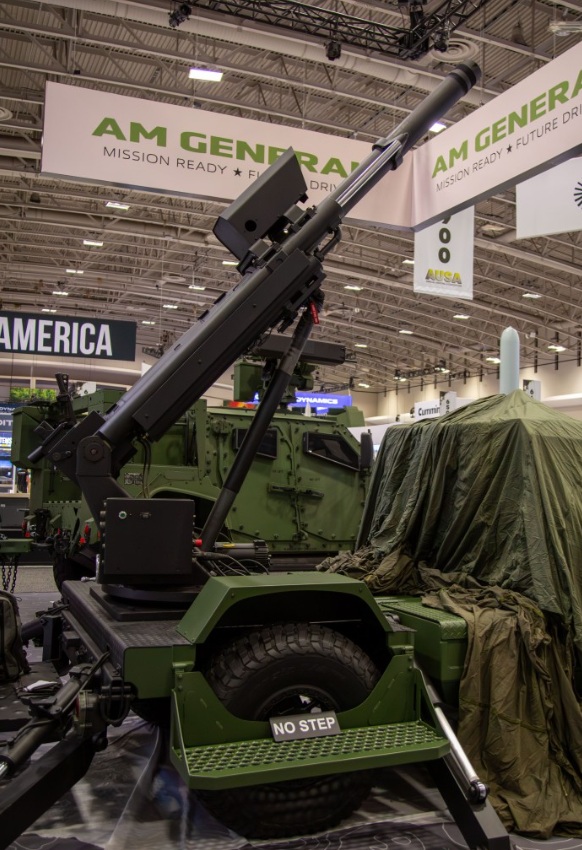
The gun’s soft recoil mechanism is central to its compact configuration, allowing a 105mm cannon to operate effectively on a light tactical vehicle chassis. This reduction in recoil not only increases platform stability but also reduces stress on components, extending service life and reducing long-term maintenance demands.
AM General says the redesign and performance improvements are directly informed by extensive field testing in Ukraine, where earlier versions of the Hawkeye system were reportedly used by Ukrainian forces in live combat operations. The system’s rapid fire-move-fire cycle and lightweight footprint were seen as valuable in a high-threat, drone-saturated battlefield where mobility and speed are key to artillery survivability.
While exact details of the Hawkeye’s deployment in Ukraine remain undisclosed, the company’s framing of the system as “refined in the laboratory of war” strongly suggests real-world performance data informed the updates on display at AUSA.
The new variant was featured prominently at the company’s stand during the event.