

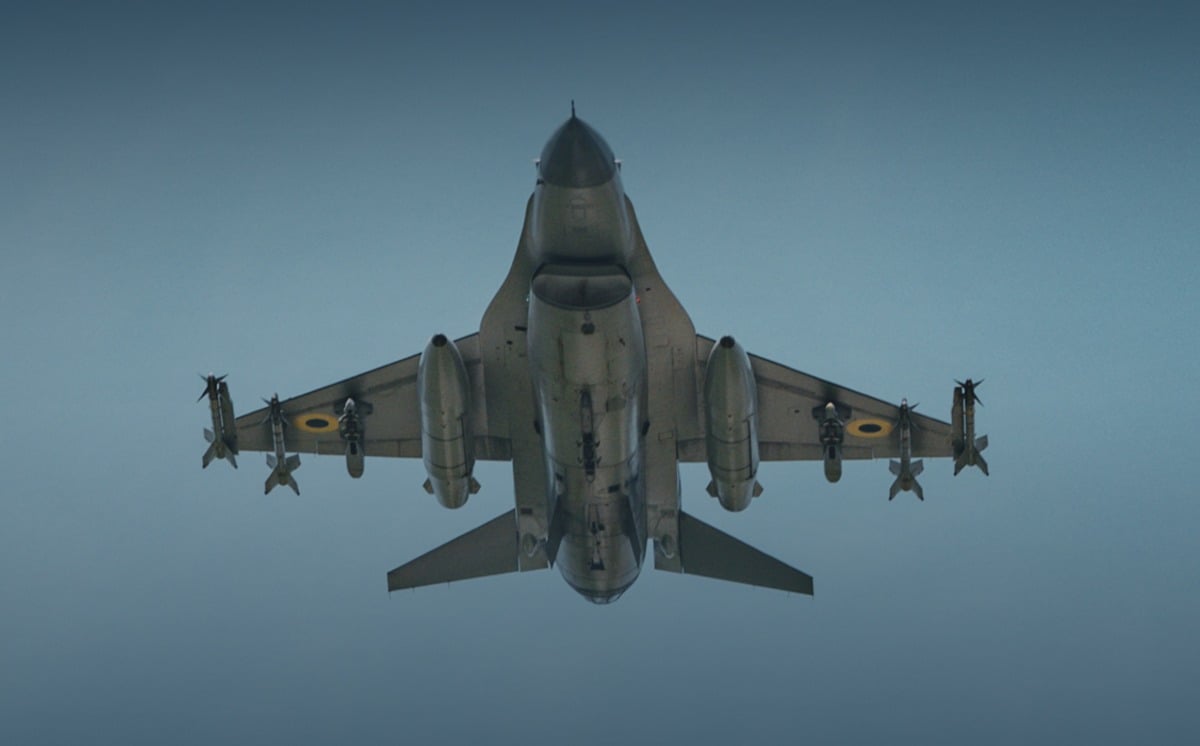
- General Dan Caine, Chairman of the Joint Chiefs of Staff, told the Senate Appropriations Committee a Ukrainian F-16 scored Ukraine's first confirmed air-to-air kill by downing a Russian Su-35.
- Ukraine's Air Force had announced the July 8, 2026 Su-35 shootdown without naming the weapon used, leaving the F-16 detail unverified until Caine's testimony.
A Ukrainian F-16 pilot did something no American-made fighter jet had confirmed doing before in this war: shoot down a Russian warplane in air-to-air combat. General Dan Caine, the four-star Air Force officer who serves as Chairman of the Joint Chiefs of Staff and holds the highest military rank in the United States, told the Senate Appropriations Committee that the milestone marks how far Ukraine’s air defenses have come since Russia’s full-scale invasion began.
“I want to highlight the incredible work that the Ukraine industrial base is doing as they scale their own capabilities,” Caine said, describing a defense buildup that now stretches from ground-based missile systems to fighter jets patrolling the skies.
Caine pointed to the F-16 shootdown as the clearest evidence of that progress, calling it the country’s first confirmed air-to-air kill with the jet.
“I’ll note that recently we had the first air-to-air kill where a Ukrainian F-16 shot down a Russian fighter,” Caine said.
The incident Caine referenced took place on July 8, 2026, when Ukraine’s Air Force announced it had shot down a Russian Su-35, a twin-engine, 4.5-generation fighter that has served as one of the Russian Aerospace Forces’ primary air superiority jets throughout the war. The Air Force’s own statement leaned on bravado rather than battlefield detail, declaring simply that Ukrainian forces had “subtracted another Russian air terrorist,” without naming the weapon system responsible. Russian military commentator Oleksii Zemtsov, who runs the channel Voevoda Veshchaet, corroborated the loss of the aircraft and claimed the pilot survived and reached Russian-held positions.
Reports at the time suggested a Ukrainian F-16 was responsible, but neither Ukraine’s Air Force nor Russian officials had confirmed that detail, leaving the F-16 claim in the realm of speculation rather than established fact. Caine’s remarks to the Senate committee change that. By naming the F-16 specifically and calling it Ukraine’s first confirmed air-to-air kill, the chairman put the authority of America’s top military officer behind a detail that Ukrainian officials themselves had not yet nailed down publicly.
The F-16 carries outsized symbolic weight in this war regardless of who eventually confirms the full engagement details. Ukraine spent nearly two years lobbying Western governments for the fourth-generation American fighter before the first jets, donated secondhand from Belgium, Denmark, the Netherlands and Norway, arrived in August 2024. The jets replaced Ukraine’s aging fleet of Soviet-era MiG-29s and Su-27s, aircraft designed decades earlier and increasingly outmatched by modern Russian air defenses and missiles. Winning a straight air-to-air fight against a Su-35, a jet purpose-built for air superiority and one of Russia’s most capable fighters, would represent a genuine leap in how Ukrainian pilots are using the American-supplied aircraft.
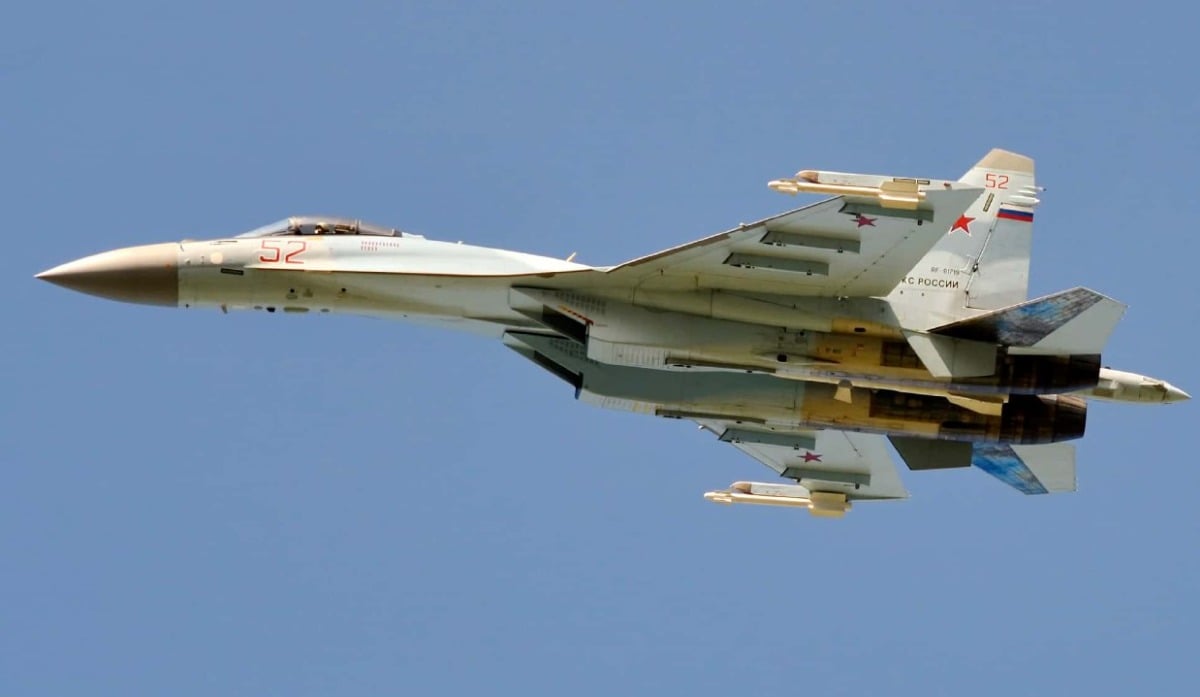
The Su-35 has proven a costly plane for Russia to keep flying over contested airspace. Open-source tracking counted eight confirmed Su-35 losses since the war’s outset as of mid-2025, with causes ranging from a Ukrainian Patriot missile strike near Bryansk in 2023 to at least one confirmed friendly-fire incident involving a Russian S-300 system near Tokmak. Russian state manufacturer Rostec has nonetheless claimed the Su-35 has destroyed more enemy targets in air-to-air combat than any other fighter type in the Russian military, a claim that will now sit awkwardly beside a Ukrainian F-16 kill confirmed by the Pentagon’s top uniformed officer.
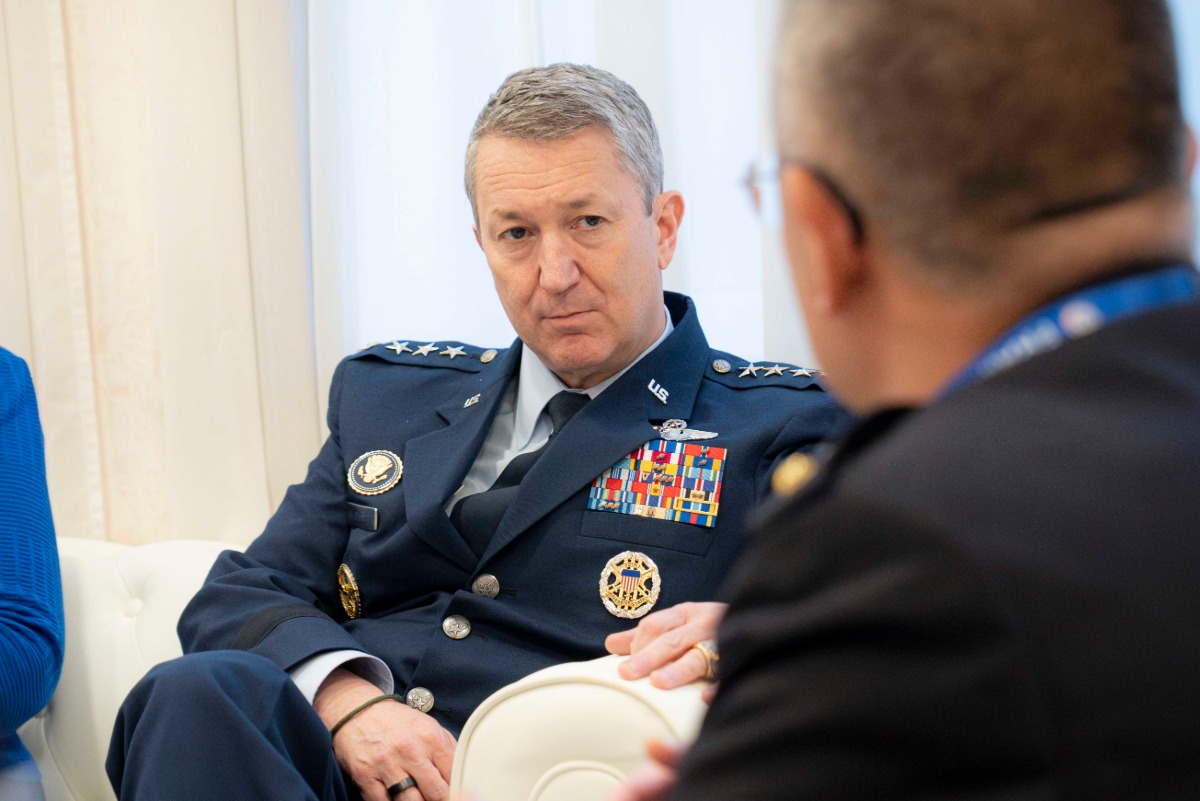
Caine framed the shootdown as one data point inside a much larger buildup he called a layered defense, military shorthand for stacking multiple overlapping systems, short-range missiles, long-range missiles, jets, radar and jamming, so that if one layer misses an incoming threat, another catches it. Ukraine has built exactly that kind of system out of necessity, facing near-nightly barrages of Iranian-designed Shahed drones and Russian cruise and ballistic missiles aimed at its cities and power grid. That experience became directly relevant to the United States earlier this year, when American and Israeli forces contended with similar Shahed-style drone swarms during the conflict with Iran, and U.S. officials privately acknowledged that Ukraine’s hard-won expertise fighting cheap, low-flying drones offered lessons the American military hadn’t fully anticipated needing.
Caine’s testimony arrives as he has spent much of the past year publicly pressing the Department of War to move faster in absorbing lessons from Ukraine’s battlefield. In prior remarks, he has argued that the American defense-industrial base has fallen behind the pace of modern warfare, telling audiences the U.S. system has gotten good at buying weapons behind the curve of new technology rather than ahead of it. Ukraine’s ability to keep adapting its air defenses in real time, scaling up production of interceptors and integrating the F-16 into combat use within months rather than years, is the kind of wartime innovation cycle Caine has held up as a model worth studying.