

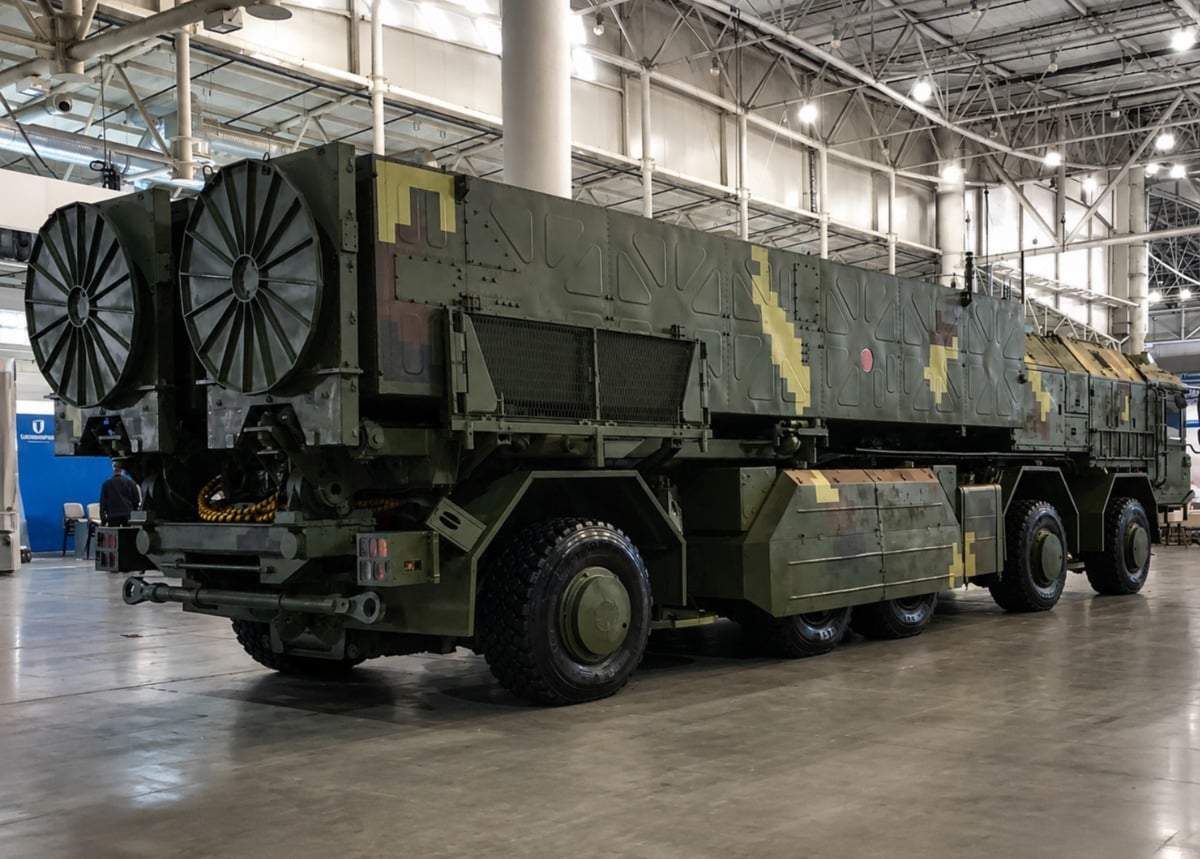
- Outgoing Ukrainian Defense Minister Mykhailo Fedorov said Ukraine successfully tested a domestic ballistic missile on July, 2026.
- Fedorov said the missile's technical specifications were revised, its accuracy maximized, and its cost reduced by 30 percent.
Ukraine’s government collapsed and a new ballistic missile flew successfully on the very same day, a coincidence the country’s outgoing defense chief made sure nobody missed. Mykhailo Fedorov, who stepped down as Ukraine’s Minister of Defense this week after just seven months in the post, announced that Ukraine conducted a successful test of a domestically developed ballistic missile on July 14, the same day President Volodymyr Zelenskyy’s government fell as part of a broader cabinet reshuffle.
A ballistic missile follows a distinct flight path compared to the drones and cruise missiles that have defined much of Ukraine’s long-range strike campaign against Russia so far. Rather than flying like an aircraft powered by a jet engine for most of its journey, a ballistic missile launches on a steep, rocket-powered climb before arcing back down toward its target at extremely high speed, a trajectory that gives enemy air defense systems dramatically less warning time to intercept it. Fedorov did not name the specific missile tested, but the context he provided points toward Ukraine’s Sapsan operational-tactical missile system, known by its export designation Hrim-2, a program that reportedly began serial production in 2025 and represents one of Ukraine’s most closely watched efforts to build an indigenous ballistic strike capability rather than relying entirely on Western-supplied weapons.
Fedorov framed the test as one of the signature achievements of his brief tenure, posting a farewell message summarizing his time at the ministry.
“Symbolically, on the day the government was dismissed, we conducted a successful test of ballistics developed in the Ministry of Defense’s area of responsibility,” Fedorov wrote. “We radically changed the technical specifications and achieved maximum accuracy. We reduced the price by 30%. Ukraine will enter a new league.”
That claim of a 30 percent cost reduction matters because it echoes a broader pattern in Fedorov’s approach to weapons procurement during his short time running the ministry. He separately highlighted a competitive tender for 155-millimeter (6.1-inch) artillery shells that he said saved the Ukrainian government roughly $100 million by cutting the price of each shell by about $1,000, part of a push to move Ukraine’s defense procurement toward open, competitive bidding rather than the closed-door contracting arrangements that have historically drawn corruption concerns in the country’s defense sector. Whether the ballistic missile program achieved its own 30 percent savings through similar competitive pressure or simply through design changes Fedorov’s team pushed during development remains unclear, since he offered no further technical detail on the program.
Zelenskyy removed Fedorov from the defense post this week as part of a wider government shake-up that began when Prime Minister Yulia Svyrydenko resigned at the president’s request, a move that automatically triggered the removal and expected reappointment of every minister serving in her cabinet.
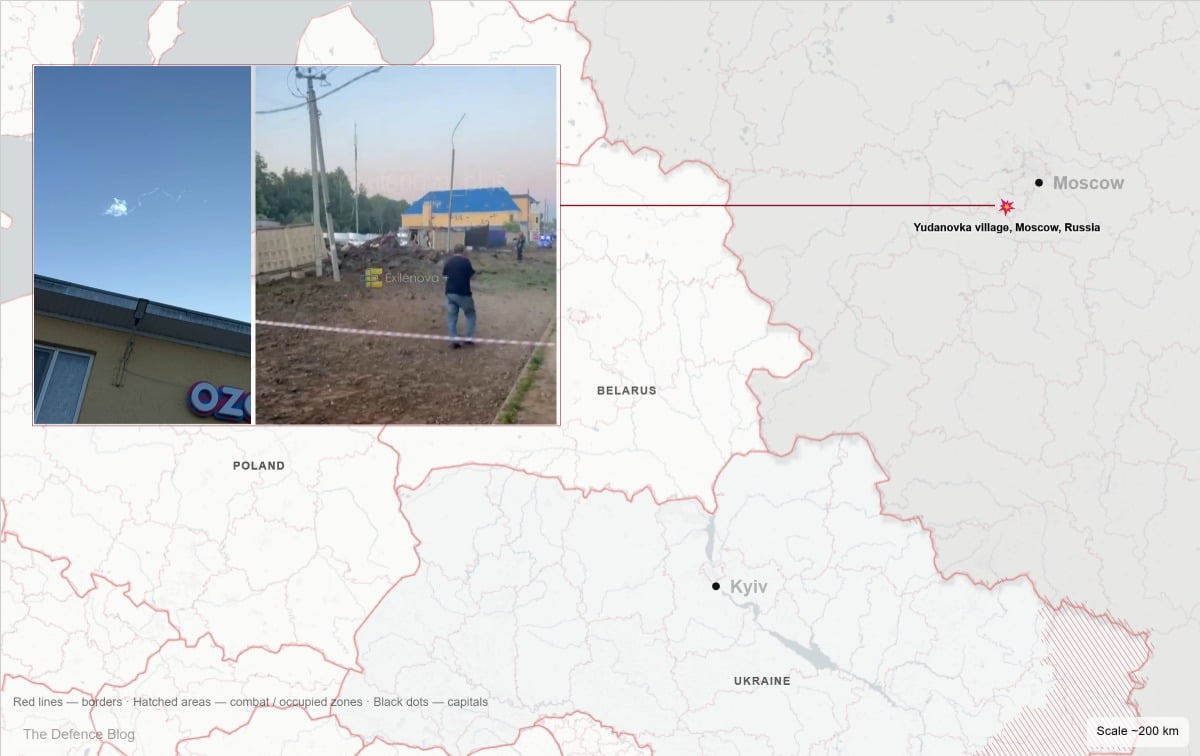
Russia’s Defense Ministry announced on June 30 that its forces shot down a Ukrainian long-range ballistic missile, confirming that Kyiv had already moved its ballistic missile program well past the theoretical or laboratory stage before this latest reported test even took place. A successful test on July, whatever missile it actually involved, reads less as a standalone breakthrough and more as another data point on a program Ukraine has been steadily pushing toward operational reliability, cost reduction, and improved accuracy over the past year, the same three variables that determine whether a domestic missile program ever becomes something a country can depend on rather than a promising prototype that never leaves the test range.
Whoever takes over Ukraine’s Defense Ministry next inherits a ballistic missile program that appears to be gaining real momentum, alongside a defense bureaucracy still only partway through the procurement overhaul Fedorov started and, by his own admission, did not finish.