


- Ukraine publicly displayed its Harpoon coastal missile launcher for the first time during a Zelensky visit to Odesa this week.
- The showcase also included Ukraine's Neptune, Norway's Naval Strike Missile, and Sweden's RBS-15 anti-ship systems.
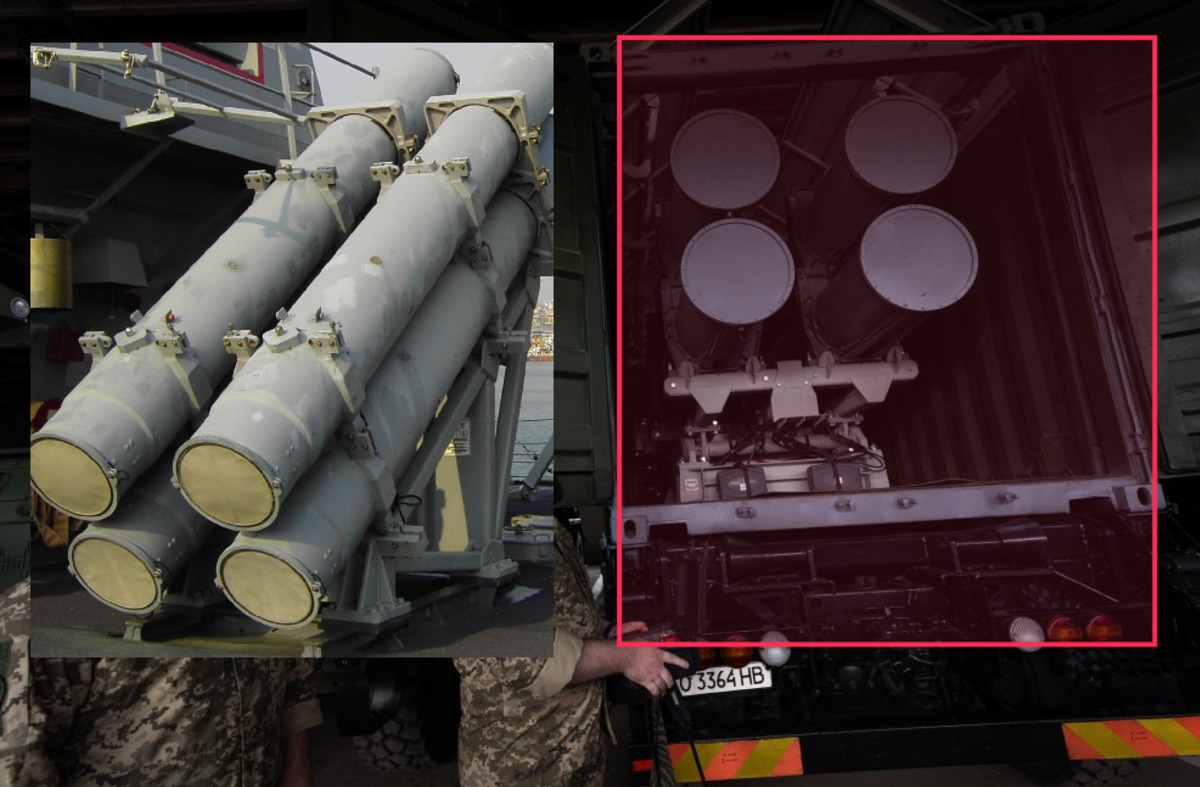
Ukraine has publicly shown off a truck-mounted missile launcher it received in secret four years ago and has kept hidden from cameras ever since, revealing for the first time exactly what its American-supplied Harpoon coastal defense system looks like.
During a visit to Ukraine’s Odesa region this week, President Volodymyr Zelensky’s military officials displayed the country’s full arsenal of shore-based anti-ship weapons, including the domestically built Neptune missile system, Norway’s Naval Strike Missile, Sweden’s RBS-15, and, for the first time publicly, the Harpoon coastal battery Ukraine received from the United States and Denmark back in 2022.
Ukrainian naval command separately confirmed to Interfax-Ukraine that the visit included a briefing on the Naval Forces’ strike capabilities, listing Neptune and Harpoon missile systems alongside new-generation unmanned systems and torpedoes as part of the coordination meeting on security in the southern region.
The Harpoon has actually been fighting for Ukraine since shortly after it arrived, and Pentagon officials have said the system helped sink at least two Russian vessels in the Black Sea, but Ukraine’s navy deliberately kept its exact appearance secret, blurring or omitting the launcher from official footage for years even as the missile itself became one of the most consequential weapons systems Kyiv received early in the war. This week’s display finally revealed the specific configuration Ukraine operates, a launcher mounted on a cargo truck chassis carrying four missile canisters, a setup adapted from the ship-based system the U.S. Navy originally designed the Harpoon around. The missile itself, built by Boeing, is a decades-old design that has been repeatedly upgraded, flying just above the water’s surface using active radar homing to strike ships from ranges that most versions place in the neighborhood of 70 to 130 nautical miles depending on the specific variant fielded.
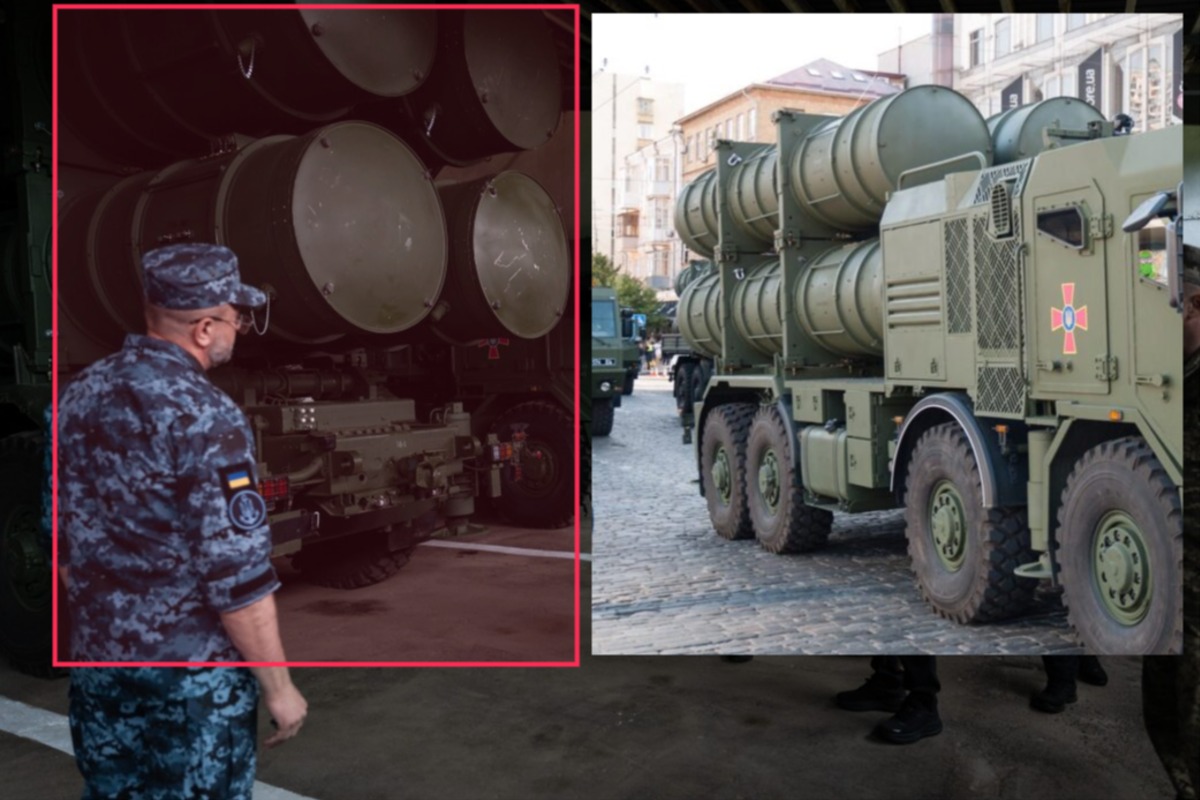
Neptune, the domestically produced missile displayed alongside it, remains Ukraine’s signature anti-ship weapon and the system credited with sinking the Russian Black Sea Fleet’s flagship cruiser Moskva in April 2022, an attack that forced Russia to keep its remaining major surface combatants farther from Ukraine’s coast for years afterward. Developed by Kyiv’s Luch Design Bureau using the Soviet-era Kh-35 missile as a starting point before substantially upgrading its range, targeting, and electronics, Neptune’s anti-ship variant carries a roughly 150-kilogram (330-pound) warhead out to a maximum range near 300 kilometers (186 miles), while a newer land-attack derivative called Long Neptune, which Zelensky unveiled in combat footage in late 2025, extends that reach to approximately 1,000 kilometers (620 miles) for strikes deep inside Russian territory.
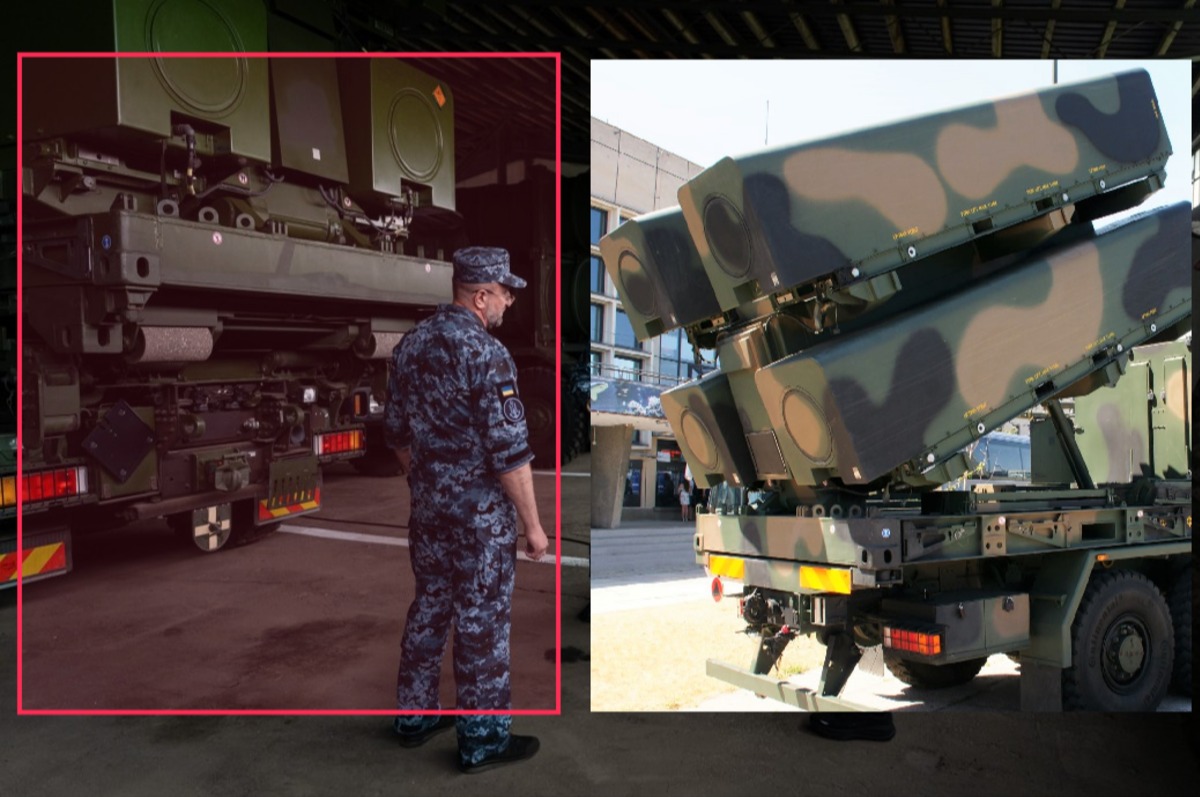
Norway’s Naval Strike Missile, shown alongside the Ukrainian and American systems, represents a more modern design built specifically to be difficult for enemy radar to detect. The missile carries a 120-kilogram (265-pound) penetrating warhead out to 200 to 300 kilometers (124 to 186 miles) depending on the version, cruising at speeds up to roughly 1,100 kilometers per hour (684 mph), and it navigates toward its target using a combination of GPS, inertial guidance, and a terrain-comparison system that matches the terrain it flies over against a preloaded map, before switching to a passive infrared seeker in its final approach that can automatically recognize its target without emitting any signal an enemy could detect and jam. Discussions about supplying Norwegian Naval Strike Missiles to Ukraine had circulated since 2023, but this week’s public display marked the first confirmation that the system has actually reached Ukrainian hands rather than remaining a topic of speculation.
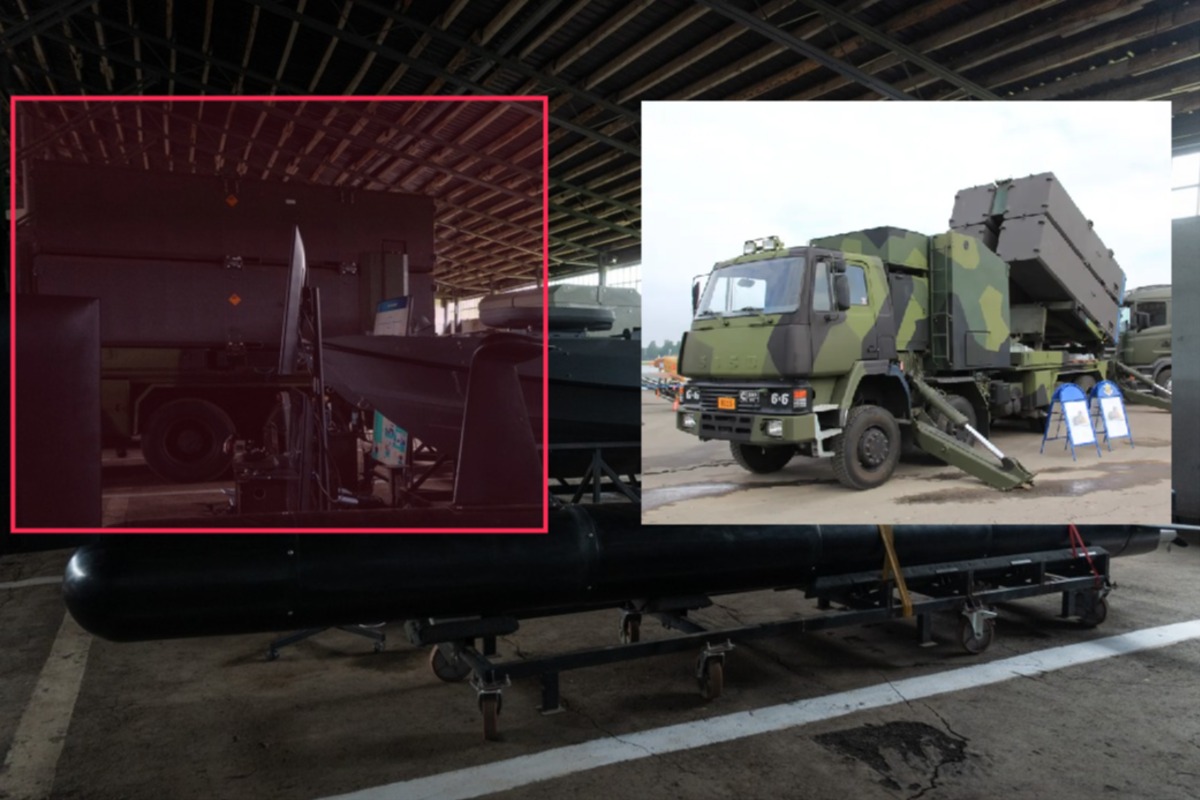
Sweden’s RBS-15, officially named Gungir after the mythological spear wielded by the Norse god Odin, rounds out the displayed arsenal and has its own confirmed combat record in Ukrainian service. The Ukrainian Navy used RBS-15 missiles in April 2026 to destroy the Sivash drilling platform, a Russian-held rig in the Black Sea that Moscow’s forces had been using for airspace monitoring, electronic warfare, and as a makeshift air defense position. The missile carries a heavier, roughly 200-kilogram (441-pound) semi-armor-piercing, high-explosive fragmentation warhead than the Naval Strike Missile, reaching similar ranges of 200 to 300 kilometers (124 to 186 miles) at comparable speeds, but relies on an active radar seeker in its terminal phase rather than infrared guidance, giving it the added ability to home in on the source of enemy jamming if a target tries to blind the missile electronically.
Displaying all four systems together sends a message well beyond simple military inventory disclosure, since it demonstrates that Ukraine has assembled a genuinely layered coastal defense network built from four different countries’ missile technology, each with distinct strengths in range, warhead design, and guidance that complicate any single Russian countermeasure from working against the entire arsenal at once. A Russian warship or drilling platform facing Ukraine’s Black Sea coast now has to account for a domestically produced missile that already sank its fleet’s flagship, an American weapon whose exact launch configuration remained secret for four years, and two separate Western European designs using different terminal guidance philosophies, a combination that has already pushed Russia’s surface fleet into more cautious, distant patterns of operation than it maintained in the war’s opening months.