

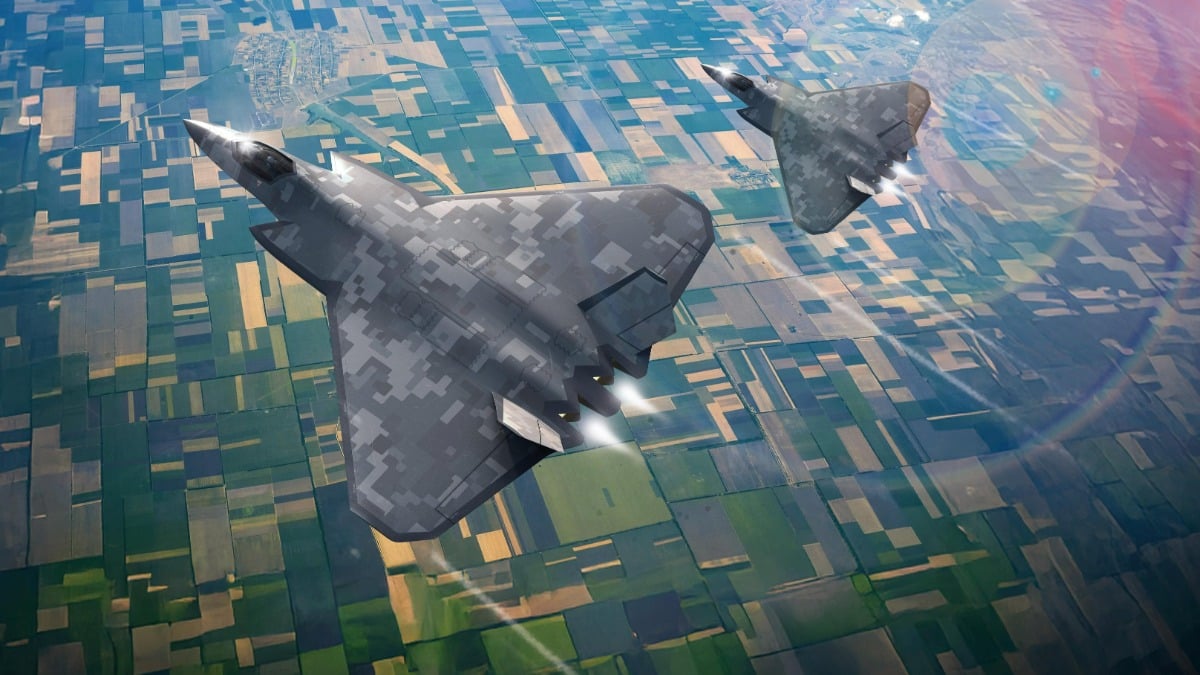
- The UK, Italy, and Japan awarded Edgewing a $6.14 billion, 18-month contract for the GCAP fighter jet on July 3, 2026.
- Britain committed $11.48 billion over four years to GCAP after two officials resigned over funding delays.
A next-generation stealth fighter that nearly stalled out over a funding dispute severe enough to cost two British officials their jobs has received a $6.1 billion vote of confidence from the three countries building it. The Global Combat Air Programme, known in Britain as Tempest, awarded an 18-month, £4.6 billion ($6.1 billion) contract on July 3, 2026, to Edgewing, the joint venture responsible for designing and building the tri-national sixth-generation fighter jet that the United Kingdom, Italy, and Japan plan to field by 2035.
The deal will fund the completion of the program’s advanced concept and assessment phase along with further detailed design and engineering work, and it lands just three days after Britain finally published a long-delayed defense investment plan committing £8.6 billion in UK funding to the program over the next four years, a commitment that came only after months of budget wrangling that culminated in the resignations of UK Defence Secretary John Healey and Armed Forces Minister Al Carns in June.
GCAP represents an unusually direct merger of separate national ambitions rather than one country inviting others to join an existing project. The program launched in December 2022 when Britain combined its Tempest fighter concept, developed jointly with Italy, with Japan’s own Mitsubishi F-X program, formalizing the arrangement through a treaty signed in Japan in December 2023. The resulting aircraft is expected to replace the Eurofighter Typhoon currently flown by Britain and Italy along with Japan’s F-2 multirole fighter, and industry estimates place the new jet at roughly a third larger than the Typhoon, built around a broad-delta, twin-engine airframe with canted tails that BAE Systems has described as three to four meters (10 to 13 feet) longer than its predecessor, a size increase driven by requirements for extended range and greater internal fuel and weapons capacity.
Edgewing itself only took its current form a year ago, officially named in June 2025 as the single trinational engineering prime bringing together Britain’s BAE Systems, Italy’s Leonardo, and Japan Aircraft Industrial Enhancement Company, a consortium led by Mitsubishi Heavy Industries. That structure marks a deliberate departure from how most multinational fighter programs have historically operated, where partner nations typically manage separate national contracts and industrial workshares that get stitched together afterward. Roughly 9,000 people currently work across the program, drawing on more than 1,000 suppliers split between the three partner nations, and this new contract follows an initial £686 million ( $916 million) stopgap award Edgewing received in April 2026 specifically to keep design work moving while the three governments worked out the larger, long-term funding package now finally in place.
Masami Oka, chief executive of the GCAP Agency that manages the program on behalf of the three governments, signed the new contract and framed it as validation of the trinational model’s momentum.
“I am delighted to sign this international contract on behalf of the three GCAP nations, Italy, Japan and the UK. It will enable the GCAP Agency and Edgewing to continue making huge progress in all areas of delivery. The programme is vital for global security and defeating future threats, while sharing costs, technological advantages and creating highly skilled jobs in all three nations. With this long-term funding, the future of GCAP has never been more assured. I am excited about what we will achieve over the next 18 months and the opportunities we can create to grow the programme further,” Oka said.
Edgewing Chief Executive Officer Marco Zoff described the contract as evidence the joint venture’s unconventional structure was already paying off after its first year of operation.
“This contract represents the trust placed in us by all three nations and our GCAP Agency partners, trust fostered by the rapid progress made under the first international contract. This momentum is being driven by our disruptive new model of defence collaboration: the first time that three countries have come together to create a single engineering prime, working on behalf of our national industries, with a single empowered customer. As we continue to ramp up operations and execute this next phase of the programme, I look with pride at the strides we have already made and with confidence at the future still to come,” Zoff said.
Beyond the airframe itself, the funding supports work by two specialized industrial groupings operating under Edgewing’s direction, the GCAP Electronics Evolution consortium developing the aircraft’s sensing and communications systems, and a separate power and propulsion consortium working on engines designed to give the jet extended range and persistence over a target area, both areas where sixth-generation fighter designs are expected to leap well beyond current Typhoon and F-2 capability. A crewed, supersonic demonstrator aircraft built under a related effort called the Combat Air Flying Demonstrator is targeted to fly by the end of 2027, giving the three governments an early flight-test data point years before the operational fighter itself enters service.
This funding milestone also lands at a moment when Europe’s combat aircraft landscape has shifted unexpectedly in GCAP’s favor. A rival Franco-German-Spanish sixth-generation fighter program collapsed in June 2026 amid industrial disputes between France and Germany, leaving several nations that might otherwise have joined that effort now eyeing GCAP instead, including Germany, Saudi Arabia, Poland, and Canada, the last of which has been pursuing formal observer status since early 2026 partly out of concern over the future of its own F-35 purchase amid strained relations with Washington. Any expansion of the program would require agreement from all three founding members, and GCAP executives have said new partners could join at varying levels of involvement rather than as full co-development partners from the outset.