

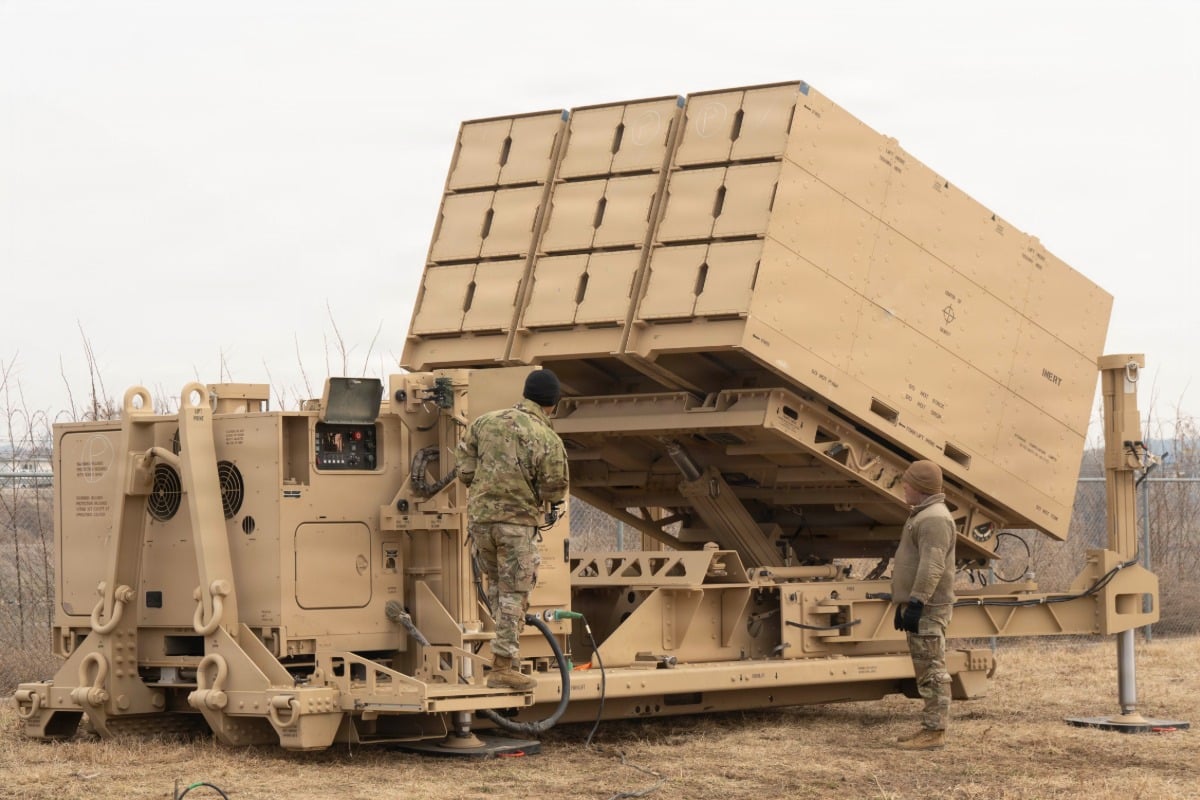
- The U.S. Air Force published a solicitation on July 1, 2026, for a ground-launched supersonic counter-air missile prototype called GLCA ETV.
- Vendor proposals are due August 3, 2026, with contract awards targeted no later than the end of September 2026.
The U.S. Air Force wants to build a missile that costs about as much as a nice house, not a fighter jet, and it has opened the door for companies to start pitching how to do it. The Air Force Life Cycle Management Center’s Armament Directorate published a formal solicitation on July 1, 2026, seeking prime missile builders and launcher system makers to prototype a new ground-launched, supersonic counter-air weapon under a program called CAMP, short for Counter Air Missile Program, with this specific effort known as the Ground Launched Counter Air Enterprise Test Vehicle, or GLCA ETV.
Counter-air simply means a weapon built to shoot down enemy aircraft, and putting it on a ground launcher rather than under the wing of a fighter jet lets the Air Force position the missile wherever troops or bases need protection without tying it to an aircraft that might not always be available.
What makes this solicitation notable is not the weapon’s speed or range, details the Air Force has not disclosed, but the price tag the service has been chasing since it first floated the idea publicly. In a request for white papers posted in November 2025, the Air Force Life Cycle Management Center described wanting a missile priced around $500,000 per unit, a fraction of what many modern air-to-air and surface-to-air missiles cost today, some of which run into the millions of dollars apiece. That price target matters because it signals the Air Force is not trying to build one more exquisite, high-performance missile for a small elite arsenal, but rather a weapon cheap enough to buy and fire in large numbers, an approach the military increasingly favors after watching conflicts in Ukraine and the Middle East burn through expensive interceptors faster than industry could replace them.
The new solicitation asks vendors to develop what the Air Force calls an affordable, digital, open and modular, and highly producible missile, meaning a design built using digital engineering tools and standardized interfaces so that different companies’ components, sensors, or guidance systems can be swapped in without redesigning the entire weapon from scratch. That modularity is meant to solve a problem that has plagued American missile programs for years, where each new system takes so long to design, test, and certify that adversaries can field several generations of countermeasures before the weapon ever reaches full production, a pattern the Air Force says it wants to break by leaning on largely commercial or minimally modified components rather than custom-built military hardware.
The Air Force plans to run this effort as a Prototype Other Transaction agreement under a legal authority known as 10 U.S.C. 4022, a contracting tool that lets the Pentagon strike deals with companies faster than traditional procurement rules allow, skipping much of the paperwork and review that typically slows down a standard defense contract in exchange for tighter timelines and more flexibility for both sides. Vendors have until August 3, 2026, to submit proposals, and the Air Force plans to hold in-person oral presentations with interested companies during the week of August 10, moving toward what the timeline suggests will be a fast turnaround by defense acquisition standards.
Interested companies also face a strict gatekeeping requirement built into the solicitation itself, since the bulk of the technical documents involved qualify as Controlled Unclassified Information, meaning sensitive but unclassified material the government restricts to vetted recipients. To receive those documents, a company must be registered in the Defense Logistics Agency’s Joint Certification Program and provide a signed DD Form 2345, a certificate that confirms a business is authorized to receive export-controlled technical data, and the solicitation explicitly bars foreign firms and any U.S. company determined to operate under foreign ownership, control, or influence from serving as a prime contractor or subcontractor on the program, a restriction the Air Force applies specifically to keep sensitive missile technology within trusted domestic hands.
The solicitation states that successful prototyping and continued funding could lead to a follow-on production program called FAMM-GLCA, part of a broader family of weapons known as the Family of Affordable Mass Missiles that the Air Force has already begun funding at scale elsewhere in its budget. The service’s fiscal 2027 budget request includes $355 million to purchase roughly 1,000 FAMM units in that year alone, part of a larger $12.6 billion plan reported by Breaking Defense to acquire nearly 28,000 FAMM missiles over the next five years across two configurations, one designed to be dropped from an aircraft on a pallet and another built with lugs for more conventional mounting.