

- The UK's National Armaments Director Group awarded Leonardo UK a $93 million contract to supply consumable aircraft spares across the entire British fixed-wing and rotary-wing fleet.
- The seven-year contract, worth up to £70 million, covers approximately 11,000 catalogue items for Typhoon, Apache, Chinook, A400M, and C-17 aircraft.
Britain’s military aircraft fleet, from Typhoon fighter jets to Chinook helicopters currently flying combat support missions in the Middle East, will stay in the air under a new contract that ensures a steady supply of the thousands of small consumable parts that keep modern warplanes mission-ready.
The National Armaments Director Group, the UK defence procurement organization responsible for managing equipment contracts across Britain’s armed forces, awarded a three-year contract worth £27 million, approximately $36 million, to Leonardo UK Ltd, the British subsidiary of the Italian-headquartered Leonardo defence and aerospace group, to supply critical consumable aircraft spares across the entire UK fixed-wing and rotary-wing fleet. The contract, designated the Aircraft Consumables Commodities agreement, carries a total potential value of up to £70 million, roughly $93 million, if all four optional one-year extension periods are exercised, giving it a maximum seven-year lifespan and providing long-term supply chain stability for a fleet that spans some of the most capable and operationally active aircraft in the Royal Air Force inventory.
The scope of what the contract covers is deliberately unglamorous and entirely essential: approximately 11,000 individual catalogue items spanning everything from blind rivets, washers, and cable ties to face masks and other consumable materials that ground crews and maintenance technicians use continuously in the course of keeping complex military aircraft airworthy. These are not weapons or major structural components. They are the thousands of small, replaceable items that any aircraft maintenance program consumes at a steady rate during routine servicing, scheduled inspections, and unscheduled repairs, and whose absence at a critical moment can ground an aircraft just as effectively as a major mechanical failure. A Typhoon fighter jet that cannot complete its scheduled maintenance because a specific type of fastener or sealing compound is unavailable sits on the ground regardless of how capable its engines, radar, or weapons systems are.
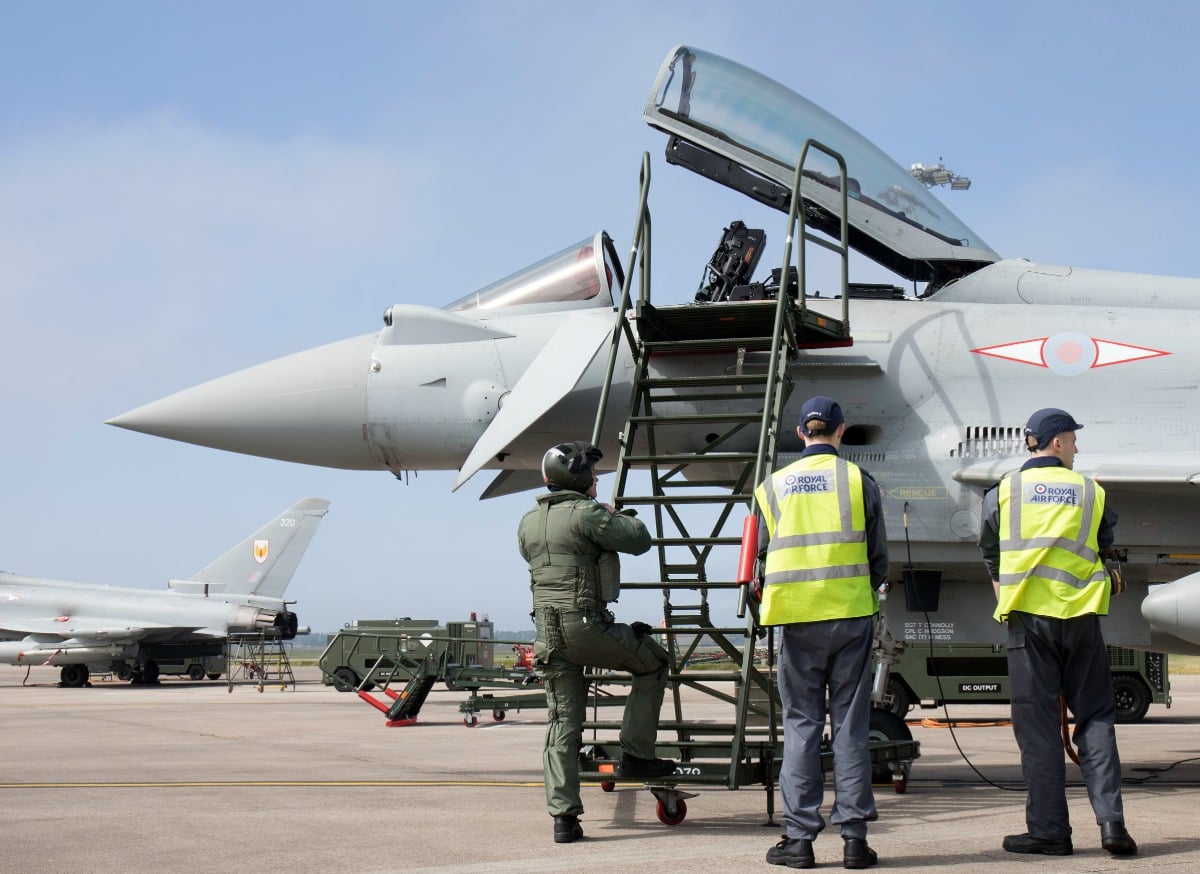
The aircraft covered by the contract include the Eurofighter Typhoon, the RAF’s primary air superiority and multi-role combat aircraft, which carries a sophisticated active electronically scanned array radar and can engage targets at beyond-visual range while also conducting precision ground attack missions. Also covered are the Boeing Apache AH-64E attack helicopter, which the British Army Air Corps operates for armed reconnaissance and close air support, and the Boeing Chinook, the heavy-lift tandem-rotor helicopter that has been central to British military operations from the Falklands to Afghanistan and remains in continuous operational use today. The contract extends to the Airbus A400M Atlas, the European-developed tactical and strategic airlifter that replaced the C-130 Hercules in RAF service, and the Boeing C-17 Globemaster III, the RAF’s largest transport aircraft, capable of delivering outsized cargo and vehicles to austere airfields worldwide. Several of these aircraft, the contract announcement notes, are currently deployed in support of live operations in the Middle East, giving the consumables supply chain a direct connection to ongoing British military commitments rather than a purely peacetime maintenance function.
Minister for Defence Readiness and Industry Luke Pollard MP addressed the operational significance of the contract in direct terms.
“This investment will be crucial in maintaining the Royal Air Force aircraft that keep the UK safe at home and secure abroad, from defending NATO’s airspace from the Russian drone threat to protecting British citizens and partners in the Middle East. We’re making sure the UK’s historic rise in defence spending is an engine for growth, boosting opportunities across the country including supporting 75 jobs through this contract.”
The contract introduces a structural change in how consumable spares are managed across the British defence aviation enterprise that the National Armaments Director Group describes as a significant improvement over its predecessor arrangement. The previous model supplied individual units directly, creating a fragmented procurement and logistics picture across a fleet with dozens of operating locations. The new contract consolidates spares management at depot level, meaning Leonardo takes responsibility for maintaining stock at centralized logistics facilities rather than managing separate supply relationships with individual squadrons or bases, a change that reduces administrative complexity and improves the speed with which parts can be redistributed to where they are needed most at any given time.
Within that depot-level model, the contract introduces a hybrid approach that distinguishes between fast-moving items, the high-demand consumables that maintenance programs use continuously and that Leonardo will manage proactively against stores availability, and slow-moving items, the lower-demand parts that will be procured through a more traditional order-as-needed model. Leonardo also takes on responsibility for spares modelling and forecasting, proactive stock maintenance, and obsolescence management, the latter being a persistent challenge in military aviation where aircraft types remain in service for decades while the commercial supply chains that originally produced their components evolve or disappear entirely.
Lisa Thorne, NAD Head of Support Capabilities and Commodities, described the partnership in terms that emphasized the breadth of what the contract covers.
“This contract provides vital services across multiple air platforms, ensuring operational readiness and enhanced capability for our forces.”
David Arrowsmith, Vice President Support and Service Solutions UK at Leonardo, framed the company’s role in language that pointed toward supply chain ownership rather than simple parts supply.
“By taking ownership of the full supply chain, from forecasting and procurement through to obsolescence management, we are best placed to provide the MOD with the responsiveness and efficiency that modern defence operations demand.”
The contract supports 75 jobs across the UK defence industry, with employment concentrated at Leonardo facilities in Edinburgh, Coningsby in Lincolnshire, and Bristol, locations that reflect the company’s existing footprint supporting RAF operations at the bases where many of the covered aircraft types are stationed. Coningsby is the home of the RAF’s Typhoon force, making it a natural logistics hub for fighter fleet consumables, while Edinburgh and Bristol anchor Leonardo’s broader UK defence electronics and support operations.