

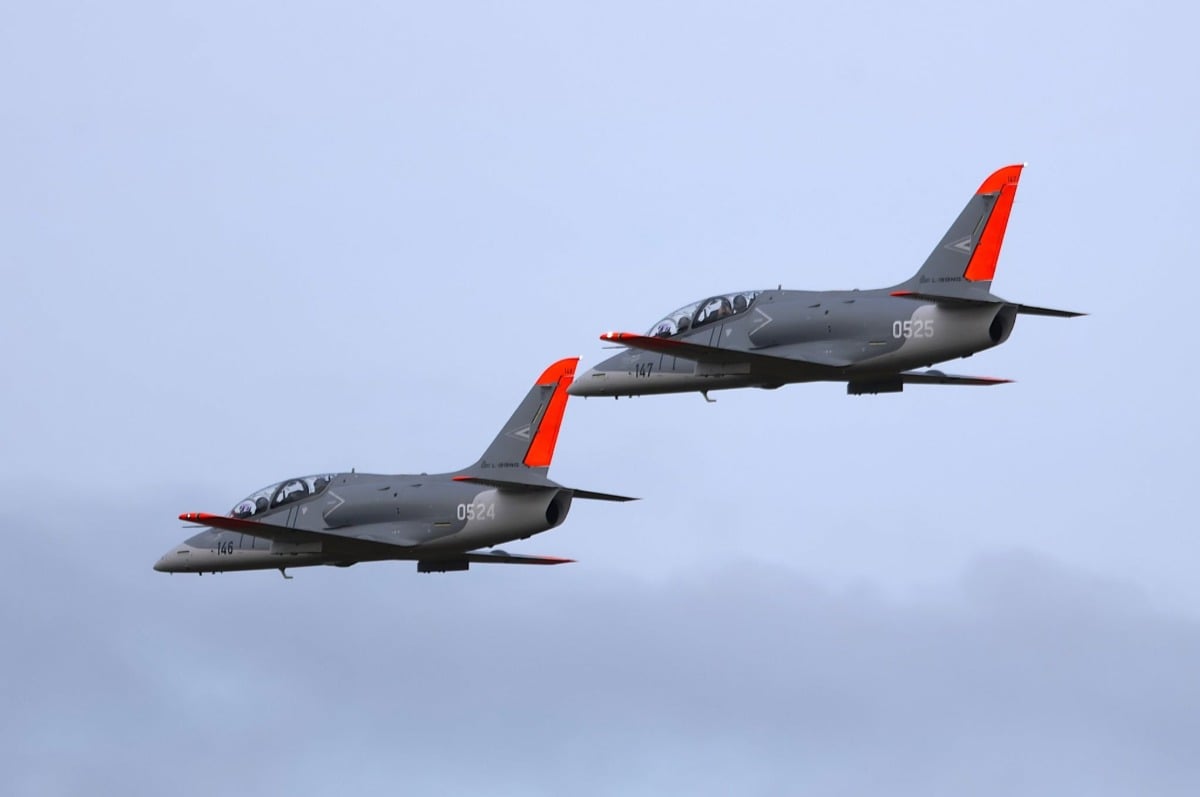
- AERO Vodochody signed contracts for L-39 Skyfox deliveries to Angola and a North American customer, marking the jet's entry into Africa and the Americas.
- Recent orders for nine new Skyfox aircraft and related overhaul work exceed $230 million, filling AERO's production capacity through mid-2027.
A Czech jet trainer that traces its lineage back to the Cold War just broke into two new continents in the same week, and the company behind it says its factory floor is now booked solid into 2027. AERO Vodochody AEROSPACE signed two new contracts for its L-39 Skyfox aircraft, one with a customer in Angola and one with a customer in North America, marking the jet’s first entry into Africa and the Americas after years of operating exclusively across Europe and Asia.
The Czech manufacturer said it has secured orders for nine new Skyfox aircraft over the past several months, with two of those orders subject to options, while simultaneously finishing production on four additional aircraft for a separate customer who has chosen not to discuss the contract publicly.
The L-39 Skyfox itself carries a pedigree that goes back further than most fighter pilots flying today have been alive. It’s the modernized successor to the original L-39 Albatros, a Cold War-era jet trainer that became one of the most widely used aircraft of its type anywhere in the world, with Aero Vodochody having produced roughly 11,000 aircraft total across its century-long history. The Skyfox keeps the Albatros’s basic airframe concept but rebuilds nearly everything else, swapping the original Soviet-designed engine for a Williams International FJ44-4M turbofan that delivers similar thrust at considerably better fuel efficiency, while adding a redesigned “wet wing” that stores fuel inside the wing structure itself rather than relying on the distinctive tip-mounted fuel pods that made the old Albatros instantly recognizable. The result is an aircraft with a maximum speed of up to 420 kt (483 mph), five external hardpoints capable of carrying up to around 1,200 kilograms (2,650 lb) of payload depending on configuration, and a price tag the company has previously said comes in under $10 million, a fraction of what a modern fighter jet costs and cheap enough to make sense as a dedicated trainer rather than a multirole combat aircraft pressed into training duty.
Angola’s decision to buy the Skyfox outright tells a more interesting story than a simple sales contract, because the country didn’t start out planning to buy anything new at all. According to AERO, the Angolan customer’s original request centered on overhauling older L-39 Albatros aircraft already in its inventory, the kind of upgrade-in-place approach that lets an air force extend the life of existing hardware without the cost of acquiring new airframes. After evaluating the operational, economic, and capability tradeoffs, Angola’s customer decided the new-build Skyfox made more sense than refurbishing what it already had, a decision AERO frames as validation that the new aircraft’s performance and avionics improvements outweigh the higher upfront cost of buying new versus repairing old. The contract covers up to four L-39 Skyfox aircraft along with related products and services supporting the introduction of the aircraft into Angolan Air Force operations and the development of a training system to go with it, and AERO says the jets will become the first Skyfox aircraft to operate in the demanding conditions of the Southern Hemisphere.
“We are very pleased to have confirmed our first customer from the African continent,” said Viktor Sotona, President and Chairman of the Board of AERO. “The Skyfox aircraft for the Angolan Air Force will also become the first aircraft of this type to operate in demanding conditions in the Southern Hemisphere. We all believe this is only the first step and that an even greater number of Skyfox aircraft will soon be seen in African skies.”
The North American contract carries a different kind of significance, less about breaking into a new region’s military and more about breaking into a market with deep, established roots in the L-39’s broader history. AERO’s North American customer comes from the civil sector and has long operated a fleet of L-39 Albatros aircraft already, the kind of contract air services provider that companies like Draken International and the Airborne Tactical Advantage Company have built businesses around, flying older jet trainers under contract to support military training exercises and adversary air simulation for the U.S. armed forces. That existing familiarity with the L-39 platform makes the customer a logical early adopter for its modernized successor, and the deal includes commercial representation of the L-39 Skyfox brand in the region, meaning the customer will help AERO market and demonstrate the aircraft to other potential buyers across North America rather than simply operating jets it purchased for its own fleet.
“The agreement with our new partner is important for AERO on two levels,” Sotona said. “Not only will it bring the first Skyfox aircraft to another continent, but it will also make it possible to actively offer and present this platform to other potential users and customers in the region. Direct customer experience and on-site aircraft presentation are the best sales tools.”
Taken together, AERO says its recent order activity, including the nine new aircraft, options on two of them, and overhaul work on older Albatros jets, now exceeds 200 million euros ($230 million) in total value and spans customers across Africa, the Americas, and Asia simultaneously. That volume has filled AERO’s production capacity through the second quarter of 2027, the company said, a backlog that arrives on the heels of what AERO has described as record financial results for 2025 and adds to a customer roster that already includes the Czech Republic, Hungary, and Vietnam as Skyfox operators. For a jet trainer market where customers often face a choice between expensive new-build aircraft and aging Cold War-era hardware nearing the end of its service life, AERO’s bet is that a modernized airframe built on a name air forces already trust will keep winning contracts on three continents at once, turning a Czech aerospace program with century-old roots into one of the country’s most consequential current export businesses.