

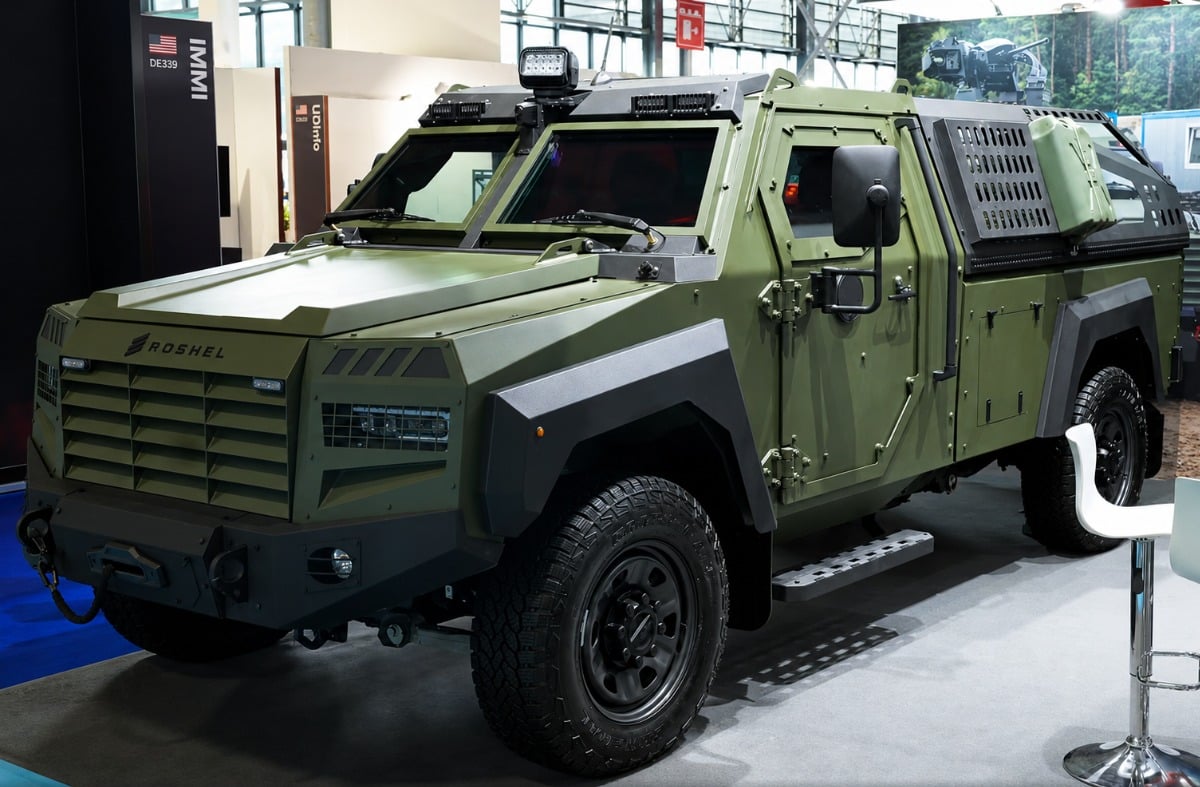
- Roshel unveiled a new generation of its Captain light armored vehicle at Eurosatory 2026, built on the Ford Ranger Super Duty platform.
- The new-generation Captain offers 1.5-tonne net payload with STANAG level 2 ballistic and STANAG level 1 blast protection, in both left- and right-hand drive variants.
A Canadian armored vehicle manufacturer has unveiled a new generation of one of its most versatile protected vehicles, building it on an entirely new platform and pushing its payload capacity to levels the company says are the highest in its class, at a moment when demand for light protected mobility has rarely been stronger.
Roshel, a Canadian defense company that specializes in protected vehicles for military and law enforcement customers, introduced the new-generation Captain at Eurosatory 2026, the biennial land warfare and security exhibition held in Paris that draws defense buyers and manufacturers from across NATO and beyond.
The new-generation Captain rides on the Ford Ranger Super Duty platform, a heavy-duty variant of Ford’s globally popular Ranger midsize truck, and is offered in both single cab and double cab body configurations as well as left-hand drive and right-hand drive variants, giving it a geographic and operational range that covers markets from Europe and North America to the Middle East, Africa, and the Asia-Pacific region where right-hand traffic rules apply.
Roman Shimonov, Roshel’s Chief Executive Officer, described the new vehicle’s core specifications directly at the show.
“This is the New Roshel Captain that now has a 1.5 ton net payload with the STANAG level 2 protection and STANAG level 1 blast protection and this vehicle is a smaller type, more versatile and along with right-hand drive and left-hand drive variants.”
Those NATO standardization ratings, known by the acronym STANAG, which stands for Standardization Agreement, define the minimum levels of ballistic and blast protection that a vehicle must withstand to meet alliance military standards. STANAG level 2 ballistic protection means the vehicle’s armor can resist 7.62 mm armor-piercing rifle rounds fired at close range, a threat level that covers the most common battlefield assault rifles and machine guns used by adversaries worldwide. STANAG level 1 blast protection covers the vehicle’s floor and underbody against explosive threats including anti-personnel mines and improvised explosive devices, the roadside bombs that have been responsible for a significant proportion of combat casualties in conflicts from Afghanistan to the Sahel. Achieving both ratings simultaneously in a light armored vehicle built on a commercial platform, while maintaining a 1.5-tonne (3,307-pound) net payload capacity, is a genuinely demanding engineering challenge because armor weight directly competes with the vehicle’s ability to carry personnel, equipment, and weapons.
The Captain’s evolution across generations illustrates how Roshel has steadily expanded its ambitions in the protected vehicle market. The original Captain was built on the Toyota Land Cruiser 70 Series chassis, a rugged and globally supported civilian 4×4 platform that made it an accessible and cost-effective solution for police, border patrol, and law enforcement customers operating in environments where commercial parts availability and driver familiarity matter as much as raw military specification.
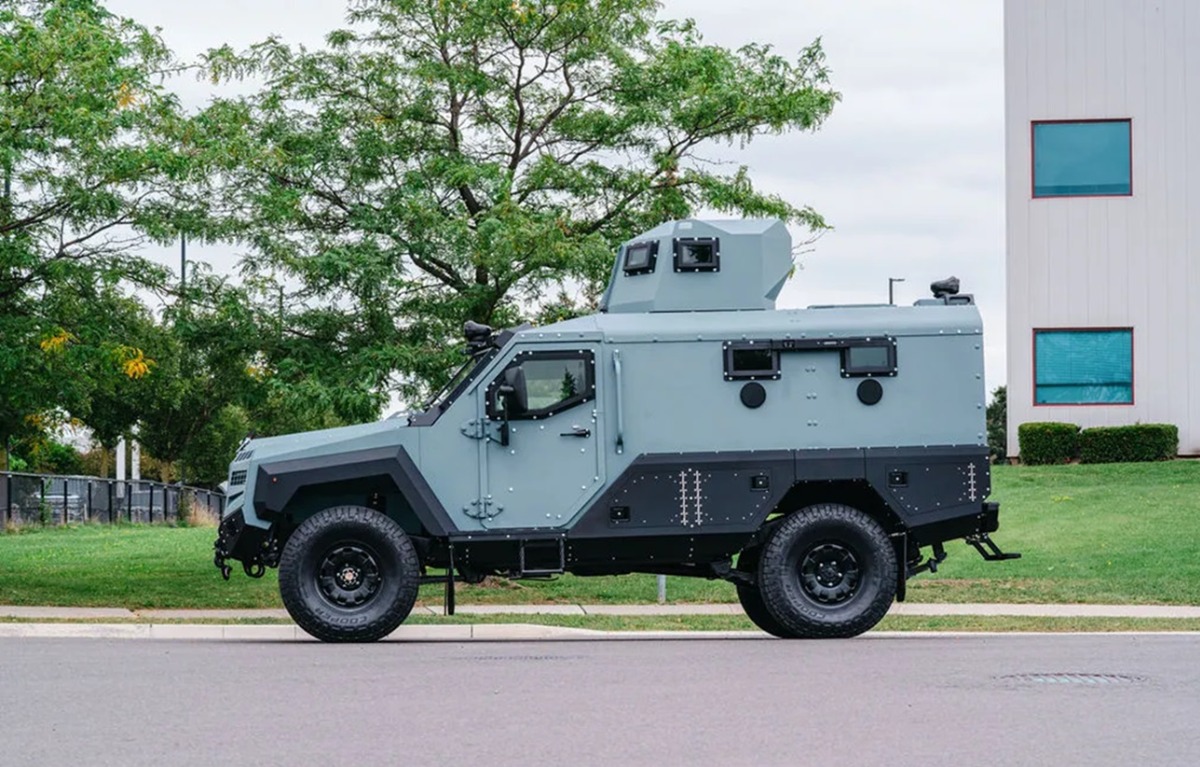
The new-generation Captain’s positioning as a vehicle designed to bridge the gap between a traditional armored personnel carrier and a lighter protected vehicle reflects a real and growing segment of the military market. Conventional armored personnel carriers are expensive to purchase, expensive to operate, and require dedicated maintenance infrastructure that many smaller militaries and security forces simply do not have. Light armored vehicles built on commercial platforms can be maintained using civilian automotive supply chains, fueled at standard stations, and operated by personnel with conventional vehicle training, making them far more accessible to customers in resource-constrained environments. The trade-off has historically been protection: lighter commercial-based armored vehicles have struggled to carry enough armor to matter against serious threats without sacrificing the mobility and payload that make them useful in the first place.
Roshel’s claim that the new-generation Captain delivers the highest payload capacity in its class while achieving STANAG level 2 ballistic protection addresses that trade-off directly. The Ford Ranger Super Duty platform provides a stronger foundation than a standard Ranger would, since the Super Duty designation implies a reinforced chassis and suspension system capable of handling significantly greater loads, but the precise vehicle weight, gross vehicle weight rating, and full armor package specifications were not released in the information available from the Eurosatory introduction.
The double cab configuration is likely to be the more operationally significant of the two body options for most military customers, as it allows the vehicle to carry a crew with full combat equipment while retaining cargo capacity for weapons systems, communications equipment, or supplies. The single cab variant trades passenger capacity for a larger load area, suiting roles such as logistics support, weapons platform mounting, or configurations where a flat rear area is more operationally valuable than additional seating.