

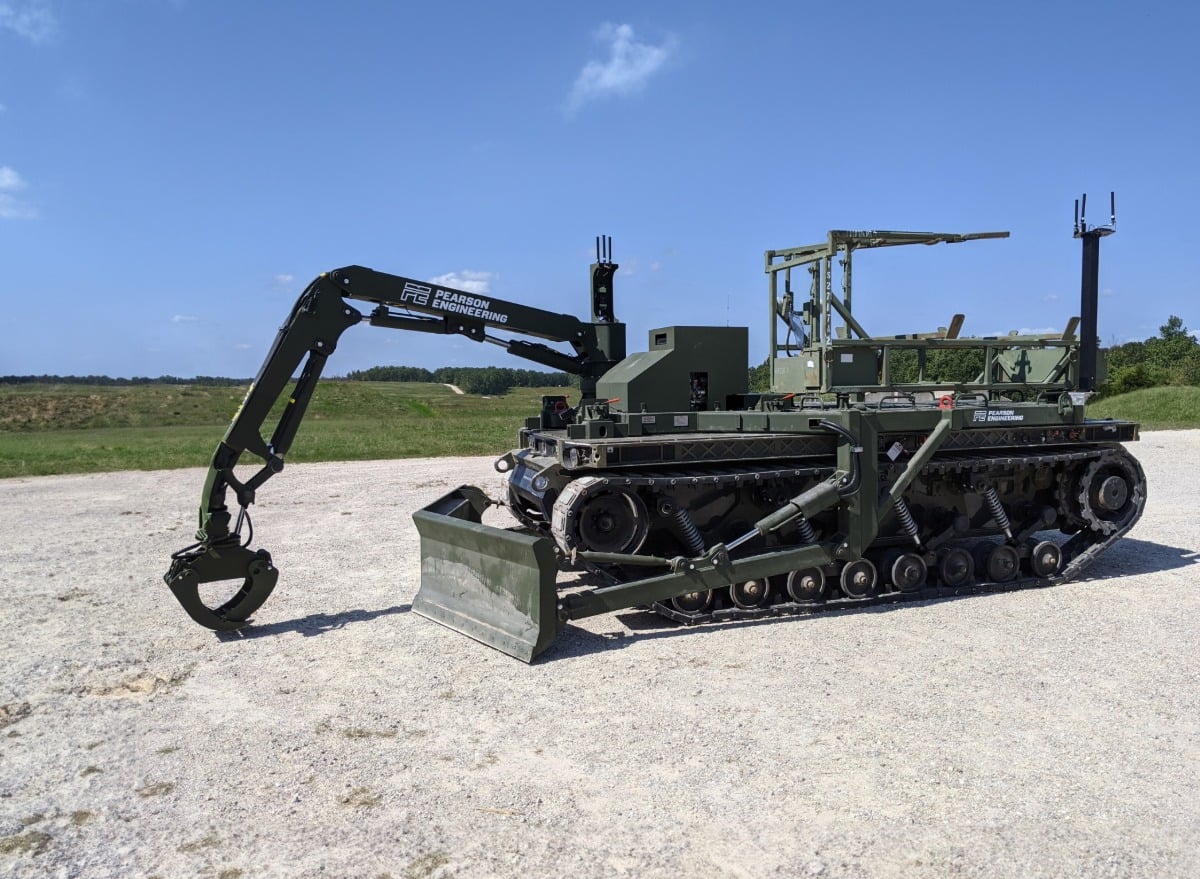
- The U.S. Army issued an RFI on June 17, 2026, seeking unmanned systems capable of autonomous vehicle recovery in contested environments.
- Industry responses addressing autonomous navigation, rigging, and DDIL operations are due by July 31, 2026.
Every soldier knows the feeling: a vehicle goes down in hostile territory, and suddenly a simple recovery mission turns into a potential casualty event. The U.S. Army wants to change that calculus by removing humans from the equation entirely, and it is now asking the defense industry to show what unmanned systems can do when the shooting starts and the comms go dark.
The Army Contracting Command’s Aberdeen Proving Ground office, operating out of Durham, published a Request for Information on June 17, 2026, calling on industry to demonstrate technologies capable of autonomously locating, rigging, and recovering disabled or destroyed military vehicles in contested combat environments. The RFI falls under the Army Materiel Command’s sustainment portfolio, and responses are due no later than July 31, 2026. The document is not a contract solicitation but a formal market survey designed to shape future requirements before procurement begins.
The problem the Army is trying to solve is not new, but the scale of its consequences in modern warfare has sharpened the urgency. Current vehicle recovery operations require large teams of specialists, including both maintenance crews and dedicated security elements, operating under strict human endurance limits in areas where enemy contact remains a constant threat. When a tank or armored vehicle is immobilized, recovering it typically means sending more soldiers into the same danger zone that took out the first vehicle. The Army’s own problem statement acknowledges that these missions are “fundamentally constrained by human endurance limits,” a candid admission that the current model reaches a hard ceiling in sustained, high-intensity conflict.
Compounding the manpower challenge is the communications environment that defines modern contested operations. Military planners refer to it by the acronym DDIL, which stands for Denied, Degraded, Intermittent, and Limited network conditions, and it describes the electronic warfare landscape that any recovery system operating near the front line will encounter. Enemy jamming, terrain interference, and deliberate signal suppression can sever the link between a remote operator and an unmanned system at exactly the wrong moment, making reliable human-in-the-loop control impractical and pushing the requirement firmly into the territory of autonomous decision-making.
The Army’s questions to industry reflect that operational reality with unusual specificity. Respondents must address how their systems would independently locate and navigate to a disabled vehicle without human guidance, how they would conduct autonomous rigging operations connecting towing or recovery equipment to the stricken vehicle, and how they would accomplish both tasks in geographically extreme terrain including unstable soil, severe obstacles, and positions on high ground that wheeled or tracked vehicles struggle to reach. The final question cuts to the hardest technical challenge of all: completing the entire sequence with no reliable communication link to any operator or command node.
The phrase “autonomous rigging” deserves particular attention because it sits at the boundary of what current robotics can reliably perform at scale. Rigging a vehicle for recovery is not a simple task even for trained soldiers. It requires assessing the vehicle’s damage, identifying attachment points, connecting hooks, straps, or tow bars under often adverse conditions, and doing so in a sequence that keeps the equipment safe during extraction. Automating that process for a general-purpose system capable of handling multiple vehicle types, damage states, and terrain conditions represents a significant engineering challenge that the Army is clearly signaling it is ready to fund.
The reference document cited in the RFI is Army Technical Publication 4-31, which governs Recovery and Battle Damage Assessment and Repair, a field manual that runs across a broad range of vehicle recovery scenarios from simple tows to complex winching operations on demolished platforms. That reference signals the Army is thinking about this capability in the context of its established doctrinal framework, not as an experimental novelty, which suggests the program could mature into a formal program of record if the market survey turns up credible solutions.
The RFI explicitly states the Army is open to modifications of existing platforms or entirely new systems, a deliberately broad aperture that invites responses from established defense primes and smaller robotics companies alike. The Army Sustainment Community, as the document describes it, is looking for low-logistics solutions, meaning systems that do not themselves require extensive support infrastructure, that reduce the personnel footprint, and that minimize the time soldiers spend exposed to fire during what are currently among the most dangerous routine missions in ground combat.