


- U.S. Navy amphibious ships, including USS Iwo Jima and USS Fort Lauderdale, were observed off the coast of Trinidad and Tobago during joint drills running from November 16 to 21.
- Satellite imagery shows the USS Iwo Jima operating 69 km north of Venezuela’s Paria Peninsula, with other U.S. vessels positioned near Isla de Patos.
Satellite imagery captured by the European Space Agency’s Sentinel-2 satellite has revealed the current position of U.S. Navy warships conducting joint operations with Trinidad and Tobago’s military forces in the southern Caribbean.
The images, dated November 18, confirm the presence of the Iwo Jima Amphibious Ready Group (ARG) in waters north of Venezuela as part of the bilateral training exercise underway from November 16 to 21.
According to the coordinates reviewed, the amphibious assault ship USS Iwo Jima (LHD-7) was located approximately 69 kilometers north of Venezuela’s Paria Peninsula. The vessel is operating near 11.356°N latitude and 61.691°W longitude, just off the northern coast of Trinidad and Tobago.
Additionally, the USS Fort Lauderdale (LPD-28) and a U.S. Navy Arleigh Burke-class guided missile destroyer were observed approximately 21 kilometers from Venezuela’s Isla de Patos, situated at roughly 10.455°N and 61.792°W. These vessels are part of the same amphibious force operating in support of regional exercises and strategic presence missions.
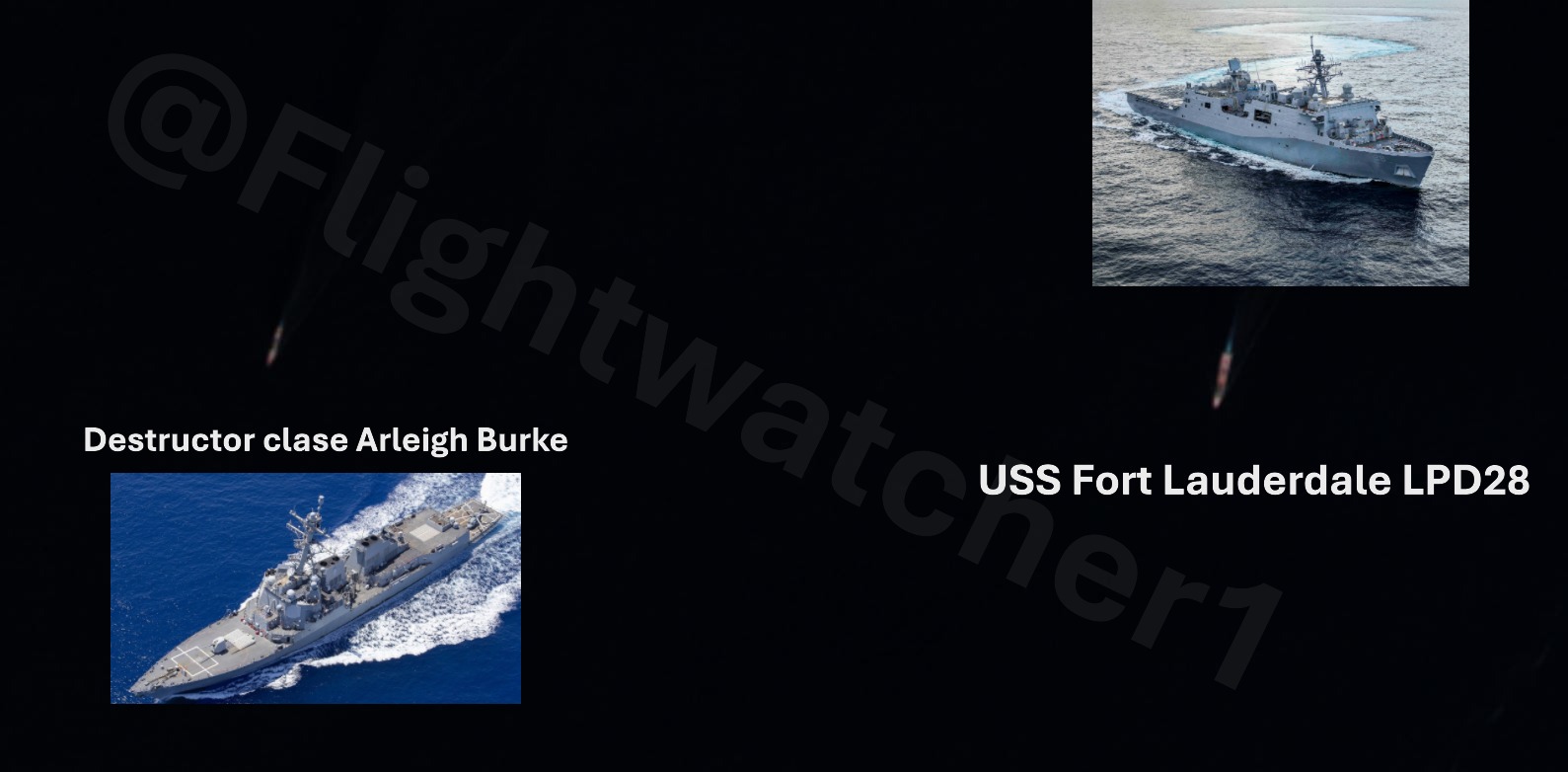
The operation comes amid increasing attention to U.S. military activities in the Caribbean and near Venezuela’s maritime borders. The U.S. Navy has not publicly disclosed the detailed scope of the maneuvers, but open-source satellite intelligence and maritime traffic monitoring platforms confirm that the ships have maintained consistent positions off the northeastern coast of South America.
The proximity to Venezuelan territorial waters has raised regional interest, given ongoing diplomatic tensions between the U.S. and the Maduro government.
The USS Iwo Jima, part of Amphibious Squadron 4, typically deploys with a Marine Expeditionary Unit (MEU) and is capable of supporting both amphibious assaults and humanitarian missions. The USS Fort Lauderdale, commissioned in 2022, enhances the group’s capacity for transporting troops, vehicles, and supplies. Arleigh Burke-class destroyers provide air defense and anti-submarine capability for the group.