


- U.S. Marines loaded a GBU-54 munition onto an F-35B in Puerto Rico as part of Southern Command-directed operations in the Caribbean.
- The Marine Corps says the deployment supports missions to disrupt illicit drug trafficking and protect the homeland.
United States Marine Corps aviation units are preparing for combat sorties in the Caribbean as part of ongoing missions directed by U.S. Southern Command and the Department of War.
New footage released by the Marine Corps shows F-35B Lightning II aircraft being armed in Puerto Rico as U.S. forces continue efforts to disrupt illicit trafficking routes across the region.
According to the Marine Corps, U.S. Marines with Marine Fighter Attack Squadron 225, assigned to U.S. Marine Corps Forces, South, loaded a GBU-54 Laser Joint Direct Attack Munition into an F-35B Lightning II at José Aponte de la Torre Airport on October 25. The aircraft, part of VMFA-225, are deployed to support operations ordered under the president’s priorities to “disrupt illicit drug trafficking and protect the homeland.”
The Marine Corps said the activity demonstrates the squadron’s readiness to conduct missions across the Caribbean as part of the wider Southern Command effort to monitor, interdict, and deter criminal networks that use the region’s air and maritime corridors for smuggling. The Marine Corps emphasized that these operations are carried out under Department of War-directed tasking and involve coordination with U.S. agencies and regional partners.
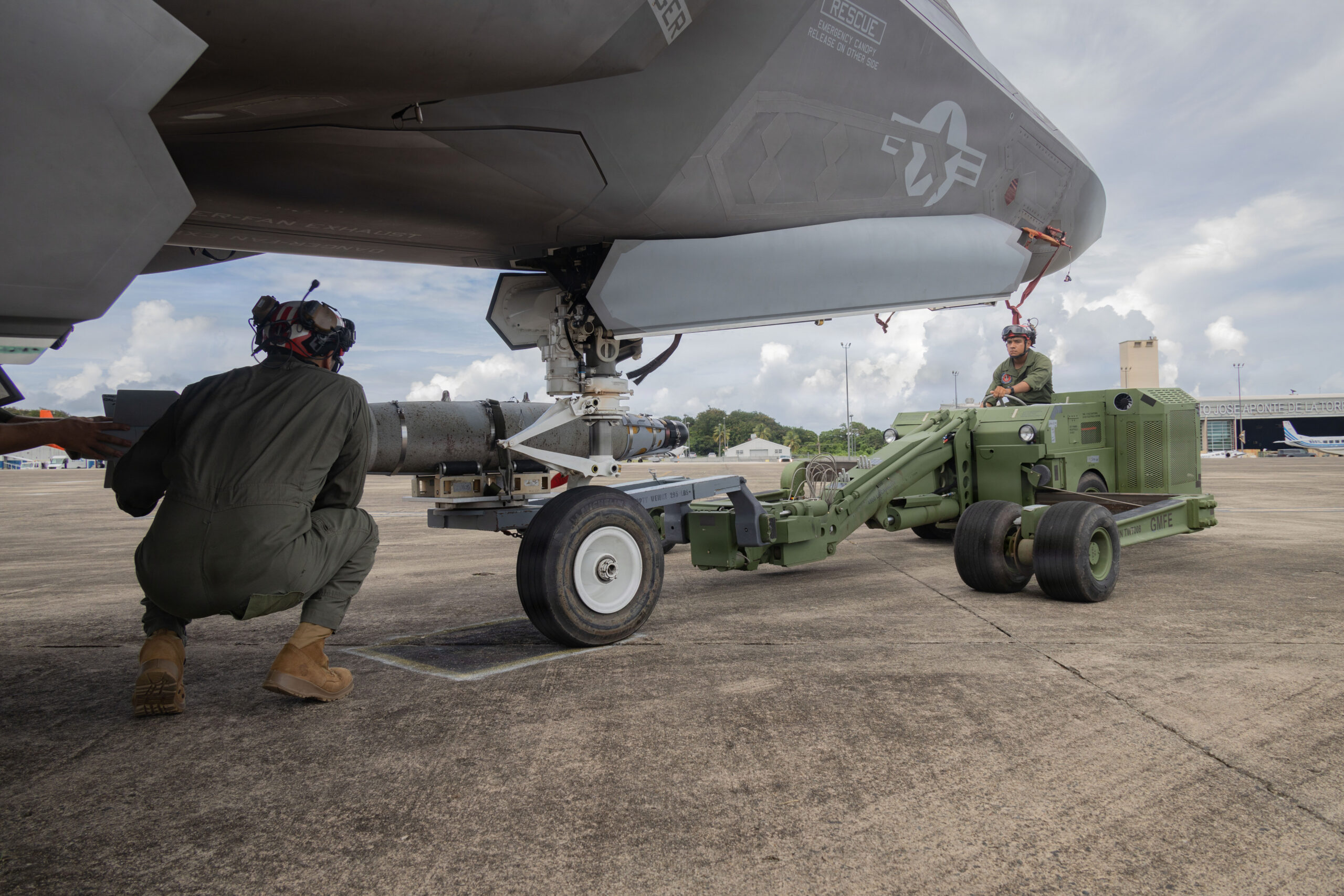
The F-35B, a short takeoff and vertical landing variant of the Lightning II, offers the ability to operate from remote or improvised locations—an important feature for deployments across dispersed Caribbean territories. While the Marine Corps routinely flies surveillance and reconnaissance missions in support of counter-narcotics enforcement, the footage highlights the use of precision-guided munitions such as the GBU-54, a weapon capable of laser and GPS guidance.
The service did not provide details on the specific mission profiles expected for VMFA-225 but emphasized the role of Marine aviation in supporting Southern Command’s regional mandate. The operations fall under a long-running U.S. effort to track trafficking networks that move narcotics toward North America using fast boats, small aircraft, and covert maritime routes.
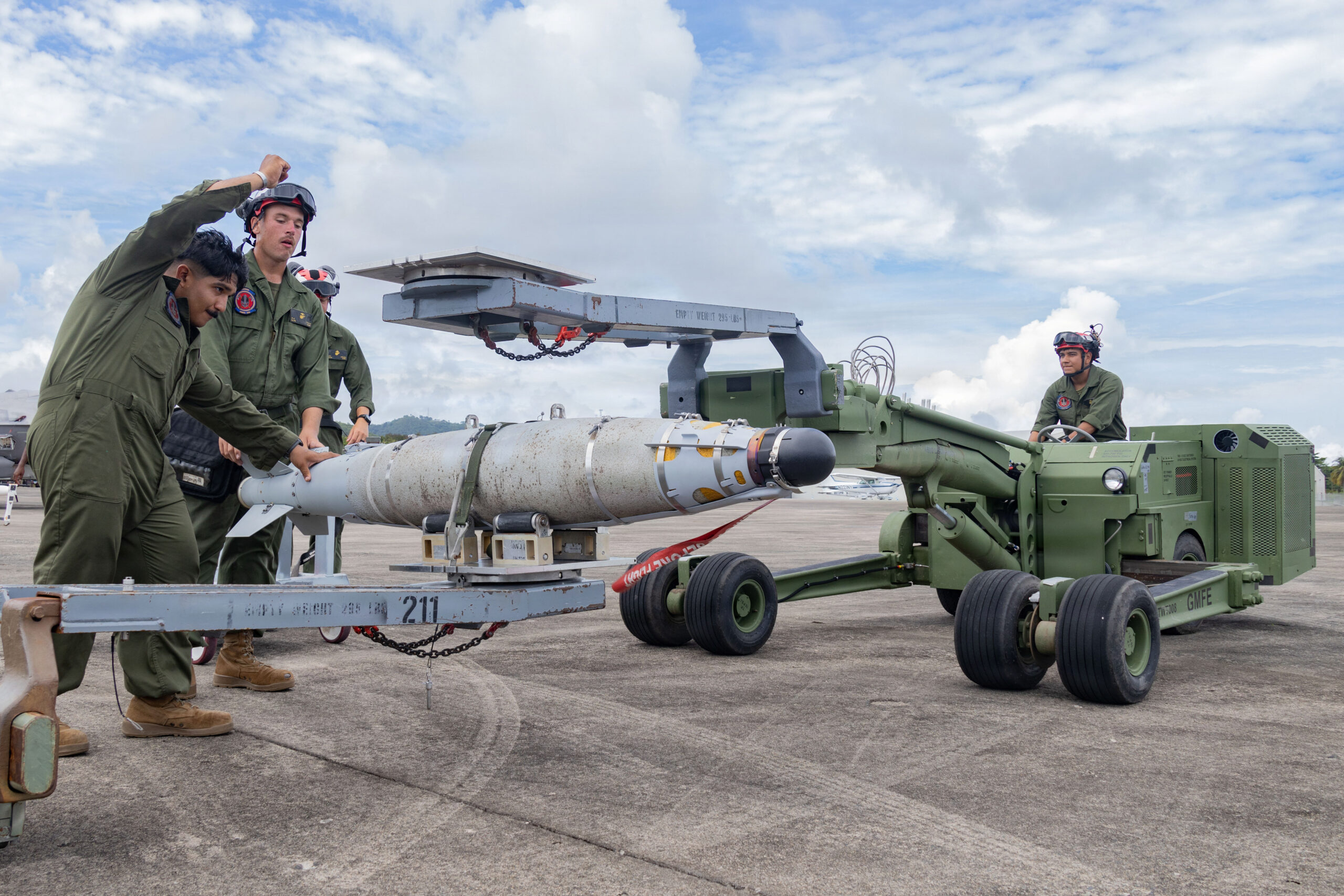
By staging aircraft from Puerto Rico, the Marine Corps places advanced sensors, rapid-response aviation, and precision strike capabilities within reach of trafficking corridors that have shifted in recent years due to increased enforcement pressure elsewhere in the hemisphere. The deployment also reflects growing emphasis on flexible basing, allowing Marine units to operate from smaller, civilian dual-use facilities when necessary.
The Marine Corps has reported that VMFA-225 is working alongside other U.S. military elements deployed throughout the Caribbean basin. These activities include maritime patrol, intelligence sharing, coordination with U.S. law enforcement agencies, and support to partner nations that participate in regional interdiction efforts.
Marine aviation officials say the F-35B’s sensor suite, networking capabilities, and ability to operate in austere conditions make it suited for missions that require rapid identification and tracking of small, fast-moving targets common in smuggling operations.
While the operations take place outside the continental United States, they target trafficking routes that directly affect U.S. communities and law enforcement agencies. The presence of Marine F-35Bs also reflects a broader shift toward dispersing advanced aircraft across multiple forward locations—a concept the Department of War views as relevant not only for counter-narcotics missions but for wider national security planning.