


Russian forces are converting Chinese-made all-terrain vehicles into remotely operated battlefield systems, including cable-laying platforms and logistics carriers, as they seek to reduce troop exposure and adapt commercial technology for use in the war against Ukraine.
Troops from the 36th Guards Combined Arms Army of the “Vostok” grouping are now fielding a remote-controlled fiber-optic cable-laying system built on the Desertcross 1000-3 platform — a civilian utility vehicle originally designed for recreational off-road use. The adapted system can lay up to five kilometers of fiber-optic communications cable through various types of terrain, according to Russian military media reports.
The primary aim of the project, the reports said, is to reduce the risks faced by signal troops tasked with establishing and maintaining communications lines in frontline conditions. By removing personnel from exposed positions and replacing them with remotely controlled platforms, the Russian military hopes to maintain network connectivity while minimizing casualties.
The Desertcross 1000-3 is an all-wheel-drive ATV powered by a 72-horsepower gasoline engine. It has a 50-liter fuel tank, a total mass of 916 kilograms, and can carry up to 300 kilograms of cargo — enough to transport towed mortars along with a small ammunition load. Although originally marketed by its Chinese manufacturer as a golf cart, recreational vehicle for tourists, and commercial users, the model is now being modified for a wide range of battlefield roles.
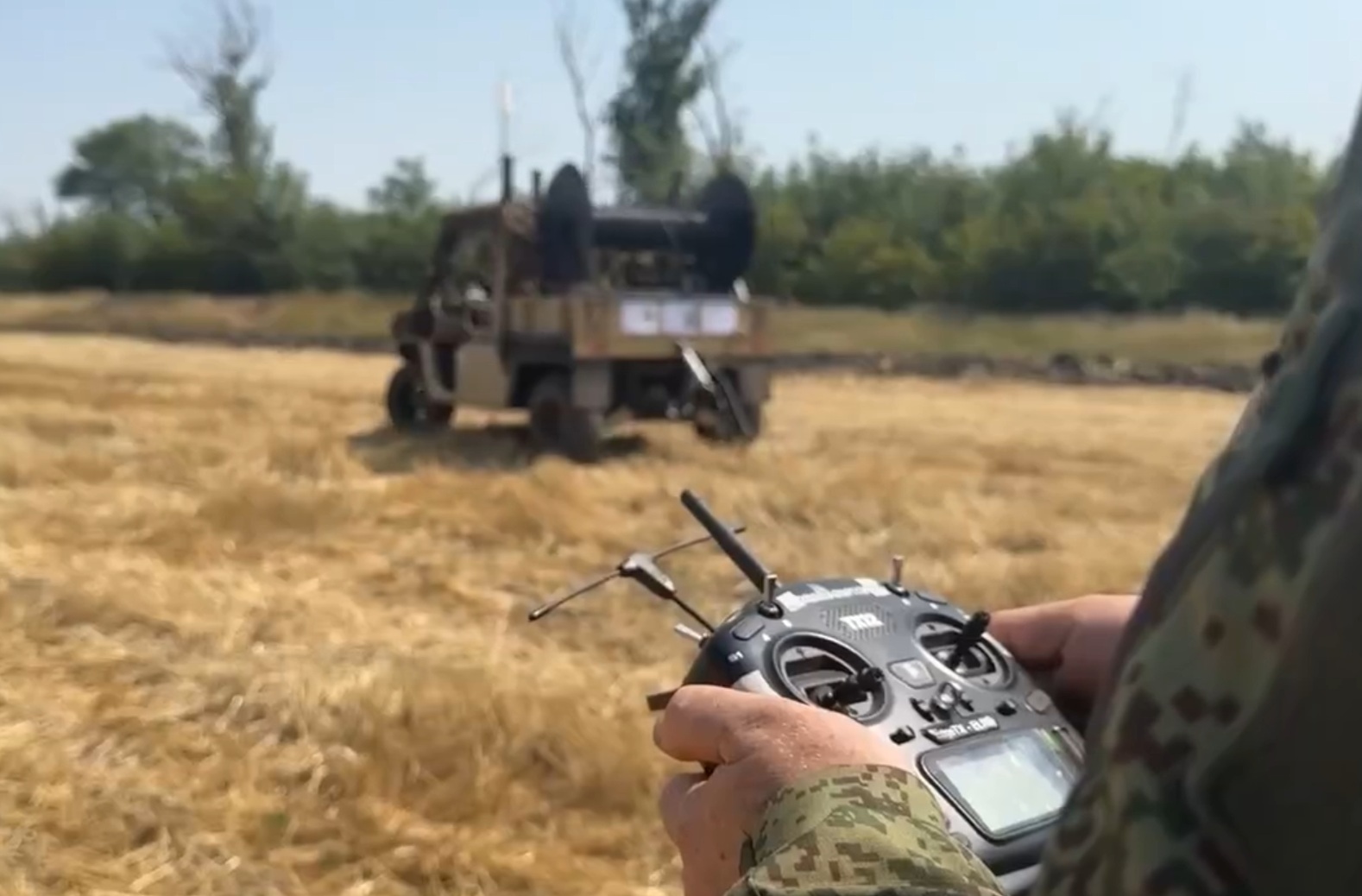
The remote-control system installed on the Desertcross platform is assembled from commercially available components and features parts produced using 3D-printing technology, Russian media said. Operators can control the vehicle from a distance, allowing it to function autonomously during missions that would otherwise expose troops to artillery, drones, or small-arms fire.
The Russian military has reportedly purchased thousands of Desertcross vehicles from China and is employing them not only for logistical tasks but also during assaults on Ukrainian positions.