


North Korean leader Kim Jong Un has overseen testing of the country’s new series of tactical uncrewed combat aerial vehicles, according to state-run outlet KCNA.
During the inspection, Kim reportedly directed defense and aerospace authorities to focus on integrating artificial intelligence into both the drone control systems and broader combat operations. While no technical details were disclosed, the report emphasized the priority of enhancing operational effectiveness and execution through intelligent automation.
State media released limited footage of the exercise, which appears to feature previously observed drone types. These include systems resembling known reconnaissance and loitering munition platforms—many of which are considered visual or functional copies of American and Russian designs.
The drones shown during the inspection bore close resemblance to earlier prototypes displayed in 2023 and early 2024. Observers have pointed to multiple similarities between North Korea’s uncrewed aerial systems and foreign platforms, including U.S. switchblade-type or Russian lancet loitering munitions and the U.S.-made RQ-4 reconnaissance drone. However, there is no indication that any newly developed airframes or configurations were presented.
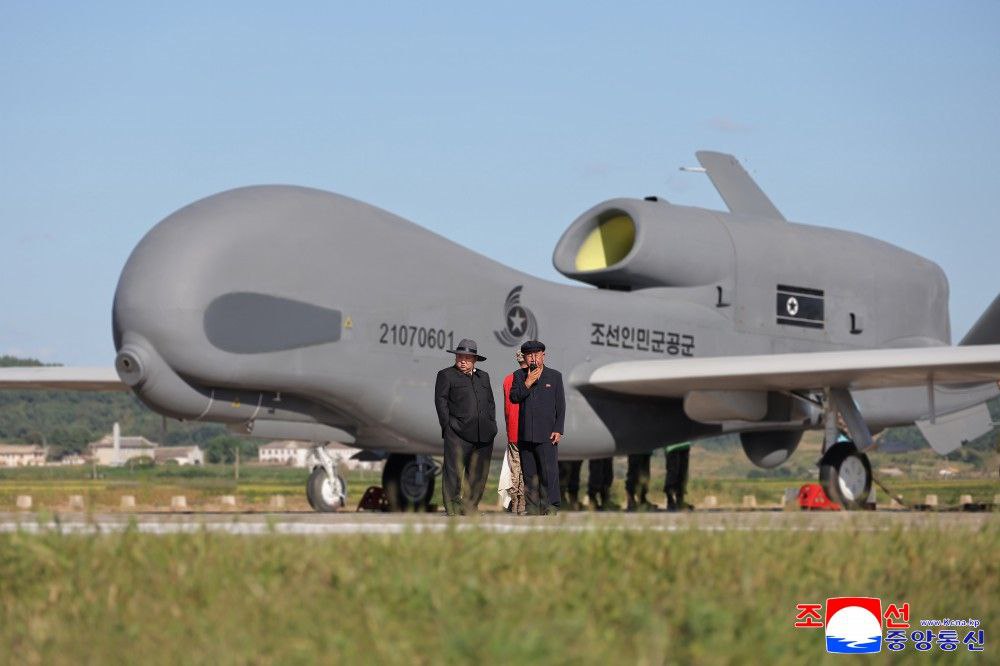
While Pyongyang’s drone program has remained largely secretive, the public emphasis on AI integration represents a new phase in North Korea’s military messaging. Until now, artificial intelligence has not been highlighted in state media coverage of defense technologies. Analysts view this development as an attempt by the regime to align itself with broader trends in autonomous warfare.
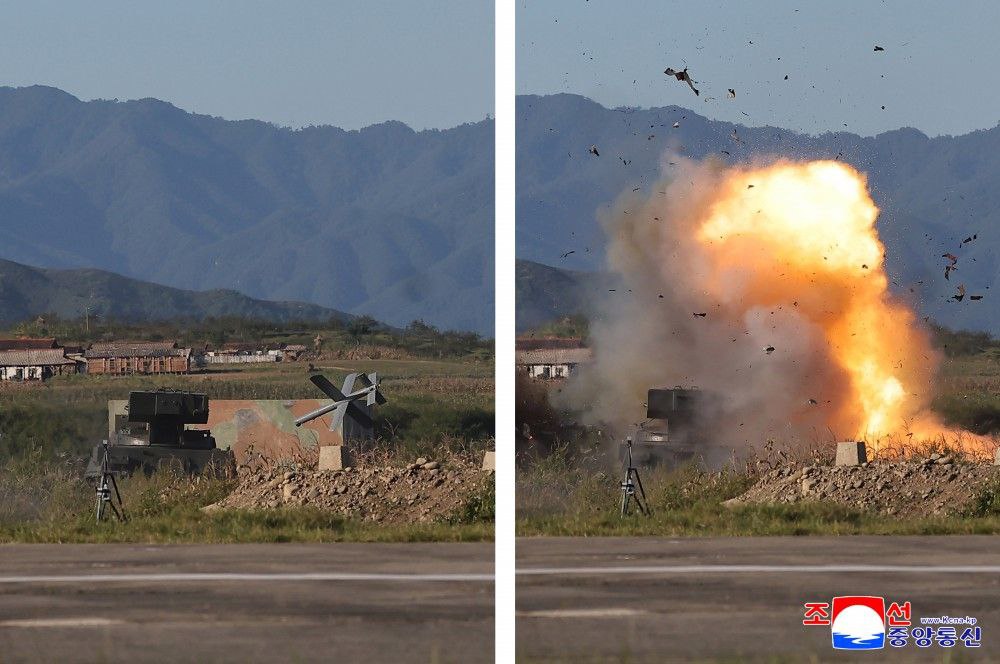
In the report, Kim was quoted as calling for “a qualitative leap” in uncrewed combat capabilities and called on scientists and technicians to “urgently develop core algorithms and control logics needed for unmanned warfare.” KCNA noted that the instruction includes the creation of AI-based adaptive mission software that could potentially adjust to battlefield conditions in real time.
No specific model names, specifications, or timelines for deployment were disclosed. However, the system’s debut—albeit with familiar-looking hardware—suggests that Pyongyang is attempting to signal growing maturity in its drone development efforts.