


A formation of UH-1N Iroquois helicopters flew over Minot Air Force Base, North Dakota, in August 2025, underscoring the enduring presence of the Vietnam-era aircraft in one of America’s most sensitive nuclear missions.
According to the U.S. Air Force, the UH-1N’s primary missions include airlifting emergency security forces, conducting surveillance of off-base nuclear weapons convoys, and performing medical evacuations.
The helicopters have been a fixture at Minot since March 20, 1980, and remain central to base operations.
The UH-1N, commonly referred to as the Huey, has carried out these roles for more than four decades. Its longevity at Minot reflects the continued reliance on the aircraft to secure America’s nuclear arsenal, particularly in ensuring the safety of convoys transporting nuclear weapons.
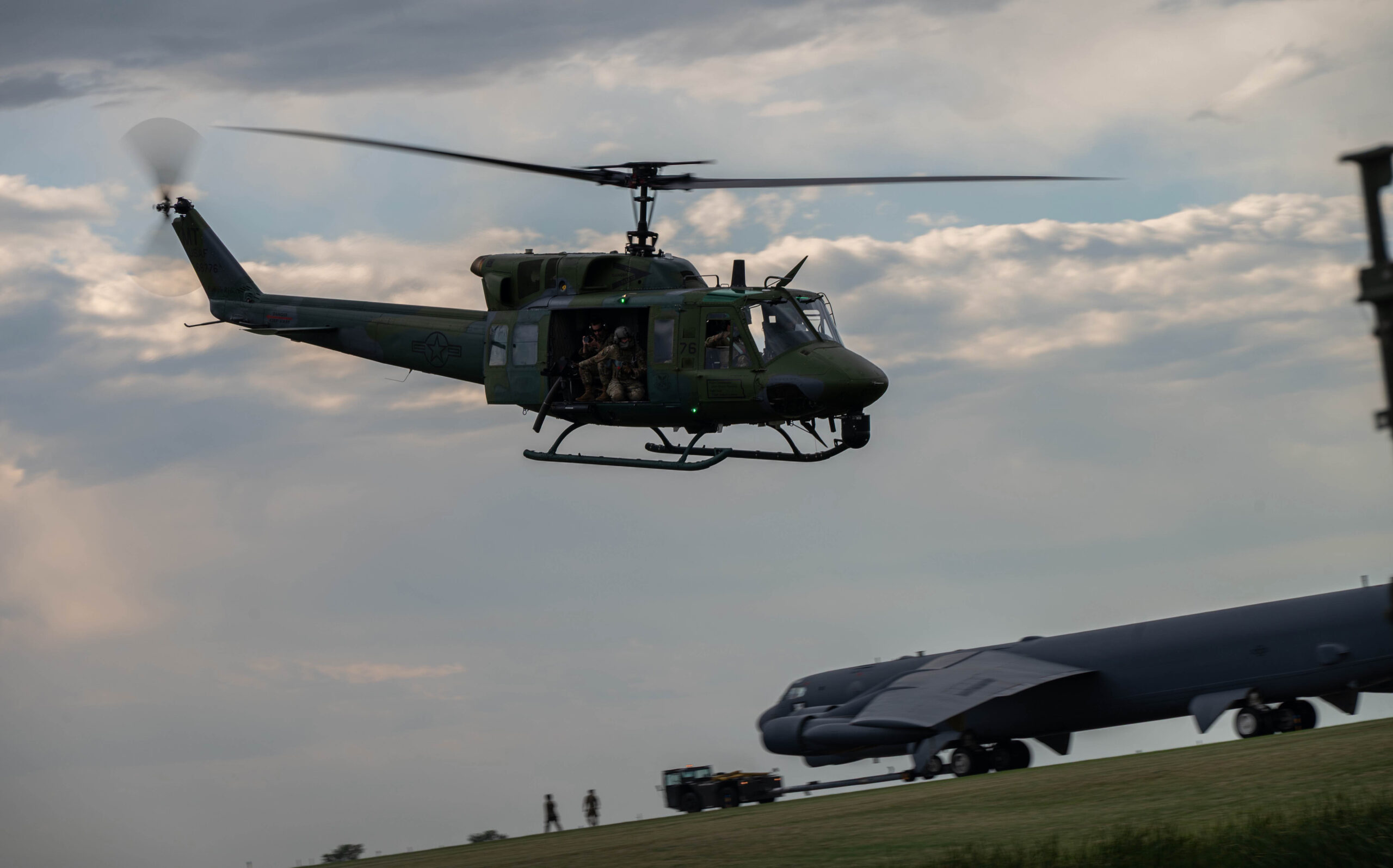
Air Force officials confirmed that the aircraft will continue flying until 2029, when they are expected to be fully retired. The planned replacement is the MH-139A Grey Wolf, which is scheduled to begin arriving at Minot in 2027. The Grey Wolf program is designed to provide enhanced range, speed, and survivability compared to the UH-1N, bringing updated capabilities to an essential mission set.

The transition will mark the end of nearly half a century of service for the UH-1N at Minot. First introduced in the early 1970s, the twin-engine helicopter has been deployed widely across the Air Force for transport, security, and evacuation missions. At Minot, its role has been especially critical given the base’s responsibility for nuclear operations.
The arrival of the MH-139A in 2027 is expected to allow a gradual transition, ensuring no gaps in nuclear security operations.
The Grey Wolf, developed from the AW139 and adapted for U.S. military use, will provide greater range and payload, better communications systems, and stronger defensive features. The Air Force has said that these upgrades are necessary to address evolving security requirements and ensure the safe transport of nuclear weapons in the years ahead.