


U.S. Marines at Marine Corps Base Camp Pendleton, California, are gaining hands-on experience with a new class of unmanned underwater systems designed to improve data gathering in coastal and littoral environments.
On August 5, 2025, Marines from the 15th Marine Expeditionary Unit (MEU), I Marine Expeditionary Force, launched JaiaBot autonomous underwater vehicles during a familiarization course. The exercise, part of the unit’s ongoing integration of unmanned maritime technologies, allowed Marines to test the systems in live conditions along the Southern California coast.
According to the Marine Corps, the JaiaBot systems provide the capability to autonomously collect and transmit high-resolution environmental data in coastal and near-shore waters. This information can be used to support reconnaissance, operational planning, and mission execution.
Joshua Mickles, vice president of Jaia Robotics, attended the course and observed the Marines’ training.

The company says its JaiaBots are “low cost, micro-sized, high speed aquatic drones for data collection and payload delivery.” The vehicles are ultraportable and can be deployed from a wide range of locations, including the surf zone, riverbanks, docks, or watercraft.
The JaiaBot’s modular design enables the rapid integration of different sensors and payloads, making it adaptable to a variety of mission profiles. As noted by Jaia Robotics, the system’s ease of use reduces the time required for operator training and lowers the burden of maintenance.
“This rugged and reliable aquatic drone can realistically and feasibly scale your data acquisition by using a pod of JaiaBots at an unprecedentedly low cost,” the company states in its product description.
For the 15th MEU, the familiarization course was not only about learning to operate the JaiaBot but also about understanding its potential applications in real-world operations. Unmanned maritime systems have become an increasing focus for the U.S. military as it seeks to expand capabilities in intelligence gathering and situational awareness, particularly in contested or hard-to-access environments.
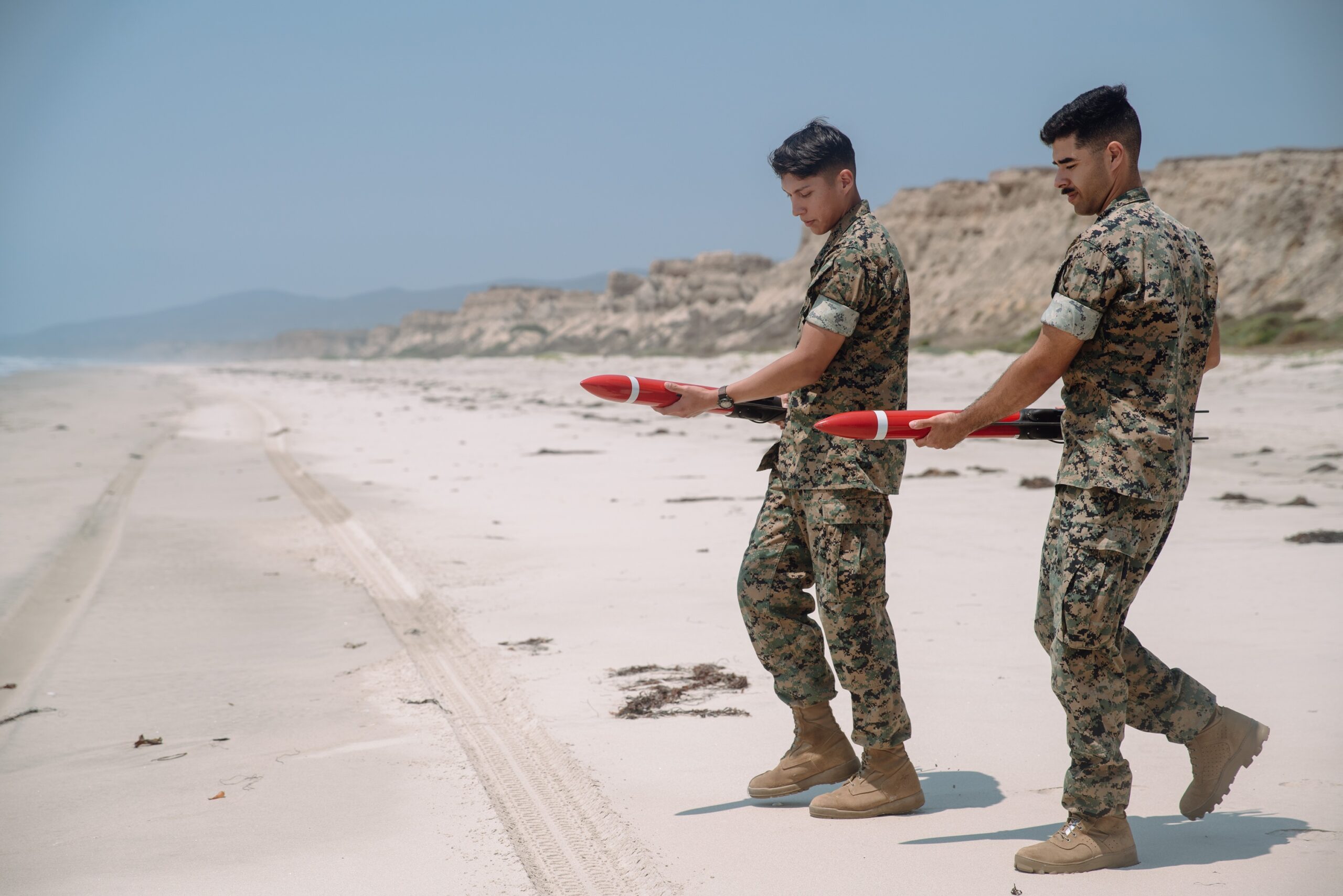
The deployment of a pod of JaiaBots offers a force multiplier effect, allowing Marines to collect large volumes of environmental data quickly. This can provide commanders with an accurate picture of coastal conditions, including water temperature, salinity, currents, and underwater terrain — factors that can directly impact amphibious operations and other missions.