


Slovakia-based defense manufacturer DefTech has released a new image of its Wolf 25 AD counter-drone combat vehicle, positioning the platform as a critical solution for today’s fast-evolving air threat environment.
The company said the system has already completed successful trials and is currently deployed in Ukraine, where it continues to receive positive operational feedback.
In a statement accompanying the release, DefTech emphasized the urgency of fielding mobile and scalable air defense assets against small unmanned aerial systems (UAS).
“The threat of small drones is no longer theoretical or hypothetical—it’s real,” the company said. “From Ukraine to the Middle East, low-cost UAVs are disrupting armored units, radar systems, and supply lines.”
DefTech noted that drones have not only become a battlefield hazard for mechanized forces but are also increasingly used to target civilian infrastructure, including airports, power grids, and communications facilities. The statement warned that “even individual soldiers are increasingly vulnerable,” as low-cost drones with improvised munitions proliferate across irregular and state-backed forces alike.
“Traditional air defense systems weren’t designed for this threat,” the company added. “That’s why Gap-Filler Air Defence systems like the Wolf 25 AD are critical. Mobile, scalable C-UAS platforms must become a baseline capability—not optional add-ons—across modern armed forces.”
The Wolf 25 AD is built on a modular V-shaped 4×4 armored chassis and is powered by a 450-horsepower, 9-liter engine. It features a top speed of 100 kilometers per hour and a maximum range of 700 kilometers. Designed for a four-person crew—driver, commander, technician, and gunner—the vehicle is optimized for rapid mobility, featuring an independent wheel suspension and automatic transmission system suited for off-road and high-threat environments.
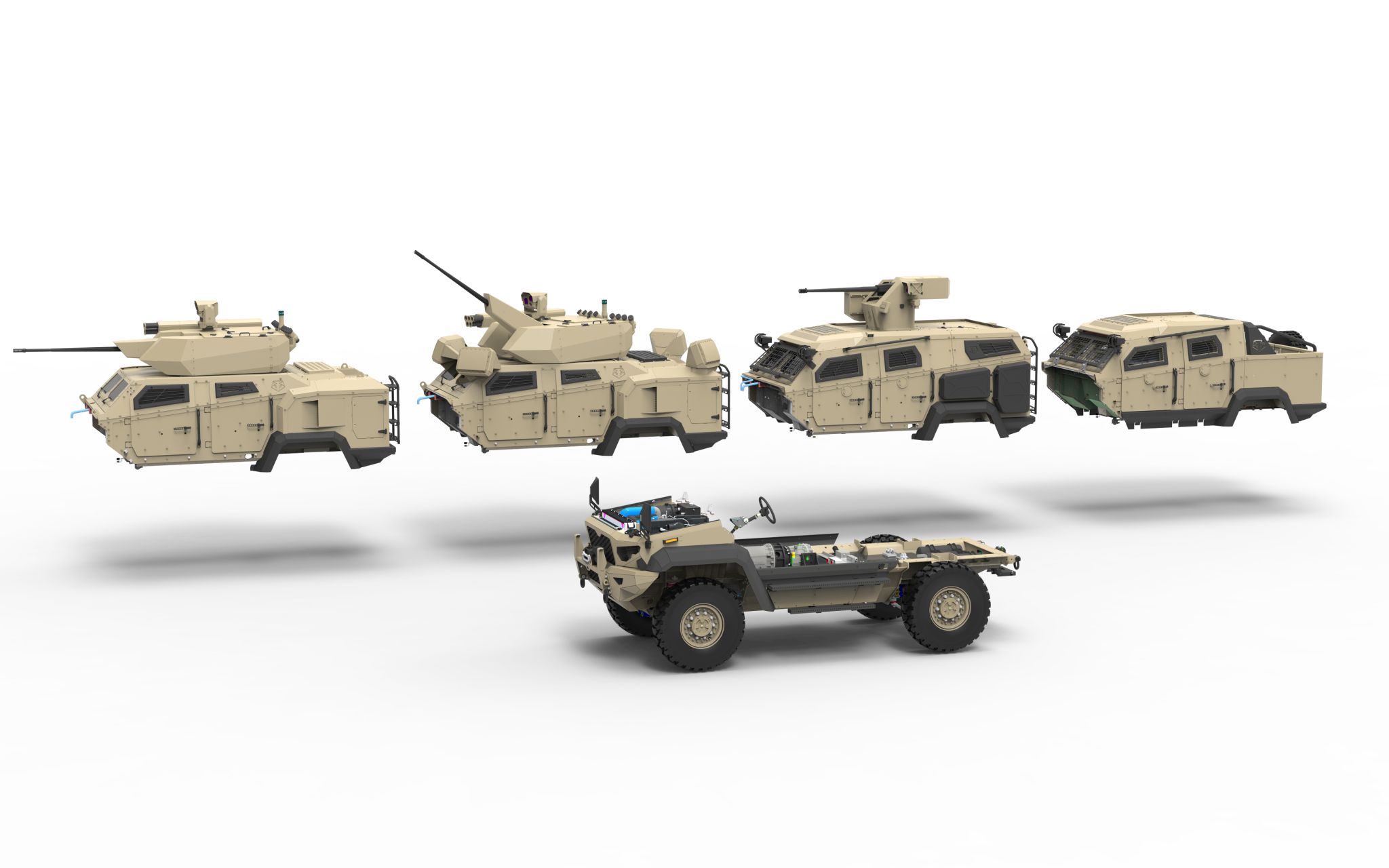
The core of the Wolf 25 AD’s capability is its turret-mounted Oerlikon KBA 25x137mm automatic cannon, which supports a range of ammunition types tailored to both aerial and ground-based threats. This includes proximity-fused high-explosive rounds (PX-HE) designed specifically for low-altitude drone interception, as well as armor-piercing and incendiary options for use against light vehicles and dismounted targets.
DefTech confirmed that the Wolf 25 AD underwent performance testing in Slovakia prior to its deployment. While the company did not specify the number of vehicles currently in service, it said trials continue in coordination with end users and that field reports have been positive. “Customer feedback has been encouraging, and we anticipate follow-on orders based on performance in the field,” the company said.
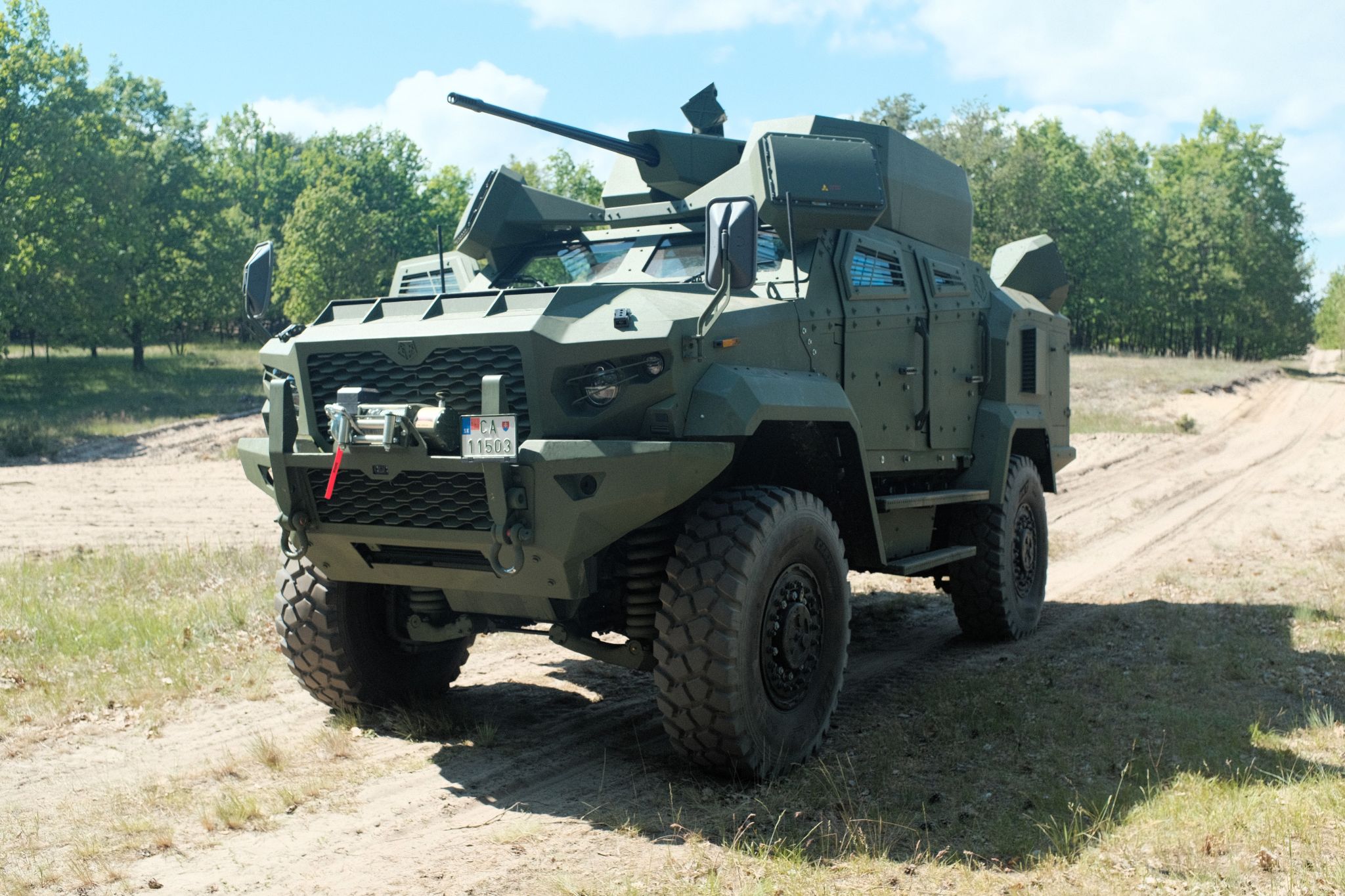
The war in Ukraine has become a proving ground for these systems, where the widespread use of both commercial and military-grade drones has reshaped frontline tactics. From first-person-view (FPV) kamikaze drones to GPS-jamming quadcopters, the drone threat continues to outpace many conventional defense measures.
In that context, DefTech’s Wolf 25 AD reflects a growing emphasis on short-range, kinetic drone defense—particularly those integrated onto maneuver units. The platform’s turreted cannon, combined with its all-terrain mobility and crew survivability features, positions it as a potential core asset for mechanized brigades and airfield protection units.
While DefTech has not disclosed potential export customers beyond Ukraine, the company’s language suggests active interest from multiple partners. As militaries across Europe and beyond reassess their counter-drone posture, platforms like the Wolf 25 AD are likely to draw further attention as both stop-gap and long-term solutions.
“Drones are rewriting the rules. Air defence needs to keep up,” DefTech said.